This post may contain affiliate links. If you purchase through these links, we may earn a commission at no extra cost to you.
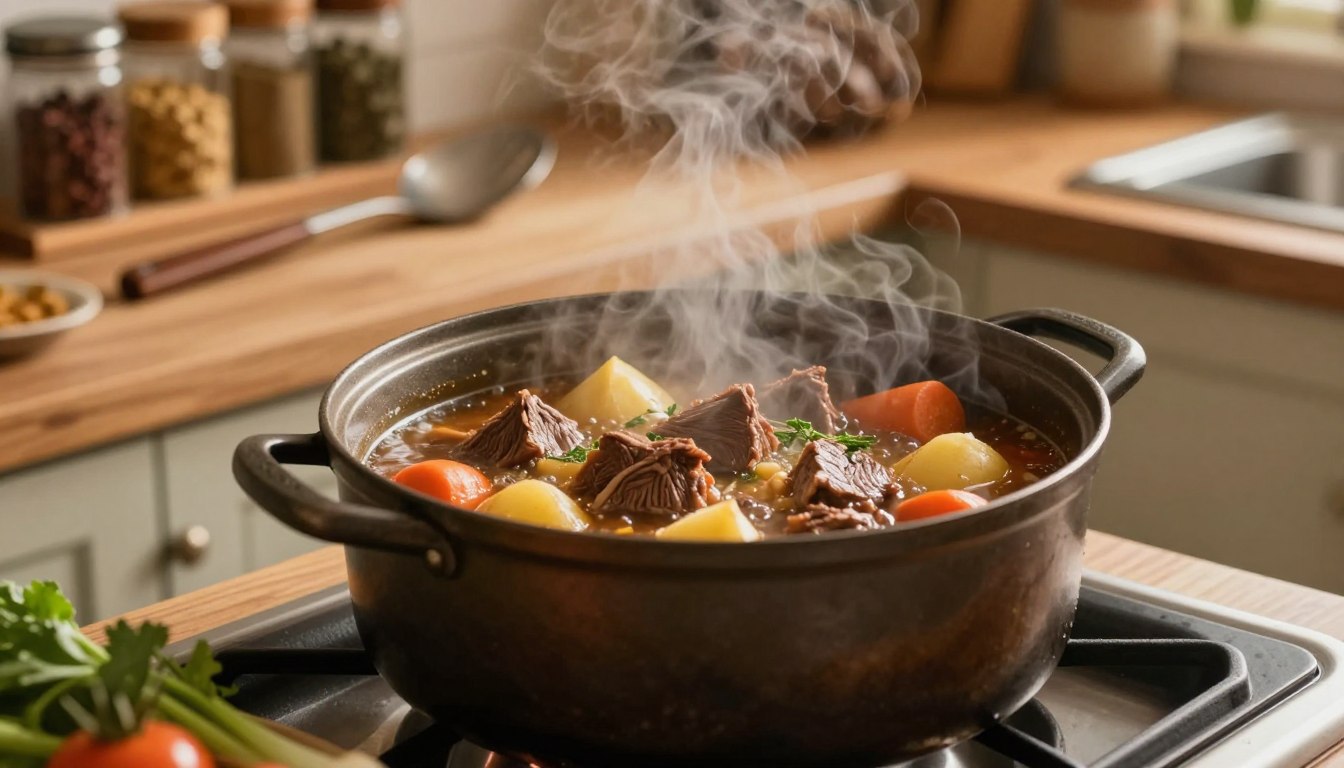
The smell of beef stew in your kitchen on a cold day is comforting. It reminds you of home and warmth. You think of sitting at a table with loved ones, watching steam rise from bowls of rich, tender meat and vegetables.
A slow simmer beef stew brings people together. It fills your stomach and soothes your soul. You can make this classic beef stew at home. You don’t need fancy equipment or years of cooking experience.
This guide will teach you how to make a beef stew that tastes like it came from a professional kitchen. You’ll learn which cuts of meat work best. You’ll discover how to build layers of flavor. You’ll understand the techniques that transform simple ingredients into something special.
Your journey to mastering slow simmer beef stew starts right here. By the time you finish reading, you’ll have the confidence and knowledge to create a dish that impresses everyone at your table. The steps are straightforward. The results are outstanding.
Table of Contents
Essential Ingredients for Your Homemade Beef Stew
Creating a tasty homemade beef stew begins with the right ingredients. The quality of your ingredients greatly affects the taste and texture of your stew. Choose fresh, firm vegetables and premium aromatics for a rich, flavorful base.
Knowing which ingredients go well together is key to a great stew. Start with fresh vegetables from the produce section. Your choice of aromatics will make the flavors deep and complex.
Selecting Fresh Vegetables
Choosing the right vegetables is crucial for taste and nutrition. Look for vegetables that are firm and show no signs of damage. Fresh produce releases better flavors during slow cooking.
Here are the key vegetables for your stew:
- Carrots: Select orange ones without soft spots
- Potatoes: Choose waxy varieties like Yukon Gold
- Celery: Pick crisp stalks with bright green color
- Onions: Use yellow or white onions for sweetness
- Tomato paste: Opt for canned varieties without added sugars
Choosing Quality Aromatics
Aromatics are the heart of your stew’s flavor. The classic French mirepoix uses onions, carrots, and celery in equal parts. Dice these finely to release their flavors into the broth.
Quality aromatics you should consider:
| Aromatic | Why You Need It | How Much to Use |
|---|---|---|
| Yellow Onions | Provides sweetness and depth | 2-3 medium onions |
| Fresh Garlic | Adds savory, pungent flavor | 4-6 cloves |
| Carrots | Brings natural sweetness | 3-4 medium carrots |
| Celery | Creates subtle earthiness | 2-3 stalks |
Using fresh aromatics instead of dried ones makes a big difference. Fresh garlic cloves have more flavor than powder, and fresh onions caramelize beautifully. You’ll taste the difference in every spoonful.
Mastering the Slow Simmer Beef Stew Technique
Creating the perfect slow simmer beef stew needs patience and low heat. This method turns tough meat into tender, flavorful dishes. The secret is keeping the right temperature during cooking.
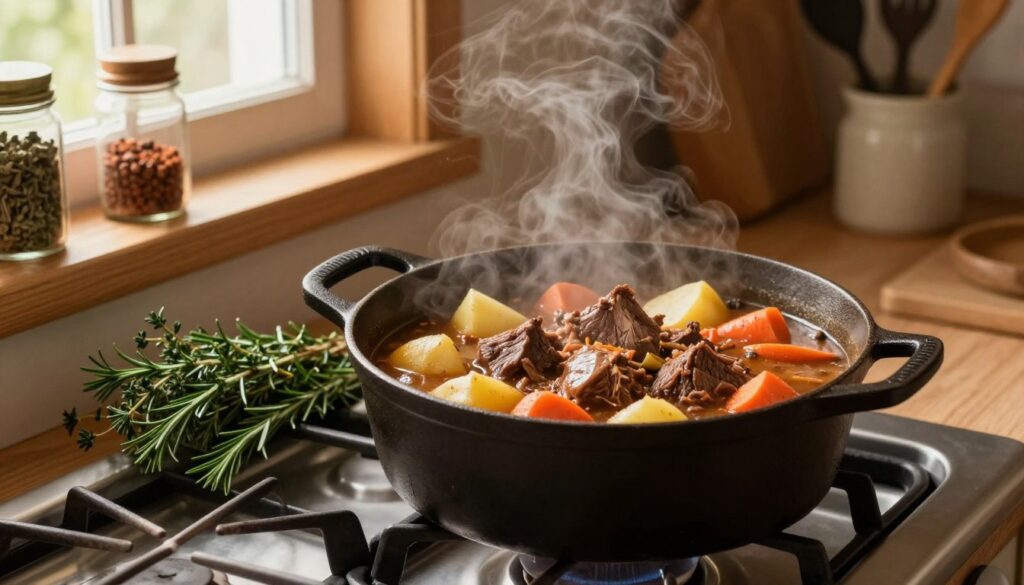
When cooking a slow-cooked beef stew, heat breaks down meat tissues over hours. This slow process can’t be rushed. Low temperatures turn collagen into gelatin, making the meat tender.
High heat, on the other hand, makes meat tough and chewy. It falls apart in unpleasant ways.
The gentle bubble is what you aim for. You want small, occasional bubbles from the pot bottom, not a full boil. This balance ensures even cooking without mushiness or overcooking.
Temperature Control Essentials
Proper temperature is key to a great stew. Follow these tips for perfect results:
- Set your heat between 200°F and 210°F for oven cooking
- On the stovetop, maintain the lowest heat setting that produces occasional bubbles
- Use a cooking thermometer to monitor internal meat temperature
- Stir occasionally to ensure even heat distribution
- Cover your pot to trap moisture and heat
Timing is crucial for slow-cooked beef stew. Plan for 2.5 to 3 hours of cooking. Check the meat with a fork around the 2-hour mark. If it shreds easily, your stew is done.
Selecting the Best Cuts of Meat for Tenderness
The meat you choose is key to a great beef stew. You want a cut that gets tender with slow cooking. This guide will help you pick the right cuts and prepare them for the best results.
Understanding Beef Chuck
Beef chuck is the top choice for stew meat. It comes from the cow’s shoulder and has lots of collagen. When cooked slowly, collagen turns into gelatin, making the meat soft and tasty.
The fat in chuck roasts adds flavor and keeps the meat moist. A 3-pound chuck roast is affordable and gives you plenty of meat for a big pot. Cooking beef to safe temperatures is easy with slow simmering.
If you enjoy simple homemade comfort meals like this Simmer Beef Stew , you might also love these easy recipes:
Proper Trimming Methods
Trimming your beef is crucial before cooking. Here’s how to do it right:
- Remove large fat caps from the surface of the meat
- Cut away silver skin—the thin, tough membrane you see on some pieces
- Leave some fat marbling inside the meat for flavor
- Cut beef into uniform 2-inch cubes for even cooking
Trimming off excess fat keeps your stew from getting too greasy. Removing silver skin is important because it stays tough even after long cooking. Cutting the beef into uniform pieces ensures it cooks evenly, making all the meat tender and delicious.
| Beef Cut | Collagen Content | Best Cooking Method | Cost Level |
|---|---|---|---|
| Beef Chuck | High | Slow Simmering | Budget-Friendly |
| Beef Brisket | Very High | Slow Cooking | Moderate |
| Beef Round | Low | Quick Cooking | Budget-Friendly |
| Beef Sirloin | Low | Grilling/Broiling | Higher |
Choosing beef chuck and trimming it well is key to success. Your patience will pay off with tender, flavorful meat in every spoonful of your stew.
Preparing Your One-Pot Beef Stew for Success
Getting your workspace ready makes cooking easier and more enjoyable. A one-pot beef stew needs smart planning before you start. Organizing your ingredients and tools ahead of time helps you focus on making a delicious meal without stress.
Start by gathering everything you need in one spot. This saves time and prevents missing ingredients mid-recipe. Clean your workspace and place your heavy-bottomed Dutch oven in a central location. Having all components ready means you can move smoothly through each cooking step.
Organizing Your Ingredients
Preparation is the foundation of cooking success. Here are the key steps to organize your ingredients for a one-pot beef stew:
- Wash all vegetables and pat them dry with paper towels
- Cut beef into uniform 1.5-inch cubes for even cooking
- Measure broth and pour into a measuring cup
- Mince garlic and chop onions into similar sizes
- Gather dried herbs and spices in small bowls
This setup ensures smooth cooking flow. You won’t need to search for items while your ingredients heat up.
Maximizing Heat Distribution
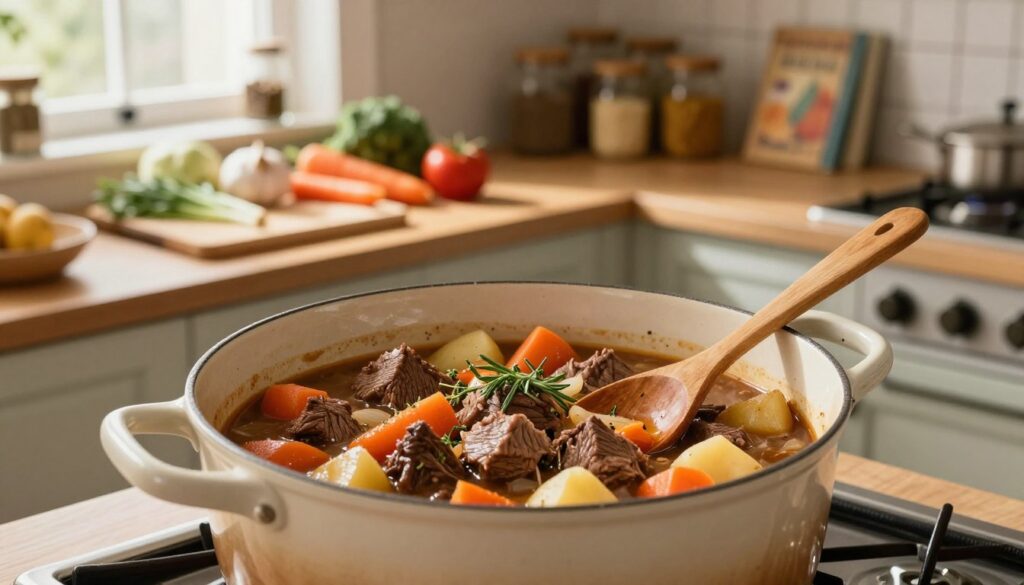
Your Dutch oven choice matters greatly. Choose a pot with thick sides and a heavy bottom for even heat. This prevents burning and ensures consistent cooking throughout your one-pot beef stew.
| Pot Type | Heat Distribution | Best For |
|---|---|---|
| Heavy-bottomed Dutch oven | Excellent | Slow cooking and stewing |
| Thin aluminum pot | Poor | Quick boiling only |
| Cast iron Dutch oven | Superior | Even temperature maintenance |
Layer your ingredients strategically. Place meat on the bottom, then add vegetables and aromatics on top. This layering technique promotes flavor blending and ensures nothing sticks to the pot bottom.
Enhancing Flavors in Your Savory Beef Stew
To make a great savory beef stew, you need more than just ingredients. You must create layers of flavor that blend together. Techniques like deglazing and using fresh herbs at the right time can make your stew stand out.
Best Amazon Picks:
Deglazing the Pot
When you brown your beef, a flavorful layer called fond forms at the bottom of the pot. This fond is packed with beef flavors that you should not miss out on. Deglazing involves adding liquid to release these stuck-on bits and mix them into your stew.
Here’s how to deglaze properly:
- Remove your browned beef from the pot
- Pour red wine, beef broth, or water into the hot pot
- Scrape the bottom with a wooden spoon for 1-2 minutes
- Watch as the brown bits dissolve into your liquid
- Return the beef and continue cooking
Using Fresh Herbs
Fresh herbs bring a brightness and depth that dried herbs can’t. The timing of when you add them is key. Tender herbs like parsley are best added near the end. Woody herbs like thyme and rosemary can go in earlier.
| Herb Type | Best Cooking Time | Amount per Stew |
|---|---|---|
| Fresh Thyme | Early (with beef) | 3-4 sprigs |
| Fresh Rosemary | Early (with beef) | 2 sprigs |
| Fresh Parsley | Last 10 minutes | 2 tablespoons chopped |
| Fresh Bay Leaves | Early (with beef) | 2 leaves |
By following these steps, your savory beef stew will have rich, complex flavors. Every spoonful will be a delight.
Tips for Achieving the Perfect Consistency
Getting the right thickness is key to a great beef stew. It’s all about finding the right balance between liquid and the starches in your veggies and meat. This balance makes your stew coat the back of a spoon just right.
The secret to perfect consistency is knowing the right liquid-to-meat ratio. A three-to-one ratio is usually best. This means for every pound of beef, you need three cups of liquid. This ratio gives your stew a great feel that makes everyone want more.
Potatoes do more than add flavor. As they cook, they release starches that thicken your stew. Make sure your potatoes are all the same size so they cook evenly and thicken your stew at the same time.
Quick Thickening Methods
Sometimes, your stew needs a little help to get the right texture. Here are some quick ways to adjust consistency:
- Let your stew simmer uncovered for thirty minutes to allow liquid to evaporate naturally
- Mix a tablespoon of cornstarch with cold water to create a slurry, then stir it in slowly
- Dust your beef chunks lightly with flour before browning to add body to the sauce
- Add tomato paste, which thickens while adding depth and richness
With these tips, your beef stew will always have the perfect consistency.
Related Recipes:
Conclusion
You now have all the tools to make a hearty beef stew that will wow your loved ones. Choosing quality beef chuck and fresh veggies is key. The slow simmer brings out flavors that store-bought can’t match. Your kitchen will smell amazing as the stew gets richer.
Creating a comforting stew takes patience and care. You’ve learned to deglaze, use fresh herbs, and get the right consistency. These skills turn simple ingredients into a soul-warming meal. Each step boosts your cooking skills and confidence.
The joy of cooking this classic dish is in knowing you made something nourishing and tasty. You can tweak the flavors and textures to fit your family’s taste. This recipe is perfect for any occasion, from a weeknight dinner to a special event. Take pride in making a dish that brings people together and creates lasting memories.