This post may contain affiliate links. If you purchase through these links, we may earn a commission at no extra cost to you.
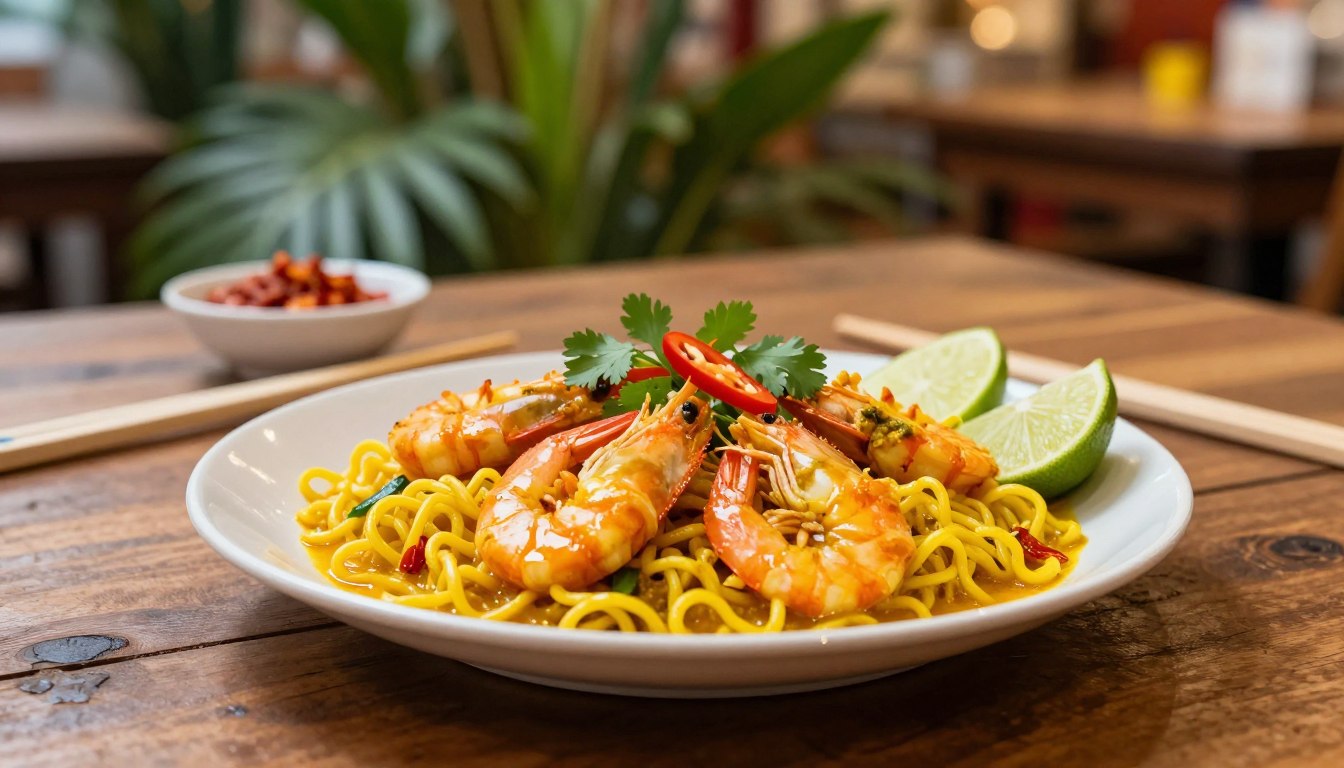
Have you ever had a bite that took you somewhere else? A taste so vibrant it wakes up your senses? That’s what awaits you in singapore noodle curry shrimp.
Your kitchen is about to become a gateway to Singapore’s hawker centers. This dish is a blend of tradition and bold flavors loved by many. The journey from store to table is just a few steps away.
Making restaurant-quality singapore noodle curry shrimp at home is within reach. The right techniques and fresh ingredients make it achievable. You’ll see how easy it is to combine shrimp, spices, and noodles.
This guide will take you through every step. You’ll learn to balance flavors and choose the right ingredients. Soon, you’ll be confident in cooking this dish whenever you want.
The flavors of Singapore are ready to delight you. Your Asian cooking adventure begins now.
Table of Contents
Understanding the Essence of Singaporean Cuisine
Singaporean cuisine is a mix of Chinese, Malay, and Indian traditions. These cultures add their own flavors and cooking styles. This mix is key to understanding dishes like Singapore noodle curry shrimp.
The core of Singaporean cooking is wok hei, or “breath of the wok.” It gives stir-fries a smoky taste. Cooking at high heat in a wok makes food taste authentic.
Exploring traditional Asian dishes shows a pattern in flavor building. Singaporean cooks use spices carefully to create complex tastes. The main spices are:
- Turmeric for warmth and color
- Chili for heat and depth
- Curry leaves for aromatic notes
- Garlic and ginger for sharpness
- Cumin and coriander for earthiness
These spices work together to build layers of flavor. Each spice adds a unique taste. This knowledge helps you choose the right ingredients for your dishes.
Singaporean cooking is fast and uses high heat. Your wok is essential. Quick stirring and constant movement prevent sticking and enhance flavors.
Essential Ingredients for Your Singapore Noodle Curry Shrimp
Creating a tasty singapore noodle curry shrimp dish starts with the right ingredients. Each part is crucial for authentic flavors that take you to Southeast Asia. Choosing quality ingredients means you’re on your way to a meal as good as a restaurant’s.
Success in making homemade curry shrimp noodles comes from picking the best ingredients. Fresh, top-notch ingredients make a big difference. Let’s look at the two key things you need to get right.
Selecting Quality Rice Vermicelli
Rice vermicelli is the heart of your dish. You want thin, delicate strands that soak up sauce well without getting mushy. Look for vermicelli that’s translucent and slightly off-white.
When you’re shopping for rice vermicelli, check these things:
- Thin, uniform strand thickness
- Translucent appearance indicating proper drying
- No broken pieces or dust in the package
- Packaging date within six months
- Origin from Vietnam, Thailand, or Singapore
Brands like Dynasty, Nasoya, and Thai Kitchen are good choices. Cook your vermicelli for two to three minutes until it’s just tender. This keeps it perfect.
If you enjoy simple homemade comfort meals like this Singapore Noodle Curry Shrimp, you might also love these easy recipes:’
Sourcing Authentic Curry Powder Blends
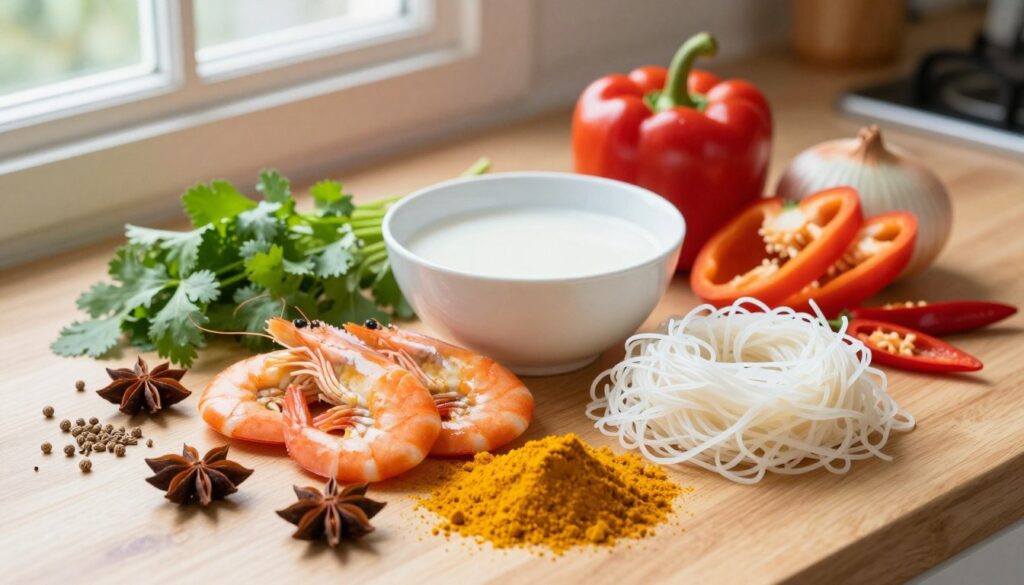
The curry powder blend gives your dish its yellow color and aroma. A true blend has coriander, cumin, and fenugreek in the right mix for that singapore flavor.
| Curry Powder Brand | Main Spices | Flavor Profile | Best For |
|---|---|---|---|
| Curry Powder (Mild) | Turmeric, Coriander, Cumin | Gentle, aromatic warmth | Beginners, sensitive palates |
| Madras Curry Powder | Coriander, Cumin, Fenugreek, Chili | Bold, spicy heat | Experienced cooks, spice lovers |
| Singapore Curry Powder | Turmeric, Coriander, Fenugreek, Cumin | Rich, authentic yellow tone | Traditional singapore noodle curry shrimp |
| Panang Curry Powder | Coriander, Cumin, Clove, Cinnamon | Warm, complex spice blend | Adding depth to homemade curry shrimp noodles |
Keep your curry powder in an airtight container away from light and heat. It stays fresh for three to four months. Buy from specialty stores or online places that keep their products well.
Investing in good rice vermicelli and real curry powder makes your cooking better. It’s like eating at your favorite restaurant.
Preparing Your Kitchen for Easy Asian Cooking at Home
Setting up your kitchen is key for easy Asian cooking at home. Before you start, organize your station. This makes cooking smoother and more fun. You can then focus on the cooking without worrying about ingredients.
Stir-frying needs speed and precision. Prepare your aromatics before heating up. Minced garlic, ginger, and shallots should be ready in small bowls. This mise en place lets you cook without interruptions.
Your cooking tools are as important as your ingredients. A seasoned wok or skillet prevents food from sticking. Season a new wok before using it. This creates a non-stick surface that gets better with each use.
Essential Kitchen Setup Checklist
- Arrange all ingredients in small prep bowls
- Position bowls in logical order around your cooking space
- Fill a water glass for quick access
- Keep paper towels nearby for cleanup
- Set your wok or skillet on the burner beforehand
- Have a wooden spoon or spatula ready
| Equipment | Purpose | Preparation Step |
|---|---|---|
| Wok or Large Skillet | High-heat cooking vessel | Season and preheat for 2-3 minutes |
| Cutting Board | Ingredient prep area | Clear and clean before starting |
| Small Bowls | Hold prepped ingredients | Organize in cooking order |
| Wooden Spoon | Stir and toss noodles | Keep within arm’s reach |
| Measuring Spoons | Portion curry powder and spices | Place near your cooking area |
Controlling the temperature is key for authentic flavors. Your burner should heat up quickly. A medium-high to high setting is best for stir-frying. Test the heat before adding ingredients. The wok should sizzle water instantly.
Being organized helps avoid mistakes and stress. Thaw and pat dry your shrimp in advance. Cook and cool the noodles before stir-frying. Keep your seasonings close. This makes cooking enjoyable, not chaotic.
Mastering the Technique for Authentic Singapore Flavors
Making authentic Singapore flavors takes skill and care. Mixing heat, aromatics, and technique makes a dish stand out. It’s all about how each part works together to create a perfect noodle curry shrimp bowl.
Best Amazon Picks:
Balancing Heat and Aromatics
The base of your dish is in the curry powder. When you add it to hot oil, it releases oils that add depth. This step is crucial and can’t be rushed.
Fresh chili peppers add heat, but they must blend with aromatics. Garlic and ginger create a fragrant base that supports the spice. You want your guests to enjoy the seafood and curry together, not just feel the heat.
- Add curry powder to hot oil for 30-45 seconds to release its oils
- Use fresh garlic and ginger in equal amounts for balanced aromatics
- Balance fresh chili peppers with the mild sweetness of onions
- Test your spice level before adding shrimp to adjust heat
Achieving the Perfect Stir Fry Texture
Your stir-frying technique is key to perfect noodles. Constant stirring prevents noodles from clumping. Pay close attention, as extra heat can ruin the texture.
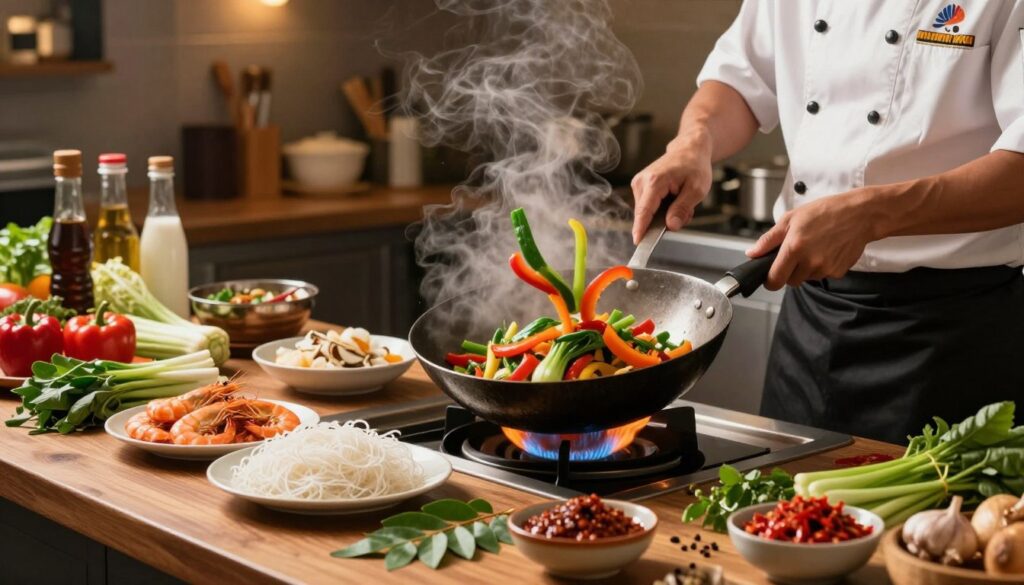
Evenly coat noodles in curry sauce by constantly tossing them over high heat. This spreads flavors and keeps noodles firm. Your noodles should bend without breaking and hold their shape.
| Cooking Step | Duration | Key Action |
|---|---|---|
| Toast curry powder in oil | 30-45 seconds | Release essential oils and deepen flavor |
| Add aromatics (garlic, ginger) | 60 seconds | Build fragrant base for sauce |
| Introduce shrimp | 2-3 minutes | Cook until pink without overcooking |
| Add rice vermicelli noodles | 2-4 minutes | Coat evenly while stirring constantly |
| Final toss and plate | 30 seconds | Ensure even distribution and texture |
By focusing on these techniques, you turn simple ingredients into something amazing. Each step you take brings you closer to that perfect authentic Singapore flavor that makes the dish unforgettable.
Tips for Perfecting Spicy Seafood Noodles
Making the perfect spicy seafood noodles takes focus and finesse. It’s all about the little things that make a big difference. Learning to balance flavors, textures, and moisture is key to mastering this dish.
Adding a splash of coconut milk at the end is crucial. It adds richness and balances out the curry. A squeeze of fresh lime juice also helps, cutting through the spice and adding depth. Add these just before serving to keep their freshness.
How you prepare the shrimp is important for texture. Cook them separately for 2-3 minutes until they’re pink. Then, gently mix them into the noodles to avoid toughness. This way, you control their doneness and keep the seafood tender.
Keeping the noodles moist is essential. If they seem dry, add a bit of chicken or vegetable stock. Start with a tablespoon and add more as needed. This helps the noodles stay soft and the spices spread evenly.
- Taste frequently while adjusting seasonings
- Keep lime juice and coconut milk nearby for final touches
- Use medium-high heat to prevent sticking
- Don’t overcrowd the pan when cooking shrimp
These tips let you adjust the heat and moisture to your liking. They help you create a dish that’s both spicy and satisfying.
Exploring Variations in Asian Fusion Recipes
Mastering the classic Singapore noodle curry shrimp is just the start. You can then mix and match to create your own dishes. Asian fusion recipes are all about trying new things. You can change the recipe based on what’s in season, your taste, or dietary needs.
Adding Fresh Seasonal Vegetables
Adding seasonal veggies makes your noodle dishes pop. Try these:
- Crisp bell peppers in red, yellow, or orange for sweetness and crunch
- Snap peas that add a tender-crisp texture
- Bok choy for authentic Asian flavor and nutrition
- Baby corn for subtle sweetness
- Mushrooms for umami depth
These veggies not only add nutrition but also make your dish look and taste better.
Incorporating Alternative Protein Sources
You don’t need shrimp to enjoy this dish. Your fridge probably has other proteins that work great:
| Protein Option | Preparation Method | Best For |
|---|---|---|
| Chicken Breast | Slice thinly, cook until golden | Mild, lighter flavors |
| Firm Tofu | Cut into cubes, pan-fry until crispy | Vegetarian meals |
| Pork Belly | Slice into thin strips, render fat | Rich, savory dishes |
| Beef Sirloin | Slice thinly against the grain | Hearty portions |
Trying different proteins keeps mealtime exciting. It stays true to the original recipe’s spirit.
Related Recipes:
Conclusion
You now know how to make a beloved flavorful noodle recipe in your kitchen. From picking the right ingredients to mastering stir-fry, you’re ready to cook. By following this guide, you’ve learned how to make authentic Singapore noodle curry shrimp.
Success comes from three main things. First, use fresh shrimp and real curry powder. Second, set up your kitchen well for easy cooking. Third, control the heat to get the right texture and taste.
As you get better, you’ll feel more confident in the kitchen. Try new things with different veggies or proteins. This guide helps you explore more of Asian cuisine. Share your dishes with loved ones and see their smiles when they taste your creations.