This post may contain affiliate links. If you purchase through these links, we may earn a commission at no extra cost to you.
The first time I tried original steak tartar at a small Parisian bistro, it changed my view of food. This raw beef dish was more than just a meal—it was an adventure that opened my eyes to gourmet appetizers.
Original steak tartar is not just a dish; it’s a work of art. It shows the skill and creativity of chefs worldwide. They pick the best beef and chop it by hand to keep its texture and flavor perfect.
This gourmet appetizer stands out because of its simple yet elegant nature. Every bite tells a story of tradition, skill, and amazing taste. It shows the expertise of chefs who value raw ingredients and their preparation.
Whether in fancy restaurants or cozy dining spots, original steak tartar fascinates and pleases food lovers. It’s not just a meal; it’s a journey into the world of flavors.
Table of Contents
Understanding the Heritage of Original Steak Tartar
The story of classic tartare is deeply rooted in French cuisine. It tells a tale of culinary innovation and cultural tradition. This dish is more than just a meal; it’s a journey through time and across continents.
Roots in French Culinary Tradition
Steak tartar started in French kitchens, where chefs turned simple ingredients into amazing dishes. It came from nomadic cultures who had to eat meat quickly.
- Originated in medieval European cooking practices
- Initially prepared as a practical meat preservation technique
- Evolved from raw meat preparations of nomadic tribes
Evolution Through European Cuisine
As cooking skills improved, tartare became a fancy appetizer. Chefs in Europe started adding flavors and new ways to prepare it. This made the dish popular in fancy restaurants.
Cultural Significance and Modern Adaptations
Now, steak tartar is a symbol of French cuisine’s excellence. Modern chefs keep the traditional recipe alive while adding their own creative touches. This honors the dish’s rich history.
- Remains a staple in fine dining establishments
- Symbolizes culinary sophistication
- Continues to inspire global gastronomic creativity
Essential Ingredients for Classic Steak Tartar
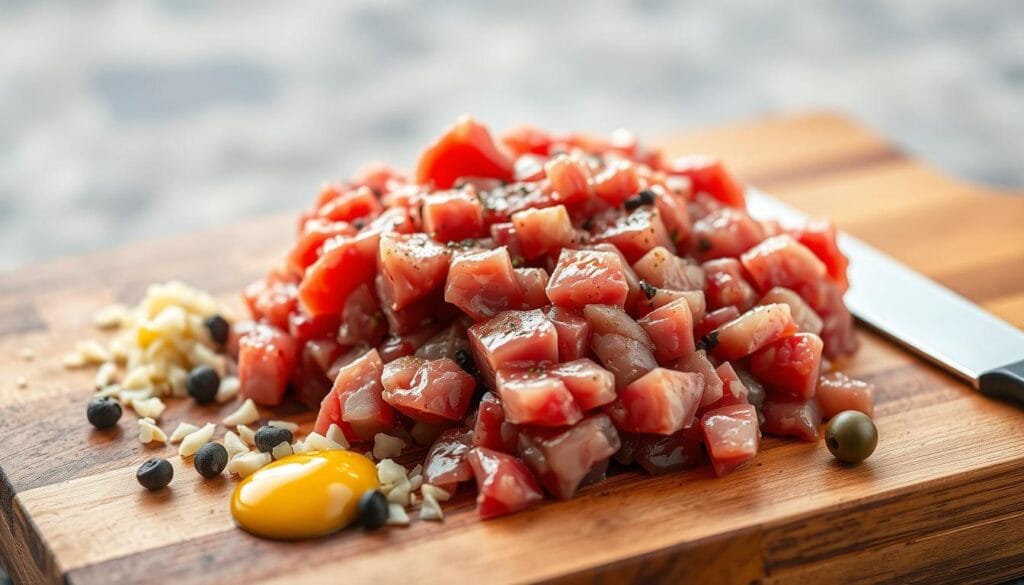
Making a real steak tartar starts with top-notch ingredients. The key is the finely chopped beef, which is the heart of this dish.
It’s important to pick the right beef for a great steak tartar. Chefs say to use:
- Fresh beef tenderloin
- Sirloin
- Top-quality beef with minimal fat
The meat’s quality affects the taste and feel of the dish. Premium, fresh beef makes it tender and delicious, turning simple parts into a fancy meal.
Here are the must-haves for a traditional steak tartar:
| Ingredient | Purpose | Quality Recommendation |
|---|---|---|
| Fresh Beef | Base of the dish | Highest grade, freshly cut |
| Shallots | Flavor enhancement | Fresh, finely chopped |
| Capers | Tangy accent | Salt-packed, premium quality |
| Dijon Mustard | Binding and flavor | Authentic French mustard |
| Egg Yolk | Creamy texture | Fresh, farm-raised eggs |
Experts know that making steak tartar is all about precision, fresh ingredients, and sticking to old ways of doing things.
Preparing the Perfect Original Steak Tartar
Making a traditional steak tartar needs precision, skill, and knowledge. It starts with picking the right meat and preparing it carefully.
Selecting and Processing the Beef
Choosing the right beef is key for a great steak tartar. Chefs suggest using:
- High-quality beef tenderloin
- Fresh, premium-grade meat
- Lean cuts with minimal fat
When making a raw beef dish, food safety is crucial. Buy meat from a trusted butcher and make sure it’s very fresh. Chill the meat well before you start and use clean cutting tools.
Mixing Traditional Seasonings
The secret to a great steak tartar is in its seasonings. Classic ingredients include:
- Finely chopped shallots
- Dijon mustard
- Worcestershire sauce
- Fresh cracked black pepper
- Capers
Achieving the Ideal Texture
Texture is vital in a traditional steak tartar. Chop the beef by hand into small, even pieces. This keeps the meat’s natural texture and consistency.
The goal is to chop the meat finely but not too much. Each bite should have a fresh, distinct flavor. This celebrates the raw beef in its purest form.
Mastering the Art of Tartare Sauce and Accompaniments
Making the perfect tartare sauce turns steak tartar into a fancy appetizer. The right mix of ingredients makes the dish special. It turns a classic into a memorable dining experience.
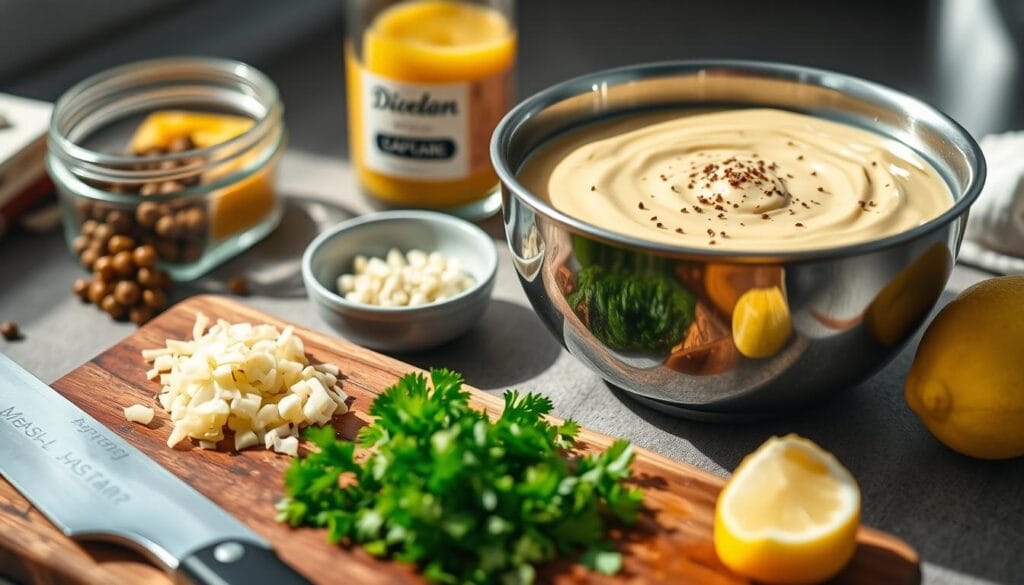
The key to a great tartare sauce is choosing the right ingredients. A classic recipe has:
- High-quality mayonnaise
- Finely chopped pickles
- Fresh herbs like parsley and chives
- Capers for a tangy kick
- Lemon juice for brightness
Mixing these ingredients well is important. Professional chefs say to mix just before serving for the best taste. The goal is to make a sauce that goes well with the raw beef without hiding its taste.
| Ingredient | Quantity | Purpose |
|---|---|---|
| Mayonnaise | 1/2 cup | Creamy base |
| Pickles | 2 tablespoons | Texture and acidity |
| Capers | 1 tablespoon | Sharp flavor |
| Fresh herbs | 2 teaspoons | Aromatic complexity |
Classic sides that go well with steak tartar include toasted bread points, microgreens, and sea salt. Each adds to the beef’s flavor, making a dish that pleases the taste buds.
Serving and Presentation Techniques for Gourmet Tartare
To make steak tartar a true culinary delight, you need to focus on presentation and serving. French cuisine is all about making each dish a feast for the eyes and taste buds.
Presenting steak tartar is a mix of skill, creativity, and respect for tradition. Chefs aim to make it look good while keeping its flavors and textures just right.
Traditional Plating Methods
Classic French cuisine keeps steak tartar simple yet elegant:
- It’s placed on a clean white plate
- Shaped into a neat circle
- Decorated with capers and herbs
- Served with toast or crackers
Modern Presentation Styles
Today’s chefs are getting creative with steak tartar:
- They try deconstructed styles
- Use molecular gastronomy for unique plating
- Make artistic shapes
- Prepare it right at your table
Pairing Recommendations
| Dish Style | Recommended Drink | Complementary Side |
|---|---|---|
| Classic Tartare | Champagne | Cornichons |
| Spicy Tartare | Crisp Sauvignon Blanc | Pickled Shallots |
| Truffle-infused Tartare | Pinot Noir | Truffle Potato Chips |
Every presentation turns steak tartar into a beautiful culinary work of art. It shows the heart of French cuisine’s love for fine food.
Conclusion
Steak tartar is more than a dish; it’s a journey through flavors and traditions. This classic dish shows the beauty of combining old and new in cooking. It’s loved by many in fine dining places.
Making original steak tartar is all about precision and quality. It’s a skill that both home cooks and chefs can master. With the right ingredients and techniques, anyone can make a dish that’s both flavorful and elegant.
Steak tartar is enjoyed in fancy restaurants and home kitchens alike. It connects us to a rich food tradition. With fresh ingredients and careful preparation, it becomes a masterpiece that delights food lovers everywhere.
Steak tartar is a timeless dish that shows the power of simple, skilled cooking. It’s a chance to explore and enjoy a classic dish. Let’s dive into its flavors and techniques, and see why it’s a favorite in gourmet food.