This post may contain affiliate links. If you purchase through these links, we may earn a commission at no extra cost to you.
There’s something magical about sitting down to a plate of fresh pasta that tastes like you’ve just stepped out of a restaurant in coastal Italy. The bright notes of lemon mixed with the warmth of cracked pepper create a flavor that feels both luxurious and comforting at the same time. You don’t need fancy equipment or years of cooking experience to bring this magic to your own kitchen.
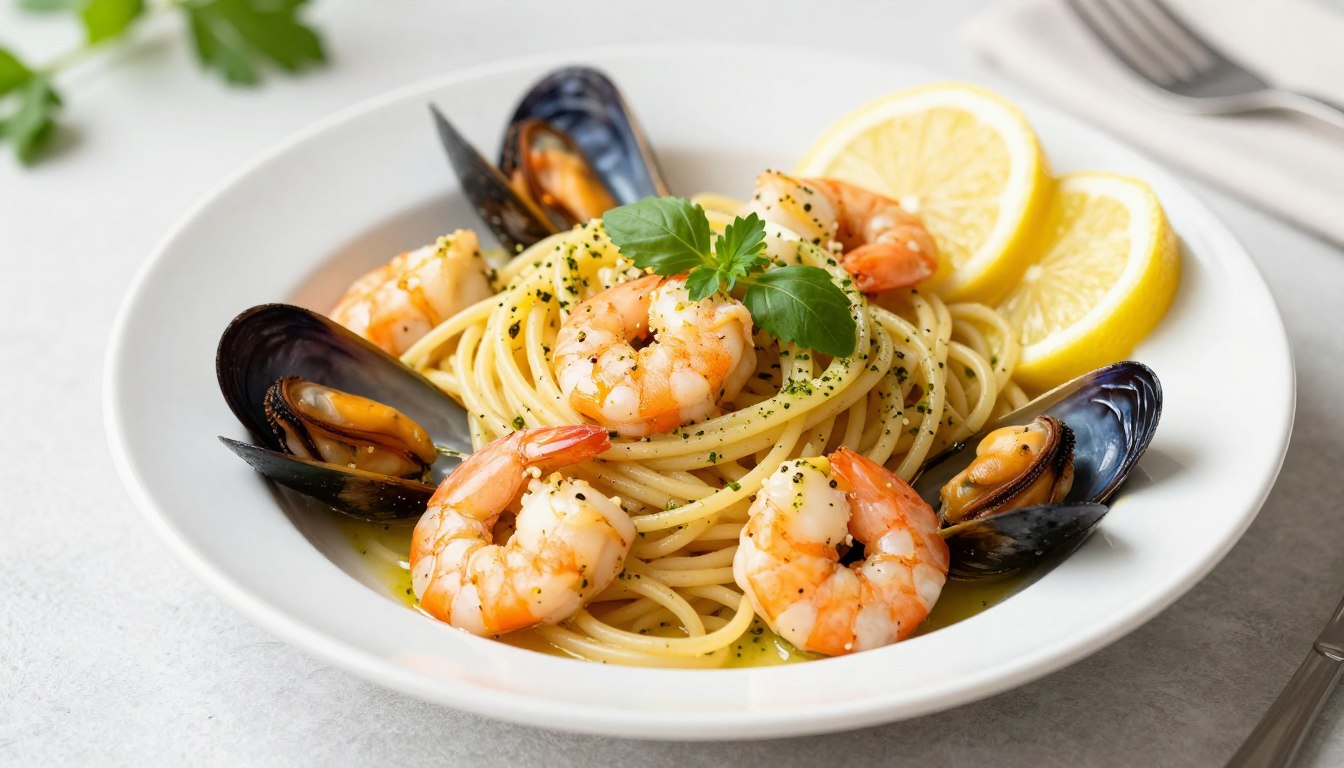
Lemon pepper seafood pasta is one of those dishes that seems complicated but actually comes together in about 30 minutes. Fresh shrimp and white fish work beautifully with a light, zesty sauce that lets the natural taste of the ocean shine through. The lemon and pepper flavors wrap around every strand of pasta, creating a meal that feels special without demanding hours in the kitchen.
This guide will walk you through everything you need to make lemon pepper pasta seafood at home. You’ll learn how to pick the freshest ingredients, prepare your seafood correctly, and build flavors that taste restaurant-quality. Whether you’re cooking for yourself or impressing guests, this lemon pepper seafood pasta recipe delivers a light yet satisfying meal that celebrates the best flavors of the season.
Table of Contents
Essential Ingredients for Your Seafood Pasta
Creating a delicious pasta with lemon pepper seafood starts with selecting the right components. The quality of your ingredients directly impacts the final taste and texture of your dish. When you invest time in choosing fresh, premium items at your local grocery store, you set yourself up for success in the kitchen.
Building a strong foundation means paying attention to each element that goes into your bowl. From the citrus you squeeze to the pasta shape you select, every choice matters. Let’s explore the key ingredients that make this dish truly special.
Selecting Fresh Citrus and Zest
Fresh lemons are the heart of your flavor profile. The bright, aromatic zest provides a punch that bottled juice simply cannot match. When shopping for lemons, look for fruit that feels firm and has a vibrant yellow color.
Here’s what to look for when selecting your citrus:
- Heavy lemons with thin skin
- No soft spots or bruises
- A strong, pleasant lemon smell
- Bright yellow appearance
Microplane graters work best for zesting, giving you fine, delicate pieces of peel without the bitter white pith underneath.
Choosing Quality Pasta Varieties
The right pasta shape matters for holding your sauce. High-quality semolina pasta options work beautifully with seafood preparations.
| Pasta Type | Best For | Texture |
|---|---|---|
| Linguine | Light seafood sauces | Smooth and silky |
| Fettuccine | Creamy preparations | Ribbon-like and substantial |
| Angel Hair | Delicate preparations | Thin and tender |
Look for pasta brands like Barilla or Rustichella d’Abruzzo that use 100% durum wheat semolina. These varieties hold sauces exceptionally well and provide a professional finish to your homemade meal.
How to Prepare the Perfect Lemon Pepper Seafood Pasta
Creating a delicious seafood lemon pepper pasta starts with understanding the right techniques and timing. This lemon pepper pasta recipe teaches you how to build layers of flavor while keeping your ingredients in perfect balance. The key lies in mastering heat control and sauce emulsion to create a dish that rivals restaurant quality.
Begin by bringing a large pot of salted water to a rolling boil. Cook your pasta for 8 to 10 minutes until it reaches an al dente texture. This firm texture prevents your noodles from becoming mushy when combined with the delicate seafood and sauce.
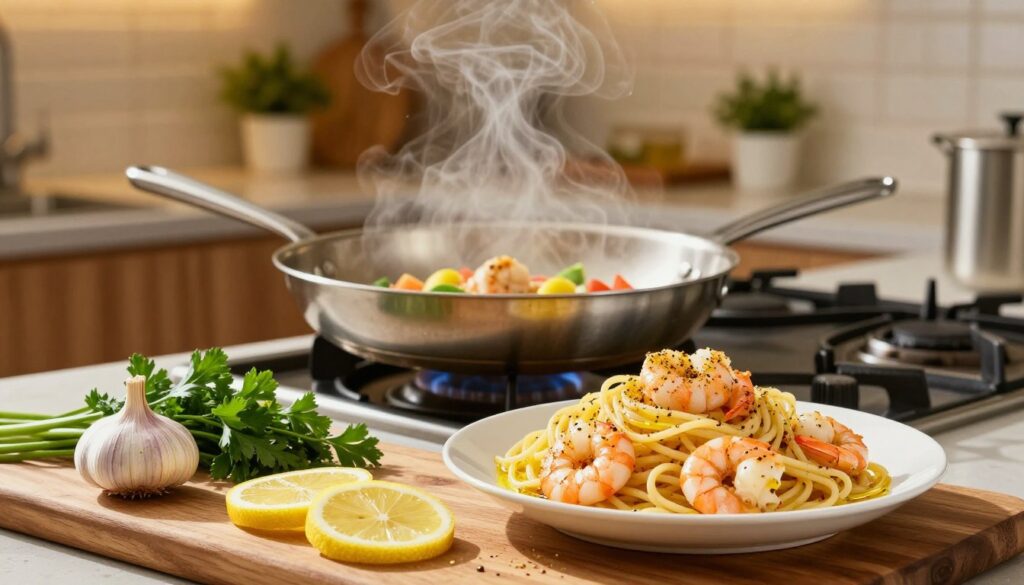
While your pasta cooks, prepare your sauce base. Melt butter in a large skillet over medium heat. Add freshly cracked black pepper and let it bloom for 30 seconds to release its full flavor. Squeeze fresh lemon juice into the pan and stir well.
Reserve 1 cup of pasta water before draining. Add this starchy liquid to your butter and lemon mixture while stirring constantly. This creates a silky emulsion that coats every strand of your seafood pasta with lemon pepper beautifully.
The technique of combining pasta water with butter creates a sauce that clings to your noodles rather than sliding off. This simple method transforms basic ingredients into something extraordinary.
- Maintain medium heat throughout sauce preparation
- Stir continuously to prevent separation
- Add pasta when sauce is fully incorporated
- Gently fold in your seafood at the very end
Timing matters when preparing seafood pasta with lemon pepper. Your seafood should cook separately just before combining with the pasta. This prevents overcooking and keeps your fish and shrimp tender and succulent.
If you enjoy simple homemade comfort meals like this Lemon Pepper Seafood Pasta, you might also love these easy recipes:
- Maple Salmon
- Lemon Rosemary Salmon
- Chef John’s Salmon
- Grilled Cod with Spinach and Tomatoes
- Baked Fish in Foil
Selecting the Best Catch for Your Dish
The quality of your seafood makes or breaks your lemon pepper seafood pasta. Choosing the right proteins ensures your dish has amazing texture and taste. Wild-caught shrimp and firm white fish fillets work best for this recipe. These options hold their shape well during cooking and absorb the lemon pepper flavors beautifully.
Your protein selection impacts how easy lemon pepper seafood pasta turns out. Fresh, high-quality seafood cooks faster and tastes better than frozen alternatives. Look for shrimp that feels firm to the touch and has a mild ocean smell. For fish, select fillets that appear moist and smell fresh, not fishy.
- Wild-caught shrimp from the Atlantic or Pacific
- Cod fillets for a mild, flaky texture
- Halibut for a firmer, meatier bite
- Scallops for a sweet, delicate flavor
Cleaning and Prepping Shrimp
Proper shrimp preparation prevents your pasta from tasting watery or tough. Start by rinsing shrimp under cold water. Remove the shell by peeling from the head toward the tail. Next, devein the shrimp by making a shallow cut along the back and removing the dark vein with a small knife or deveiner tool.
Pat the cleaned shrimp dry using paper towels. Moisture on the surface prevents proper searing and browning. Dry shrimp cooks evenly and develops a golden crust that adds depth to your dish.
| Shrimp Size | Count Per Pound | Cooking Time | Best Uses |
|---|---|---|---|
| Jumbo | 10-15 | 3-4 minutes | Main protein centerpiece |
| Large | 16-20 | 2-3 minutes | Pasta dishes |
| Medium | 21-25 | 1-2 minutes | Mixed seafood dishes |
Incorporating White Fish Fillets
White fish fillets add substance and mild flavor to your lemon pepper seafood pasta. Cod and halibut work exceptionally well because they stay firm during cooking. Before adding fish to the pan, pat the fillets completely dry with paper towels. Moisture causes the fish to steam instead of sear.
Cut larger fillets into bite-sized pieces so they cook evenly with the shrimp. Season the fish lightly with salt and pepper before cooking. A quick sear in a hot pan creates a golden exterior while keeping the inside tender and moist. This technique enhances the overall texture of your seafood pasta dish.
Best Amazon Picks:
Tips for Cooking Homemade Lemon Pepper Pasta Seafood
Mastering the art of lemon pepper pasta seafood requires understanding how flavors work together. The magic happens when you balance citrus brightness with bold pepper notes. Your lemon pepper pasta recipe will shine when you time each ingredient perfectly and use proper cooking techniques.
The foundation of great seafood lemon pepper pasta starts with your seasoning strategy. Lemon pepper seasoning blends citric acid with cracked black pepper in precise proportions. Adding this blend toward the end of cooking preserves its punch and prevents flavors from becoming dull or muted.
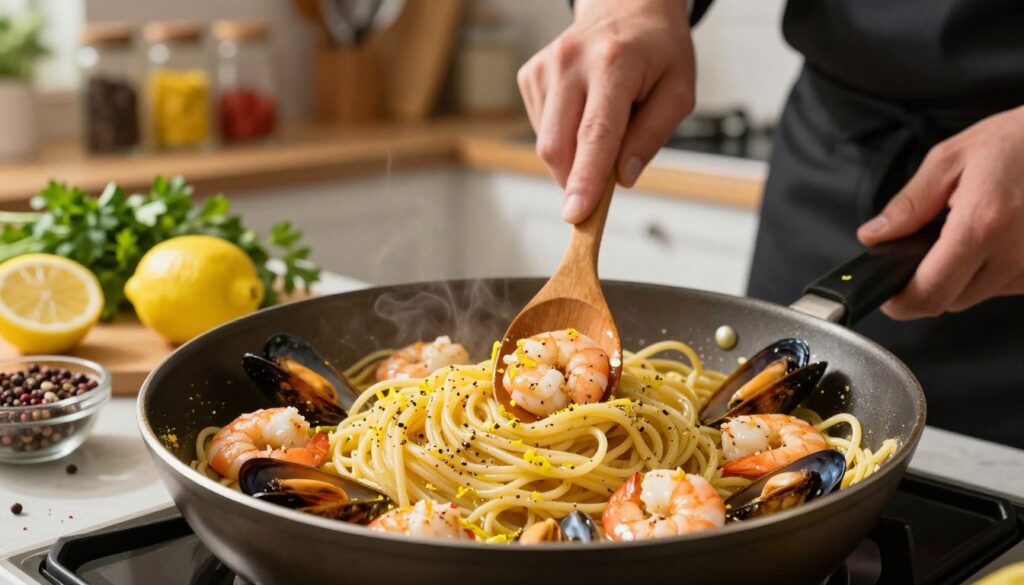
Building a rich flavor base is essential for homemade lemon pepper pasta seafood. Use a combination of olive oil and butter in your pan before adding aromatics like garlic and shallots. This creates a luxurious foundation that complements the citrus notes beautifully.
Follow these practical cooking tips for the best results:
- Heat your pan to medium-high before adding oil and butter
- Sauté aromatics until fragrant, roughly one to two minutes
- Add your seafood and cook until just done
- Toss pasta with the sauce gently to avoid breaking delicate pieces
- Sprinkle lemon pepper seasoning in the final thirty seconds of cooking
- Finish with fresh lemon juice and zest for brightness
Timing matters greatly when preparing your lemon pepper pasta recipe. Overcooking seafood creates tough, rubbery textures that ruin your dish. Keep vegetables and proteins moving in the pan for even cooking and consistent results throughout your homemade creation.
Temperature control ensures every element cooks properly without burning. Medium-high heat allows flavors to develop while keeping everything tender. This approach guarantees that each forkful of your seafood lemon pepper pasta delivers balanced, zesty flavor from start to finish.
Serving Suggestions for a Gourmet Lemon Pepper Pasta Dish
Creating a memorable meal goes beyond just cooking the main dish. The way you serve and present your seafood pasta with lemon pepper makes all the difference in transforming dinner into an elegant experience. Thoughtful pairing choices elevate your pasta with lemon pepper seafood from simple comfort food into something truly special. Consider how complementary sides and beverages enhance the flavors you’ve worked hard to develop.
Pairing with Fresh Garden Salads
A crisp garden salad serves as the perfect opening to your meal. The light, fresh flavors prepare your palate for the rich, buttery notes of your lemon pepper pasta dish. Choose vegetables that offer natural acidity and texture.
- Arugula with a light lemon vinaigrette
- Mixed greens with shallots and fresh herbs
- Spinach salad with citrus segments
- Romaine with parmesan shavings
Dress your salad with extra virgin olive oil and vinegar rather than creamy dressings. This choice prevents overwhelming the delicate seafood flavors in your main course.
Choosing the Right Wine Accompaniment
Wine selection matters when serving seafood pasta with lemon pepper. The best choices share characteristics with your dish itself.
| Wine Type | Why It Works | Tasting Notes |
|---|---|---|
| Sauvignon Blanc | High acidity mirrors lemon flavors | Citrus, herbaceous, crisp |
| Pinot Grigio | Light body complements seafood | Green apple, white flowers, clean |
| Vermentino | Coastal wine matches ocean flavors | Mineral, grapefruit, refreshing |
Serve your wine well chilled at about 45 degrees Fahrenheit. This temperature brings out the crisp acidity that balances the richness of your seafood pasta with lemon pepper beautifully.
Related Recipes:
- Maple Salmon
- Lemon Rosemary Salmon
- Chef John’s Salmon
- Grilled Cod with Spinach and Tomatoes
- Baked Fish in Foil
Conclusion
Creating an easy lemon pepper seafood pasta at home brings restaurant-quality flavors to your dinner table. You now have the knowledge to select fresh ingredients, prepare your seafood correctly, and balance bold citrus notes with pepper spice. This skill set allows you to impress your family and friends without spending hours cooking.
Your homemade lemon pepper pasta seafood dish delivers both taste and elegance in a single bowl. The combination of tender shrimp, flaky fish, and bright lemon zest creates a meal that feels special. Pairing it with crisp salads and quality wine makes the experience feel even more upscale.
Store any leftovers in airtight containers in your refrigerator for up to two days. This means you can enjoy your lemon pepper pasta dish again without extra effort. Use this guide as your starting point to experiment with fresh herbs, different seafood options, and creative plating ideas that match your personal style.
The kitchen is your space to learn and grow as a cook. These techniques work with many seafood options and flavor combinations. Start making this dish today and turn your weeknight meals into something you truly look forward to eating.