This post may contain affiliate links. If you purchase through these links, we may earn a commission at no extra cost to you.
Spring arrives with a promise of fresh beginnings. The farmers markets burst with vibrant green asparagus spears. The sun feels warmer on your skin. Your kitchen calls for lighter meals that celebrate the season’s bounty. That’s where lemon asparagus pasta comes into play.
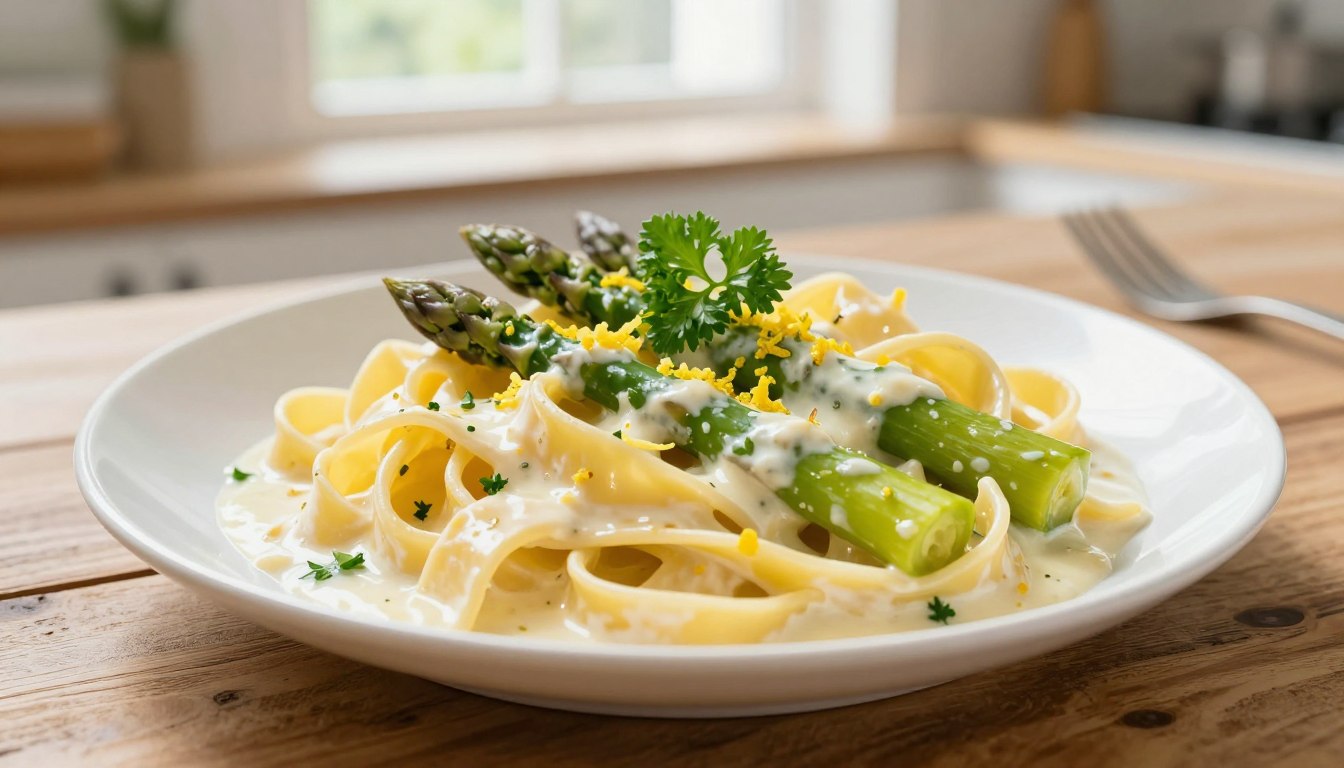
This dish captures everything spring represents. It brings together bright citrus flavors with earthy vegetables. The result feels both simple and elegant on your dinner table. You don’t need fancy techniques or hard-to-find ingredients to create something truly special.
Cooking with seasonal produce connects you to the rhythm of nature. When you choose asparagus at its peak in April and May, your food tastes better. Your body feels lighter. Your meals feel more meaningful. A creamy lemon asparagus pasta transforms basic pantry items into a meal worthy of any occasion.
Whether you’re cooking for yourself on a busy weeknight or impressing guests at dinner, this recipe delivers. The balance of flavors keeps things interesting. The preparation stays manageable. The satisfaction you feel eating this dish runs deep.
This guide walks you through every step. You’ll learn how to select the best asparagus. You’ll discover which pasta shapes work best. You’ll master the techniques that make your sauce silky and rich. By the end, you’ll have a recipe you cook again and again when spring rolls around.
Table of Contents
Essential Ingredients for the Perfect Dish
Creating a delicious asparagus lemon pasta requires more than just tossing ingredients together. The quality of each component matters significantly to the final result. When you select the right ingredients, you build a strong foundation for a meal that tastes fresh, vibrant, and satisfying. This section breaks down the key ingredients you need to master this spring classic.
Selecting Fresh Asparagus Spears
The quality of your asparagus determines much of your dish’s success. Look for spears that are firm and bright green in color, with tightly closed tips. When you bend an asparagus spear, it should snap cleanly rather than bend limply. This snap tells you the vegetable is fresh and at peak crispness.
Fresh asparagus should feel heavy for its size, indicating good water content. Avoid spears that appear wilted, yellowing, or have soft spots. Store your asparagus in the refrigerator’s crisper drawer, wrapped in a damp paper towel, to keep it fresh until you cook.
- Choose spears that are medium thickness for even cooking
- Check that tips are compact and closed
- Select bunches with uniform color throughout
- Trim the woody ends before preparation
Choosing the Best Pasta Varieties
Your pasta choice shapes how the sauce clings to each bite. Long, flat noodles like linguine and fettuccine work beautifully for creamy asparagus lemon pasta. These shapes hold rich sauces well, creating a satisfying eating experience with every forkful.
| Pasta Type | Best For | Sauce Cling Rating | Cooking Time |
|---|---|---|---|
| Linguine | Elegant presentations | Excellent | 9-13 minutes |
| Fettuccine | Creamy sauces | Excellent | 10-12 minutes |
| Pappardelle | Rich textures | Outstanding | 12-14 minutes |
| Spaghetti | Light preparations | Good | 8-11 minutes |
Choose dried pasta from reputable brands like Barilla or Banza for consistent quality. Fresh pasta cooks much faster, so adjust your timing if you use it. Always cook your pasta al dente, leaving it slightly firm to the bite, so it doesn’t turn mushy when combined with the asparagus lemon pasta sauce.
Quality pasta should contain durum wheat semolina. Check the package for “bronze-cut” or “trafilata al bronzo” varieties, which have a rougher surface that grabs sauce better than smooth pasta.
If you enjoy hearty and simple comfort meals like this Lemon Asparagus Pasta,you may also want to try some of our other delicious recipes:
- Chicken Fried Steak
- Sizzling Chicken Spaghetti
- Peanut Butter Chicken
- Tzatziki Chicken Bowls
- Chicken in Brandy Sauce
How to Prepare Your Lemon Asparagus Pasta
Making an easy lemon asparagus pasta recipe takes less than 30 minutes from start to finish. The key is organizing your ingredients and timing each step correctly. This approach keeps your kitchen stress-free while delivering restaurant-quality results.
Start by bringing a large pot of salted water to a rolling boil. The water should taste like the sea. Once boiling, add your chosen pasta and stir occasionally to prevent sticking. Most pasta varieties need between 8 to 12 minutes to reach al dente texture. Check the package directions for exact timing.
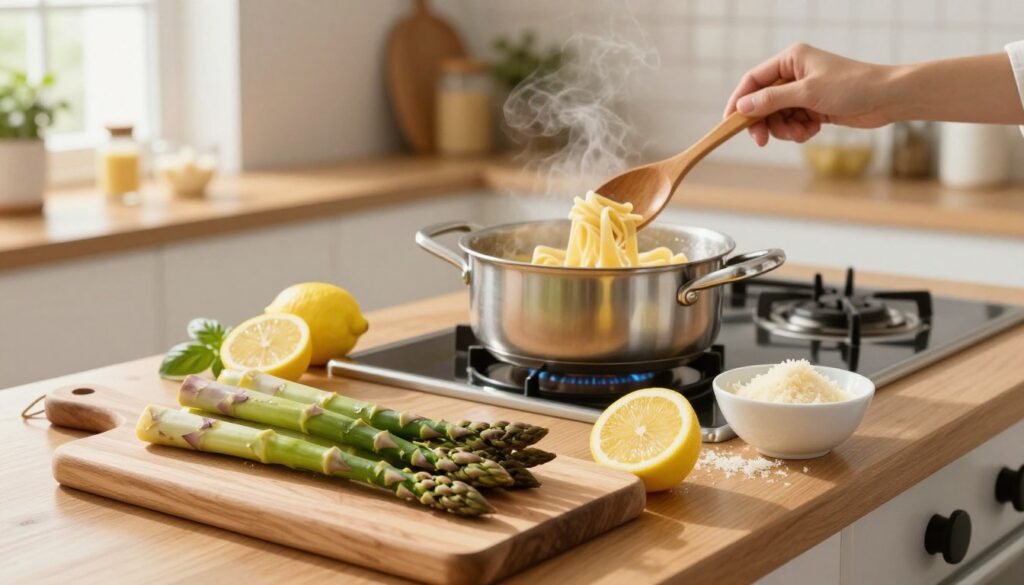
While your pasta cooks, prepare the asparagus. Trim the woody ends by snapping them where they naturally break. This simple method ensures you remove only the tough parts. Cut the remaining spears into 2-inch pieces for even cooking.
About 4 minutes before your pasta finishes, add the asparagus to the same boiling water. This blanching process keeps the spears tender-crisp instead of mushy. Your pasta and asparagus will finish cooking at the same time.
Prepare these steps while waiting:
- Zest 2 fresh lemons into a small bowl
- Squeeze juice from those same lemons
- Mince 3 garlic cloves into thin pieces
- Grate Parmigiano-Reggiano cheese
Reserve 1 cup of pasta water before draining. This starchy liquid helps create the creamy sauce that ties everything together in your easy lemon asparagus pasta recipe.
Best Amazon Picks:
Tips for Achieving the Creamiest Texture
Creating a creamy lemon asparagus pasta requires understanding two key cooking techniques. The secret lies in building an emulsion that coats every noodle with silky sauce. This approach uses starchy pasta water mixed with butter and cheese to form a luxurious coating. When done right, the best lemon asparagus pasta rivals dishes served in upscale Italian restaurants.
The process involves balancing acidity with richness. Fresh lemon brings brightness that cuts through heavy cream and butter. Getting this balance right transforms your dish from ordinary to exceptional.
Balancing Lemon Zest and Juice
Lemon provides two distinct flavor elements that work together:
- Lemon zest adds bright, aromatic notes without extra liquid
- Lemon juice brings sharp acidity that prevents the sauce from feeling heavy
Start with half a teaspoon of zest per serving. Add juice gradually, tasting as you go. Too much juice makes the sauce thin and sour. Too little leaves it flat and boring.
Emulsifying the Sauce Properly
An emulsion bonds fat and water into a smooth, creamy mixture. Follow these steps for success:
- Reserve one cup of starchy pasta cooking water before draining
- Melt butter in your pan over low heat
- Add pasta water one tablespoon at a time while stirring constantly
- Toss in grated Parmesan cheese slowly while mixing
- Add cooked pasta and asparagus to complete the creamy lemon asparagus pasta
Keep heat at medium or lower. High temperatures break the emulsion and create a greasy texture. Patience and constant movement create that restaurant-quality result you want.
Enhancing Flavor with Garlic and Parmesan
Garlic and Parmesan cheese are the secret weapons that transform your lemon asparagus pasta with garlic into a restaurant-quality dish. These two ingredients work together to create depth, warmth, and complexity that keep people coming back for more bites.
Garlic needs careful attention during cooking. When you sauté minced garlic, you want to release its essential oils without burning it. Burned garlic tastes bitter and ruins the entire dish. Keep your heat at medium and stir constantly for about 30 seconds to one minute. You will know the garlic is ready when it becomes fragrant and slightly golden.
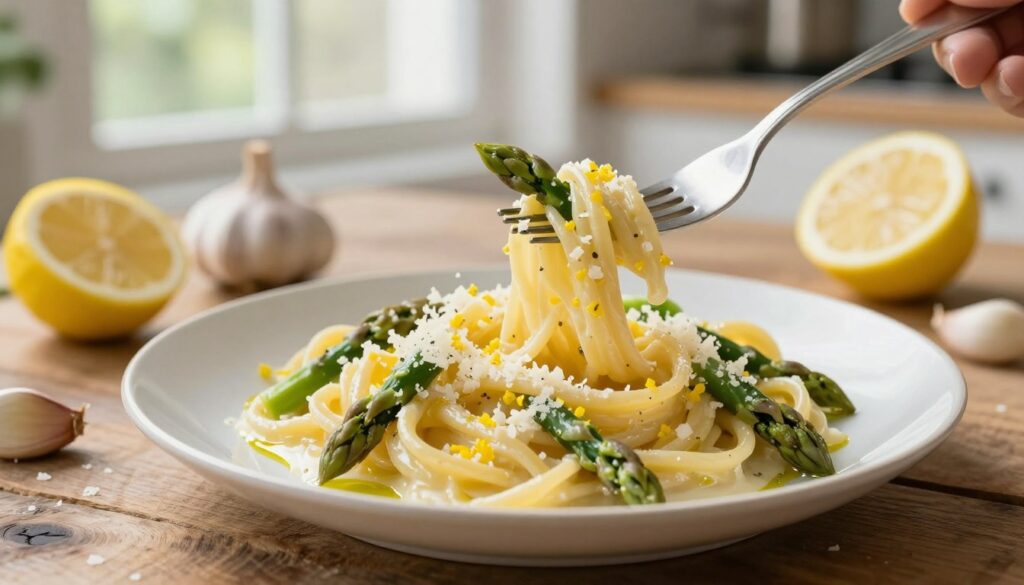
High-quality Parmesan cheese makes a real difference in your final dish. Look for authentic Parmigiano-Reggiano, which comes from specific regions in Italy. This cheese has a protected name that means it meets strict quality standards. The natural saltiness and nutty flavor of real Parmesan work perfectly with lemon asparagus pasta with Parmesan, adding richness without needing extra salt.
Here are the key steps for using these ingredients:
- Mince fresh garlic cloves into small, uniform pieces
- Add garlic to hot olive oil and watch it carefully
- Grate Parmesan fresh, never use pre-grated versions
- Stir Parmesan into the warm pasta off the heat
- Reserve some cheese for topping at the table
The combination of aromatic garlic and creamy Parmesan creates the perfect balance for your spring pasta dish.
Serving Suggestions for a Spring Meal
Your vegetarian lemon asparagus pasta deserves the perfect accompaniments to make it shine on the dinner table. The right pairings turn a simple pasta dish into a complete spring feast that impresses family and guests. Whether you want to keep things light or add heartiness, these serving ideas elevate your meal.
Pairing with Crusty Bread
Crusty bread is the perfect companion to your vegetarian lemon asparagus pasta. The creamy sauce clings beautifully to warm bread slices, letting you enjoy every drop of that rich lemon flavor. Consider these bread options:
- Ciabatta rolls with a golden, crispy crust
- Focaccia bread drizzled with olive oil
- Sourdough slices with a chewy interior
- Italian baguettes toasted until golden
Toast your bread lightly before serving to bring out its natural flavors and create a satisfying contrast to the tender pasta.
Adding Protein for a Hearty Dinner
Make your meal more filling by including lean proteins that complement the bright lemon flavors:
| Protein Option | Preparation Method | Flavor Profile |
|---|---|---|
| Grilled shrimp | Season and grill until pink | Delicate and slightly sweet |
| Pan-seared scallops | Sear in butter for 2 minutes per side | Buttery and tender |
| Roasted chickpeas | Toss with olive oil and spices, bake at 400°F | Nutty and satisfying |
| Grilled chicken breast | Season and grill until cooked through | Mild and versatile |
These proteins maintain the spring-inspired theme while keeping your vegetarian lemon asparagus pasta as the star of the plate. Choose what best fits your dietary needs and taste preferences.
Related Recipes:
- Chicken Fried Steak
- Sizzling Chicken Spaghetti
- Peanut Butter Chicken
- Tzatziki Chicken Bowls
- Chicken in Brandy Sauce
Conclusion
Making homemade lemon asparagus pasta at home is easier than you might think. This dish brings the fresh taste of spring right into your kitchen. By using quality ingredients and following the right steps, you can create a meal that feels both cozy and elegant. The techniques you learned in this guide will help you make a pasta dish that tastes restaurant-quality.
The key to success lies in paying attention to each step. Start with fresh asparagus and good pasta from trusted brands. Focus on getting the cream sauce smooth and silky. Balance your lemon juice and zest to get the right tangy flavor. Add garlic and Parmesan cheese to boost the taste even more. These small details make a big difference in your final dish.
Do not be afraid to make this homemade lemon asparagus pasta your own. Try different pasta shapes or adjust the lemon flavor to match what you like. Experiment with the cooking times until you find what works best for you. The more you cook it, the better you will become at making it.
You now have all the skills needed to create a wonderful spring meal. Serve it with crusty bread or add protein on the side for a heartier dinner. Enjoy the process of cooking with fresh spring vegetables. Your family and friends will love sharing this delightful dish with you.