This post may contain affiliate links. If you purchase through these links, we may earn a commission at no extra cost to you.
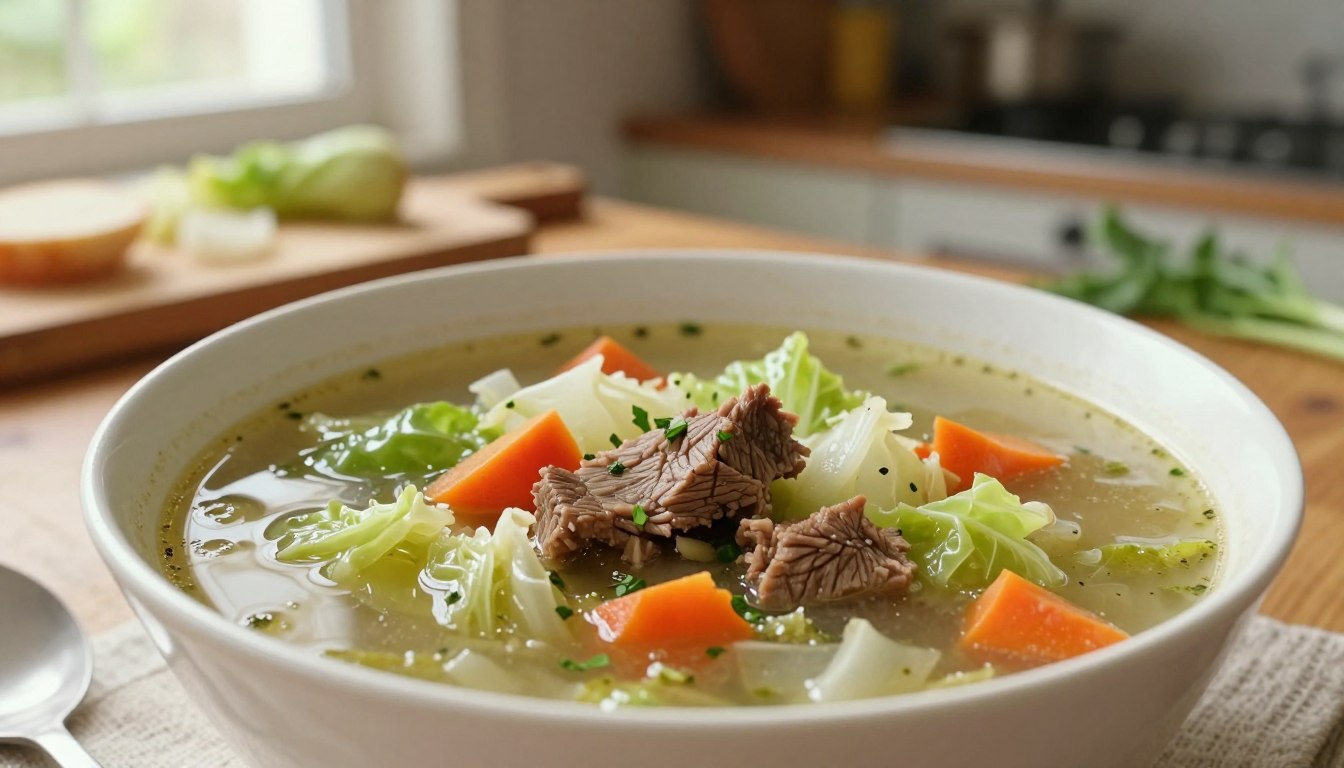
There’s nothing like a warm bowl of soup on a cold day. It feels like a hug in a bowl. Cabbage beef soup brings that cozy feeling with every spoonful.
This classic dish has been a staple in American homes for years. It’s a meal that brings families together. Your kitchen will fill with inviting aromas, making it the perfect dinner.
When you make cabbage beef soup at home, you control what goes in. You avoid processed additives and make something your family will love. Fresh veggies, quality beef, and savory broth come together to create something amazing.
You don’t need to be a pro to make this soup. Just follow the steps in this article. You’ll learn how to make a delicious, comforting bowl of soup. The USDA-approved methods ensure it’s both healthy and tasty.
Your kitchen is about to become a cozy haven. Let’s make something special together.
Table of Contents
Why You Will Love This Hearty Cabbage Soup Recipe
A hearty cabbage soup recipe is perfect for busy weeknights. It’s a nourishing meal that’s quick to make but full of flavor and nutrition. It brings warmth and satisfaction to your family’s dinner.
The magic of this soup is in its simple yet powerful mix. Savory beef and tender cabbage create layers of flavor. The broth gets richer and more complex as it simmers.
This meal is great for those watching their budget. You can make it with pantry staples and a few cheap ingredients from the grocery store.
Health Benefits You Can Control
By making your own hearty cabbage soup, you control what’s in your bowl. You can manage sodium, fat, and choose quality ingredients. This beats processed canned soups with hidden additives and too much salt.
- Fresh vegetables packed with vitamins and minerals
- Lean beef providing protein and iron
- Natural broth without artificial preservatives
- Customizable seasoning to your taste preferences
- Family-friendly meals made from scratch
With every spoonful, you give your family wholesome nutrition.
Essential Ingredients for Your Homemade Cabbage Soup
Creating a tasty homemade cabbage soup begins with the right ingredients. What you choose at the store or market will affect the soup’s taste and health. It’s important to pick quality ingredients for a soup that’s both fresh and fulfilling.
The success of your soup depends on the ingredients you use. Choosing the best ingredients sets you up for a great dish.
Selecting Fresh Produce
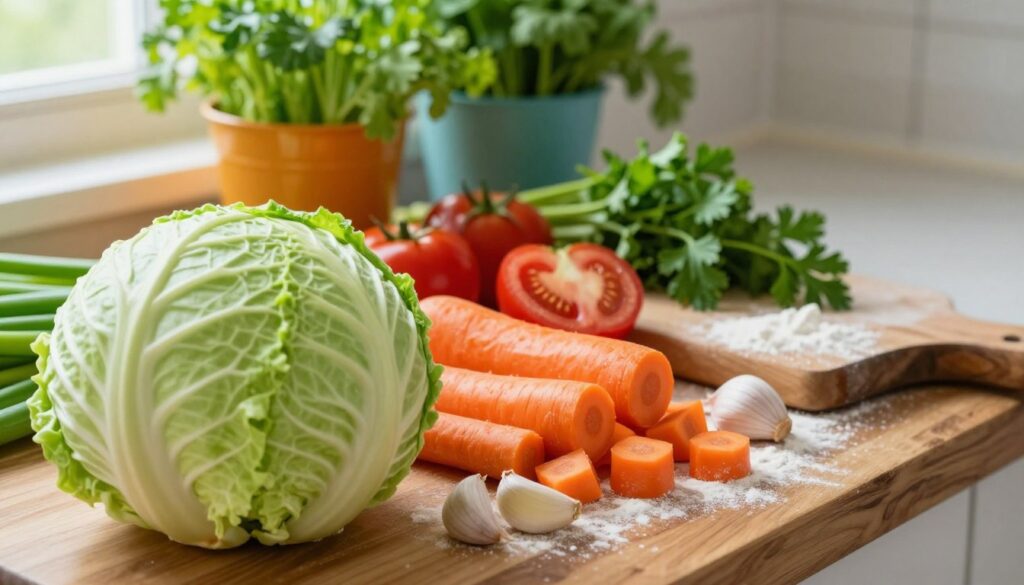
When buying vegetables, look for firm green cabbage. It should feel heavy and have tight, unblemished leaves. For the freshest options, visit your local farmers market.
You’ll also need:
- Carrots that are bright orange and firm
- Celery stalks without wilting or browning
- Onions with papery skin and no soft spots
- Garlic cloves that are compact and dry
- Tomatoes or tomato paste for depth
Choosing Quality Beef Cuts
Choose beef cuts that break down well when cooked. Chuck roast and stew meat are perfect for a tender texture.
| Beef Cut | Best For | Cooking Time |
|---|---|---|
| Chuck Roast | Rich, deep flavor | 2-3 hours |
| Stew Meat | Tender, bite-sized pieces | 1.5-2 hours |
| Brisket | Hearty, robust taste | 2.5-3 hours |
Opt for beef with good marbling (white fat). This fat adds flavor as it melts during cooking. Quality beef makes your cabbage soup richer.
If you enjoy simple homemade comfort meals like this Cabbage Beef Soup, you might also love these easy recipes:
How to Prepare the Best Cabbage Beef Soup
Making an easy beef cabbage soup is simple. It starts with basic steps that turn simple ingredients into a delicious dish. You’ll learn a method that builds flavor at every step.
Begin by searing your beef in a large pot over medium-high heat. Brown the meat on all sides until it’s golden. This step locks in juices and sets the flavor base for your soup.
Building Your Flavor Base
After browning the beef, pour in your broth to deglaze the pot. Use a spoon to scrape up the flavorful bits stuck to the bottom. These bits add incredible taste to your soup.
Next, add your aromatics. Put in diced onions, minced garlic, and sliced carrots. Let them cook until they soften and release their oils.
Adding Your Vegetables
Now, add your chopped cabbage to the pot. Stir everything together so the vegetables are evenly distributed. This ensures every spoonful has balanced flavors and textures.
- Bring the mixture to a boil
- Reduce heat to low
- Cover and simmer until beef becomes tender
- Season with salt, pepper, and herbs to taste
You’ve just made a professional-quality soup that’s easy to make at home.
Tips for Achieving the Perfect Texture
Getting the right texture in your delicious cabbage soup with beef is more than just throwing ingredients in a pot. Your cooking technique is key to creating a soup that tastes amazing and has the right consistency. Understanding how heat, time, and liquid work together is crucial.
Cooking your soup requires close attention and smart adjustments. You want the cabbage to stay tender but not fall apart, and the beef to be soft and easy to chew. This balance takes practice, but once you understand the basics, you’ll make perfect soup every time.
Managing Simmering Times
The heat level you use is crucial. A rolling boil can break down the cabbage too fast, making it mushy. Instead, keep your soup at a gentle simmer. Small bubbles should rise slowly to the surface, not rapidly boil over.
- Watch your pot regularly during the first 20 minutes
- Keep the temperature steady and even
- Reduce heat if you see aggressive boiling
- Plan for 45 to 60 minutes of simmering time for beef to become tender
Balancing Broth Consistency
Your broth thickness affects how your soup tastes and feels. Too much liquid makes the soup thin and weak. Not enough liquid leaves vegetables dry and tough. You control this by letting your soup simmer uncovered, which allows water to escape naturally and thickens the broth.
| Consistency Level | What It Means | How to Fix It |
|---|---|---|
| Too Thin | Broth looks like water with floating ingredients | Simmer longer without a lid or add a small amount of cornstarch mixed with water |
| Too Thick | Broth looks heavy and sticks to the spoon | Add more beef broth or water in small amounts |
| Just Right | Broth coats vegetables lightly and tastes rich | Maintain current heat and continue cooking until beef is tender |
When making adjustments to your soup, do it slowly. Add small amounts of liquid or allow extra simmering time rather than making big changes all at once. This way, your delicious cabbage soup with beef stays balanced and tastes great.
Best Amazon Picks:
Variations for a Healthy Beef Cabbage Soup
You can make your healthy beef cabbage soup in many ways. It’s all about what you like and what fits your diet. This classic dish is very flexible. You can pick what goes into your bowl, keeping it comforting.
Think about adding seasonal veggies you like. Fresh kale, bell peppers, or diced tomatoes add nutrients and flavor. They mix well with the beef and cabbage you already enjoy.
Boost Your Soup With Extra Fiber and Protein
Legumes can elevate your soup. Try these:
- Kidney beans for a hearty texture
- Lentils for earthy flavor
- Black beans for a different twist
- Chickpeas for extra crunch
These ingredients complement beef and cabbage well. They boost fiber and plant-based protein, making your soup more filling.
Create a Lighter Version
For a leaner soup, use lean ground turkey instead of beef. This reduces calories but keeps it satisfying. You can also add more veggies and less meat. This makes your soup lighter without losing its essence.
| Base Ingredient | Best For | Flavor Profile |
|---|---|---|
| Ground Beef | Traditional taste | Rich and savory |
| Ground Turkey | Lighter option | Mild and clean |
| Extra Vegetables | Plant-forward style | Fresh and vibrant |
These changes let you enjoy the soup’s comfort while fitting your lifestyle.
Utilizing Your Slow Cooker for Cabbage and Beef Stew
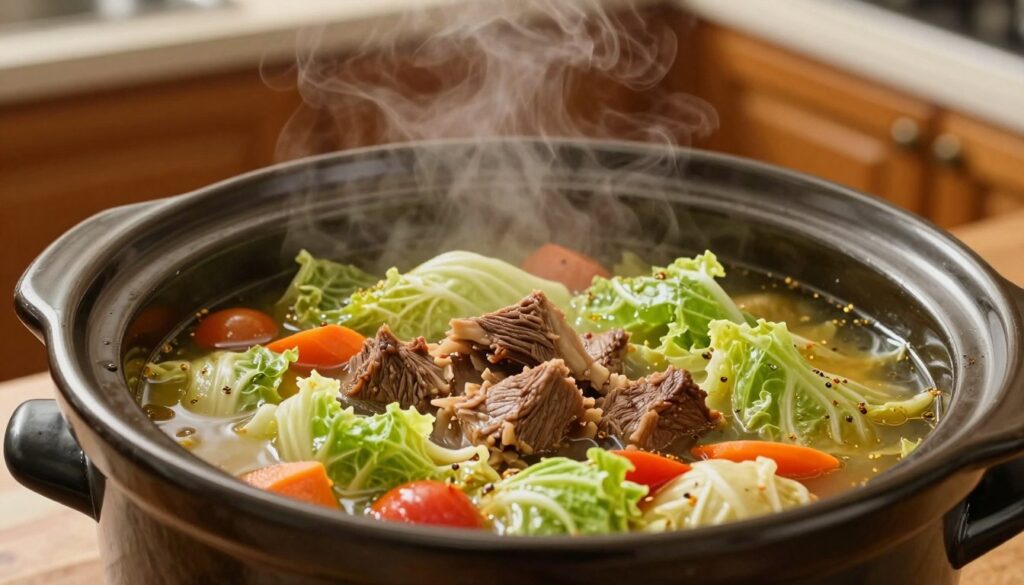
A slow cooker turns your cabbage and beef stew into a comfort food masterpiece. It’s easy to make. Just prep in the morning and come home to a hot meal. The slow cooker’s heat builds flavors over hours, making it richer than stovetop cooking.
Low-and-slow cooking makes your soup tender and full of flavor. It tenderizes even the toughest beef cuts. The moisture inside the cooker makes every bite taste amazing.
Setting the Temperature
Choosing the right temperature is key for your slow cooker. You have two options:
- Low setting: Cooks for 8-10 hours, producing the most tender results
- High setting: Cooks for 4-5 hours, useful when you need dinner faster
For beef, low heat is best. It makes the meat tender, not tough. Most recipes suggest low heat for the best taste and texture.
Layering Flavors for Depth
How you arrange ingredients affects cooking and taste. Layer them wisely:
| Layer Position | Ingredients | Reason |
|---|---|---|
| Bottom | Root vegetables (carrots, potatoes, onions) | Longer cooking time needed; creates flavorful base |
| Middle | Beef cubes or chunks | Cooks evenly; releases savory juices into broth |
| Top | Cabbage pieces | Shorter cooking time; prevents turning to mush |
This way, everything cooks perfectly. Vegetables soften, beef gets tender, and cabbage stays crisp. It’s a soup with deep, balanced flavors, like you spent hours cooking.
Related Recipes:
Conclusion
Learning the best cabbage beef soup recipe can transform your kitchen into a cozy haven. This classic dish offers warmth and nourishment with simple, wholesome ingredients. You’ve discovered how to pick the best produce and beef, making a big difference in your soup.
The techniques you’ve learned offer various ways to make your soup. You can simmer ingredients on the stovetop or use a slow cooker for convenience. Both methods ensure delicious results if you focus on simmering times and broth consistency. Your choice depends on your lifestyle.
Now, you can make this cozy classic whenever you like. You can tweak flavors and textures to suit your taste. Your kitchen will be filled with amazing aromas as your soup cooks. Share these meals with your loved ones and enjoy their smiles. Keep improving your cooking skills with each attempt.