


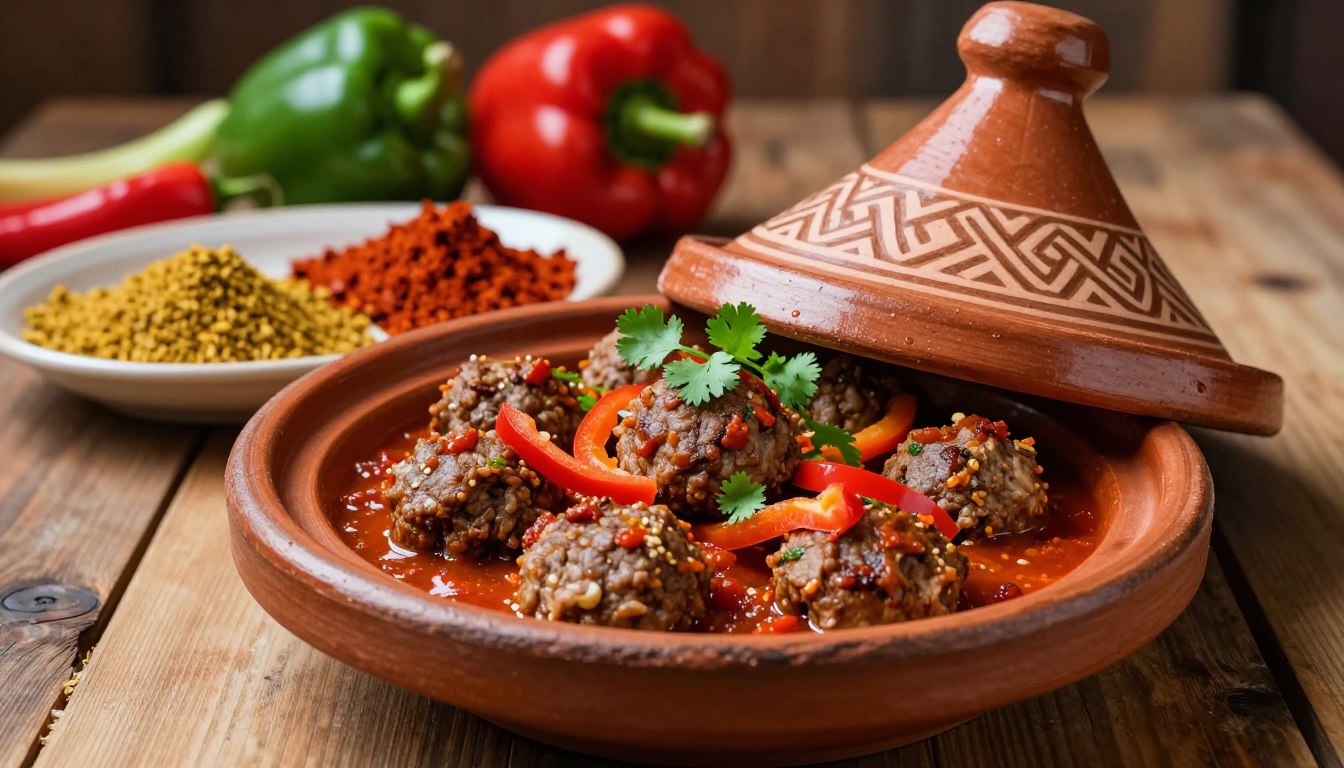
There’s something magical when you lift the lid of a clay pot. The smell of rich spices fills the air, taking you to Morocco. Tajine kefta is a dish that brings centuries of tradition to your table. Learning to make it connects you to a culture that values patience, flavor, and togetherness.
Preparing tajine kefta at home is more than cooking a meal. It’s a way to connect with families who have mastered this dish for generations. This North African classic is the heart of Moroccan cooking, blending aromatic spices with fresh ingredients for a memorable taste.
This guide will show you how to make authentic tajine kefta at home. You’ll learn to balance spices, shape meatballs, and create a sauce that tastes like Marrakech. Your kitchen will smell like a Moroccan spice bazaar, and your table will tell a story of flavor and tradition.
Understanding the Essence of Moroccan Meatball Tagine
The Moroccan meatball tagine is more than just a meal. It’s a symbol of Moroccan culture and community. When you make it, you connect with North Africa’s culinary past. It brings families together, creating warmth and connection.
Learning about this dish means diving into Moroccan food culture. You’ll see how families share recipes, adding their own flair while keeping the essence. This makes each meal special.
Exploring the Cultural Roots of the Dish
The traditional tajine kefta comes from Berber cooking traditions. These traditions focus on slow cooking, which creates deep flavors. Berbers knew that slow cooking tenderizes meat and blends spices beautifully.
Clay pots, or tagines, are key to this cooking method. They spread heat evenly and keep food moist. This shows the wisdom of traditional cooking practices.
Why This Recipe Remains a Staple in Moroccan Homes
The Moroccan kefta tajine is loved for good reasons:
- Affordable ingredients like ground beef and tomatoes
- Simple preparation methods accessible to home cooks
- Rich, satisfying flavors that please all family members
- Flexibility to adjust spices based on personal preferences
- Long shelf life when stored properly
You can make this meal with common ingredients. It’s great for busy nights or family gatherings. The slow cooking and spices turn simple ingredients into something amazing.
Essential Ingredients for Your Tajine Kefta
To make a tasty tajine kefta, start with the right ingredients. Your kefta tajine recipe needs quality parts that blend for true Moroccan tastes. Choosing fresh, top-notch items is key to a great dish.
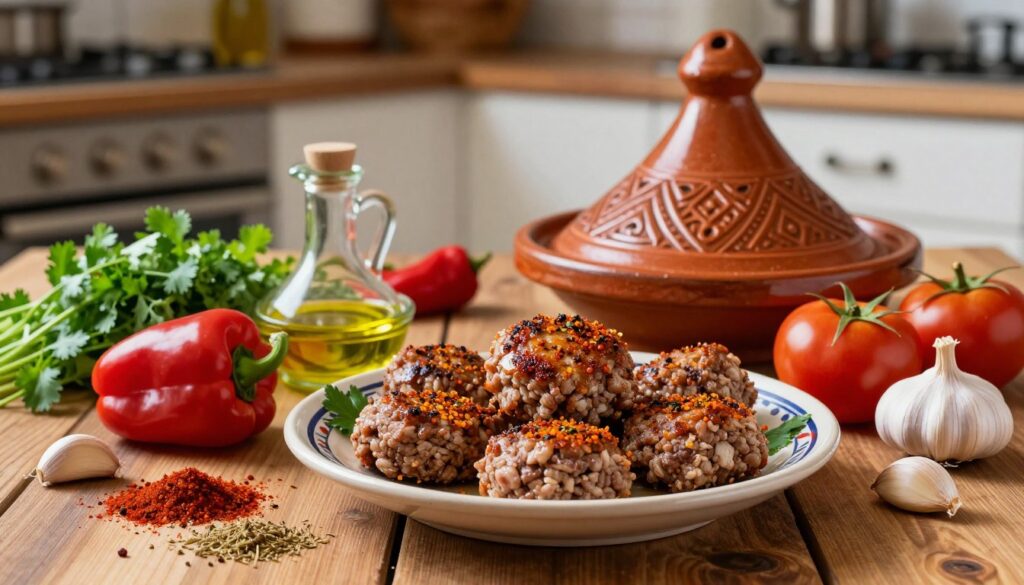
The base of any tajine de kefta is your protein. Use ground beef or lamb for juicy meatballs. Ground lamb gives a traditional taste, while beef is milder.
Core Ingredients You’ll Need
- Ground beef or lamb (1.5 to 2 pounds)
- Fresh onions (2 medium, finely chopped)
- Garlic cloves (4 to 5, minced)
- Fresh cilantro (1/2 cup, chopped)
- Fresh parsley (1/4 cup, chopped)
- Ground cumin (1 to 2 teaspoons)
- Paprika (1 teaspoon)
- Salt and black pepper (to taste)
- Fresh tomatoes or tomato sauce (1 to 1.5 pounds)
- Olive oil (2 tablespoons)
Spices are vital in your tajine kefta. Cumin and paprika give a strong aroma. Fresh cilantro and parsley add a bright taste. Onions and garlic make the sauce rich and deep.
When making your tajine de kefta, pick fresh, seasonal items. Fresh herbs and veggies make your dish lively and bold, just like Moroccan food. This focus on quality turns a simple recipe into a memorable meal.
If you enjoy simple homemade comfort meals like this tajine kefta , you might also love these easy recipes:
Preparing the Flavorful Tomato Base
The heart of a great Moroccan meatball tagine is its tomato base. This sauce infuses every meatball with rich flavors. Building this base takes time, but it’s worth it. Your patience here will make the final dish better.
Begin by heating olive oil in your clay pot over medium heat. Add diced onions and minced garlic, cooking until they’re soft and golden. This takes about five minutes. Then, pour in crushed tomatoes and let them transform. This is where the magic starts.
Selecting the Best Spices for Your Sauce
Spices are the soul of your best tajine kefta recipe. The right mix adds warmth and complexity. Here are the essential spices for your sauce:
- Cumin for earthy warmth
- Paprika for subtle sweetness
- Cinnamon for depth and intrigue
- Ginger for gentle heat
- Turmeric for golden color
- Cayenne for a touch of spice
Add your spices slowly, stirring well. This lets each spice enhance the sauce. Let the sauce simmer for at least twenty minutes. This slow cooking blends flavors perfectly.
Achieving the Perfect Consistency in Your Clay Pot
Your clay pot is key to success. It distributes heat evenly and prevents burning. Keep the heat low, so the sauce bubbles softly.
If the sauce is too thin, simmer it uncovered. If it’s too thick, add water or tomato juice. You want a sauce that coats the meatballs well without being too runny. This balance makes the dish authentic and delicious.
Shaping and Cooking the Perfect Meatballs
Making tender meatballs is an art that needs a light touch and patience. When shaping your meat mix, don’t overwork it. Press the ingredients together gently until they just hold their shape. This way, your meatballs will be soft and not tough.
Fresh herbs add a lot to your meat mix. Mix parsley and cilantro into the beef before shaping. These herbs balance the meat’s richness, making each bite better.
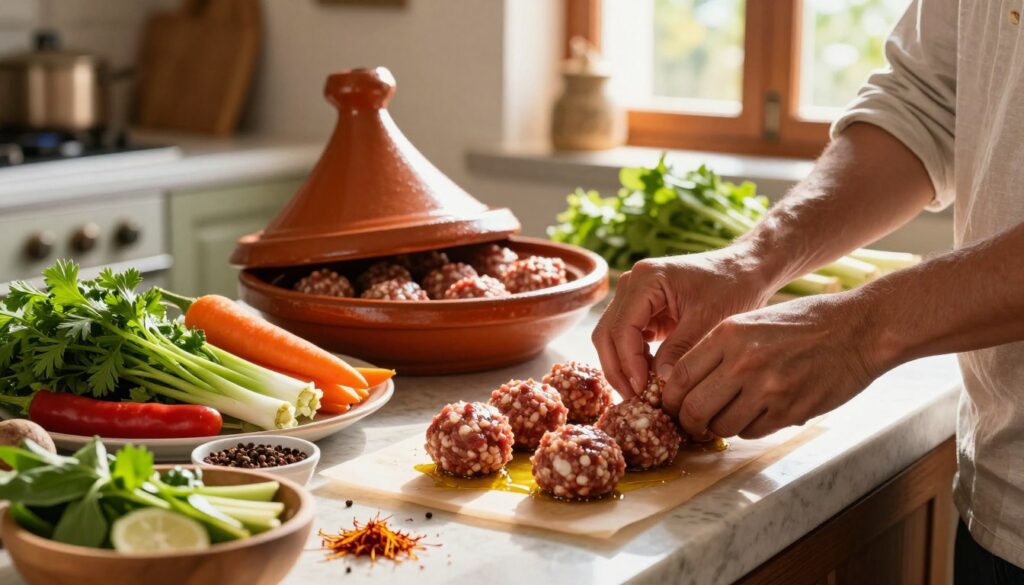
After shaping, cook your meatballs gently. Place them in the simmering tomato sauce. The sauce should barely bubble, not boil. This slow cooking keeps your meatballs moist and flavorful.
Best Amazon Picks:
Cooking Times and Temperature Guidelines
Watch your meatballs as they cook in the sauce. They need time to cook fully and soak up flavors.
| Meatball Size | Cooking Time | Internal Temperature | Texture Result |
|---|---|---|---|
| Small (1 inch) | 12-15 minutes | 160°F | Tender, quick cooking |
| Medium (1.5 inches) | 18-20 minutes | 160°F | Balanced texture, ideal |
| Large (2 inches) | 25-30 minutes | 160°F | Rich, hearty bite |
Tips for Perfect Results
- Use a meat thermometer to check doneness without cutting into meatballs
- Keep sauce temperature between 180-190°F for gentle cooking
- Avoid stirring frequently; let meatballs settle into the sauce
- Test one meatball before serving to confirm tenderness
Being patient pays off with meatballs that are tender and flavorful. Following these steps ensures your kefta tajine is a hit with every bite.
Serving Suggestions for an Authentic Experience
Serving your traditional tajine kefta in a clay pot makes a big difference. It keeps your meal warm and adds to the authentic feel. The sauce and meatballs stay just right, enhancing every bite.
Choosing the right sides and garnishes can make your meal special. Think about what goes well with the spices in your kefta tajine. The right choices can reveal new flavors.
Pairing Your Meal with Fresh Crusty Bread
Fresh, crusty bread is perfect for your tajine. It’s great for scooping up sauce and meatballs. Try using khobz, ciabatta, or a warm baguette.
- Khobz absorbs the flavorful sauce beautifully
- Crusty exterior provides satisfying texture contrast
- Warm bread complements the hot tajine perfectly
- Bread lets you eat with your hands, staying true to tradition
Adding Traditional Garnishes for Extra Flavor
Adding the right touches can make your dish unforgettable. A drizzle of extra virgin olive oil adds richness. Fresh cilantro adds a burst of freshness that cuts through the spices.
| Garnish | Flavor Profile | Best Use |
|---|---|---|
| Extra Virgin Olive Oil | Rich and fruity | Drizzle around the edge of the pot |
| Fresh Cilantro | Bright and herbaceous | Scatter over the top before serving |
| Lemon Wedges | Tart and zesty | Squeeze over individual servings |
| Toasted Sesame Seeds | Nutty and crunchy | Sprinkle as a finishing touch |
These simple additions are the perfect finishing touch. Cilantro and olive oil balance the spices beautifully. Your guests will appreciate the extra effort you put into serving this meal.
Related Recipes:
Conclusion
Learning to make Moroccan kefta tajine brings the warmth of a Moroccan kitchen into your home. This dish is a treasure passed down through generations. It connects you to a rich cultural heritage.
By following our steps, you’ve learned to make an authentic kefta tajine. You know how to mix bold spices with simple ingredients. You also know how to choose the right meat and cook it perfectly in a clay pot.
This knowledge is more than just a recipe. It’s a starting point for exploring more Moroccan dishes. We hope this guide inspires you to keep exploring Moroccan cooking. Each time you make this dish, you get better at cooking. Your family and friends will love the delicious meals you create.
FAQ
What exactly is tajine kefta and where does it come from?
Tajine kefta is a traditional Moroccan dish. It’s a meatball tagine that comes from Berber traditions. This dish is a key part of North African food culture.
The name “tajine” comes from the clay pot it’s cooked in. This pot is a symbol of Moroccan cooking. Tajine kefta has been passed down through generations in the Maghreb region.
Why does the Moroccan meatball tagine remain so popular in modern kitchens?
This dish is loved because it’s made with affordable ingredients. Ground beef and tomatoes create a rich flavor. It’s also a slow-cooked dish that tenderizes meat and spices.
It’s easy to make at home. You don’t need special skills. It reminds people of the bustling markets in Marrakech.
What are the essential ingredients needed for the best tajine kefta recipe?
You need high-quality ground beef or lamb for the meatballs. Chopped onions and garlic are key for the sauce. Spices like cumin and paprika add flavor.
Don’t forget fresh cilantro and parsley. They add brightness. Seasonal produce and crushed tomatoes complete the dish. The quality of spices makes a big difference.
How do you achieve the perfect consistency in your clay pot when making tajine de kefta?
The secret is slow cooking the tomato base. This lets spices infuse into the sauce. Start with sautéed onions and garlic, then add tomatoes and spices.
Use a clay pot for even heat. This prevents burning. A gentle simmer is key to a rich sauce that coats the meatballs perfectly.
What technique should you use when shaping meatballs for your authentic kefta tajine?
Handle the meat gently to keep the meatballs tender. Mix in fresh parsley and cilantro for extra flavor. Shape the meatballs carefully.
Place them in the simmering sauce. This way, they cook evenly and absorb the spices. This method ensures tender, flavorful meatballs.
How should you serve traditional tajine kefta for an authentic experience?
Serve it straight from the clay pot to keep it warm. Pair it with fresh bread, like khobz. This bread is great for scooping up the sauce and meatballs.
Adding a drizzle of olive oil or fresh cilantro adds freshness. These touches enhance the dish’s flavors.
Can you explain the difference between making tajine kefta in a traditional clay vessel versus modern cookware?
Traditional clay pots distribute heat evenly. This prevents hot spots that can burn the dish. The clay also keeps the meatballs moist.
Modern pots can substitute, but they don’t have the same heat distribution. Using clay is key to authentic flavor and texture.
What spices are most important in a successful Moroccan meatball tagine?
Cumin and paprika are essential. They form the base of the dish’s flavor. Ginger, cinnamon, and turmeric add warmth and depth.
Fresh herbs like cilantro and parsley add brightness. The right balance of spices is crucial for authentic Moroccan flavor.
How long should your tajine de kefta simmer to achieve optimal flavor?
Simmer it for 30 to 45 minutes. This allows the flavors to develop and the meatballs to cook evenly. Rushing the cooking can result in tough meatballs and underdeveloped sauce.
The slow heat is important for a rich, velvety sauce. This is what makes the dish special.
What type of meat is best for preparing an authentic kefta tajine?
Use high-quality ground beef or lamb. The fat content is important for keeping the meatballs moist. Ground lamb is traditional and adds a gamey flavor.
Ground beef is more accessible and milder. Many use a mix of both for the best flavor and texture.
Can you make tajine kefta in advance, and does it reheat well?
It’s better when made a day or two in advance. The flavors meld together beautifully. It reheats well, keeping the meatballs tender and flavorful.
This makes it perfect for meal planning and entertaining. You can prepare it ahead and reheat when ready.
What garnishes complement your Moroccan meatball tagine best?
Extra virgin olive oil and fresh cilantro are traditional. Roasted sesame seeds add a nutty crunch. Preserved lemon adds a citrus note.
Adding sliced peppers or toasted almonds can also enhance the dish. These garnishes honor the traditional way of serving.
Is it necessary to use a clay tagine pot for how to make tajine kefta authentically?
While clay is ideal, it’s not necessary. A heavy-bottomed pot can substitute. The key is to use low, gentle heat.
Clay enhances the experience and results. If you’re new to making tajine kefta, start with what you have. Focus on technique and ingredients, then invest in clay for future dishes.
