


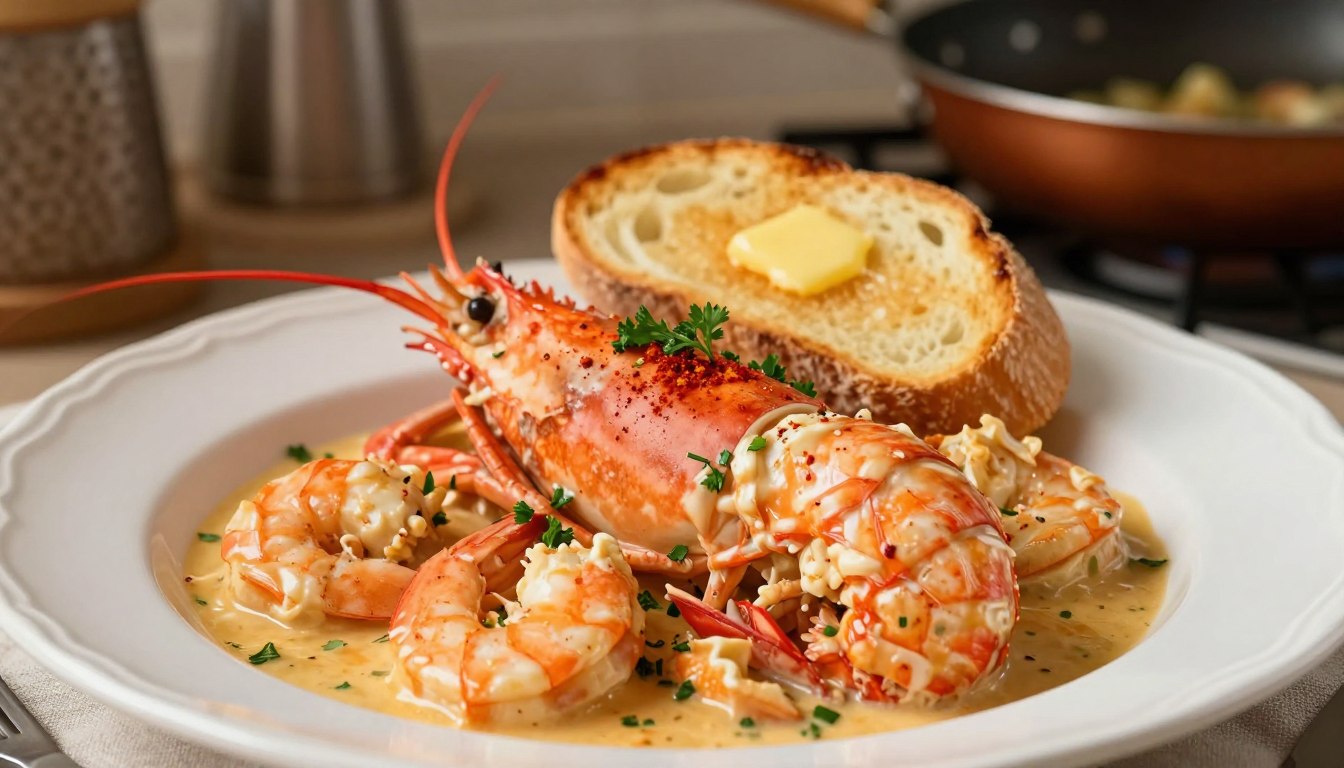
Enjoy a restaurant-quality meal at home with delicious seafood newburg. You can prepare it in about 45 minutes.
This elegant yet manageable dinner features tender protein in a rich, velvety cream sauce. Imagine surprising your family tonight with a dish that looks sophisticated but feels easy to make.
This practical, step-by-step guide explains each stage of the cooking process. You will learn to choose ingredients, prepare proteins, build savory aromatics, and make a classic roux-based sauce.
You will also learn sherry seasoning, careful egg-yolk tempering, final assembly, serving suggestions, and proper storage. For seafood newburg, careful temperature control keeps seafood tender and the sauce silky smooth.
Key Takeaways
- Prepare this gourmet dinner in just 45 minutes at home.
- Master the art of creating a rich and velvety cream sauce.
- Learn proper temperature control to keep your seafood tender.
- Understand the secret to tempering egg yolks without curdling.
- Follow step-by-step instructions from ingredient selection to storage.
What Is seafoof newburg?
Seafood Newburg is a rich American classic made with tender shellfish in a velvety sherry cream sauce. Fresh seafood, butter, shallots, heavy cream, and savory sauce create its deep flavor. You will find that this iconic creamy seafood dish balances luxury with comfort.
The finished creamy seafood dish should look glossy and smooth, never too heavy. Lemon and spices add bright flavor and keep each bite enjoyable.
Understand the classic American seafood dish
This historic recipe began in upscale dining rooms and soon became popular for special occasions. Simple cooking techniques can help you recreate that gourmet experience in your own kitchen.
Plan the cooking process
You can prepare this entire meal in one large skillet in about 45 minutes. Remember, gentle cooking is essential because delicate seafood can become tough or rubbery under high heat.
Gather the Ingredients and Equipment
Crafting any gourmet seafood dish requires good planning before turning on the stove. Success depends on measuring every component before cooking.
Choose the seafood for your Newburg
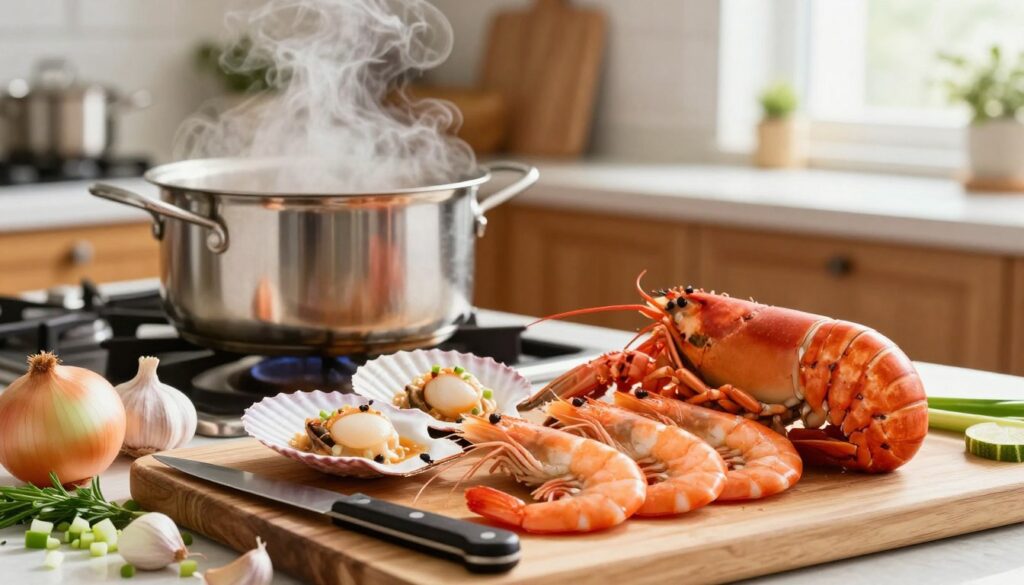
Plan to use about one and a half to two pounds of cooked seafood for your recipe. Choose traditional lobster meat for authentic flavor, or mix in shrimp, scallops, and crab. Check that all seafood is fresh, properly thawed, and free from excess water or unusual odors.
Measure the sauce ingredients
Set out unsalted butter, a finely minced shallot, and all-purpose flour for the base. You also need seafood stock, heavy cream, dry sherry, and fresh egg yolks. Keep salt, black pepper, paprika, and a tiny dash of cayenne nearby for seasoning.
Prepare the necessary equipment
Gather a large skillet, a whisk, a wooden spoon, measuring cups, a sharp chef knife, and a cutting board. An instant-read thermometer helps you monitor temperatures closely. You may also want a fine-mesh strainer to make the sauce smooth and lump-free.
Prepare the Seafood and Aromatics
Preparing your components is central to any savory seafood recipe. Good organization helps control cooking times and gives your sauce the right consistency. Careful handling prevents common kitchen mistakes.
Step 1: Thaw, drain, and cut the seafood
Thaw frozen seafood completely in the refrigerator before cooking. Drain it well, then gently pat the pieces dry with paper towels. Never add icy or watery ingredients directly to the pan.
Prevent excess moisture
Excess water can thin your sherry cream sauce and weaken its delicate oceanic taste. Do not rinse cooked crab or lobster unless necessary; rinsing removes vital flavor. Cut large lobster pieces, scallops, or crab portions into similar, manageable sizes for even cooking.
Step 2: Prepare the vegetables and seasonings
Start your flavor profile by finely mincing a shallot or sweet onion. Measure paprika, cayenne pepper, black pepper, fresh lemon juice, and optional Worcestershire sauce beforehand. This preparation makes a complex cooking process feel smooth and orderly.
Build balanced flavor
Each seasoning has a clear role in your savory seafood recipe. Shallots add gentle sweetness; paprika brings vibrant color and mild warmth; cayenne gives controlled heat; black pepper adds sharpness. Lemon creates bright contrast against rich cream, so season lightly because seafood stock and butter may contain hidden salt.
Make the Sherry Cream Sauce
For an unforgettable seafood dinner, whisk a silky sherry cream sauce in the same skillet you will use for seafood. Control the heat and stir steadily to keep the sauce smooth and luxurious.
Step 3: Sweat the shallot in butter
Melt your unsalted butter over medium-low to medium heat in a large skillet. Add the finely minced shallot and sweat it gently until soft and translucent. Do not brown it aggressively; seek a sweet, subtle flavor instead of a caramelized one.
Step 4: Create the roux
Sprinkle flour over the softened shallot and melted butter. Stir constantly with a wooden spoon or wire whisk until a smooth paste, called a roux, forms. Cook it briefly to remove the raw flour taste, keeping the heat moderate so it stays pale.
Step 5: Add the stock and cream gradually
Pour warm seafood stock or milk into the pan in small splashes, whisking well after each addition. This gradual method prevents flour lumps and builds a stable, cohesive base. When the liquid thickens, lower the heat and slowly add heavy cream.
Do not boil it hard; high heat can separate dairy and ruin the texture.
Keep the sauce smooth
The finished sauce should coat the back of a spoon while staying fluid enough to cover your seafood. If tiny lumps form, remove the pan from heat and push the sauce through a fine-mesh strainer. Keep the sherry cream sauce glossy and even before adding the final seasonings.
| Issue | Primary Cause | Corrective Action |
|---|---|---|
| Lumpy texture | Liquid added too fast | Strain through a fine-mesh sieve |
| Raw flour taste | Inadequate cooking time | Simmer gently for two more minutes |
| Separated sauce | Excessive heat applied | Whisk in a splash of warm cream off heat |
Finish the Seasoning and Temper the Egg Yolks
Making a truly remarkable savory seafood recipe starts with careful seasoning. Add alcohol and spices to deepen the creamy base. This step turns a basic white sauce into an authentic culinary classic.
Add sherry and spices
Your alcohol choice shapes the dish’s final aroma. Add it at the right time so harsh alcohol burns off, leaving rich, complex notes.
Choose the right sherry
Choose dry or medium-dry sherry for this savory seafood recipe. It adds nutty, savory depth without sweetening the sauce or hiding seafood’s natural flavor. Measure the sherry, then add paprika, black pepper, and a pinch of cayenne.
If sherry is unavailable, replace it with seafood stock, clam juice, or a small amount of dry white wine. These substitutes slightly change the flavor profile. Always taste your sauce carefully at this stage, because stock and shellfish may already contribute a high level of salt.
Step 7: Temper the egg yolks
That signature velvety texture comes from egg yolks, but they must not scramble. Cold eggs added directly to hot liquid can ruin the dish, so warm them slowly.
Avoid curdling
Whisk your egg yolks thoroughly in a separate bowl. Slowly drizzle a small amount of hot cream sauce into the yolks while whisking continuously. This process safely raises the yolks’ temperature.
Return the tempered yolk mixture to the main pan and stir constantly over low heat. High heat can curdle the eggs and make the cream sauce separate. Your sauce should stay smooth and glossy, with enough thickness to lightly cling to a spoon.
| Technique Element | Recommended Action | Risk to Avoid |
|---|---|---|
| Sherry Selection | Use dry or medium-dry sherry | Avoid sweet cooking wines |
| Egg Tempering | Whisk hot sauce into yolks slowly | Avoid scrambling with high heat |
| Heat Control | Maintain low, steady warmth | Never let the sauce boil aggressively |
If your sauce begins to bubble aggressively, remove the pan from the heat immediately and continue stirring. Proper execution creates a balanced, rich, and expertly seasoned savory seafood recipe.
Combine and Cook the Seafood Newburg
Now, combine your succulent seafood newburg components into one harmonious dish. Each prepared element helps create a rich, velvety masterpiece.
Step 8: Fold the seafood into the sauce
Gently fold the prepared seafood into the finished sauce instead of stirring it roughly. Add your lobster, shrimp, scallops, or crab combination directly to the warm pan. Heat everything gently until the seafood is hot throughout.
Your seafood is already fully cooked. Focus on warming and coating it, not prolonged cooking. Keep the burner on low, and never let the mixture boil.
Adjust the final consistency
Your sauce may need a quick adjustment before serving. If it seems too thick, add warm stock, milk, or cream one tablespoon at a time. Stir gently until it becomes smooth and spoonable.
If the sauce is too thin, simmer it briefly over low heat. Keep bubbling to an absolute minimum.
Step 9: Taste and make final adjustments
Sample your seafood newburg before plating it for guests. Adjust the salt, black pepper, paprika, cayenne, or sherry in tiny amounts. A splash of fresh lemon juice quickly brightens the rich sauce.
Finish with a generous sprinkle of chopped parsley for fresh color. The texture should be creamy and cohesive, with sauce lightly clinging to each piece.
Serve Your Luxurious Seafood Dinner
Transform your freshly prepared dish into a truly luxurious seafood dinner with careful plating and temperature control. Each element should highlight the velvety sherry cream sauce without overpowering your catch’s delicate flavors.
Proper presentation elevates a simple weeknight meal into an elegant dining experience. Let us explore ways to plate, pair, and serve this luxurious seafood dinner to guests.
Choose a traditional presentation
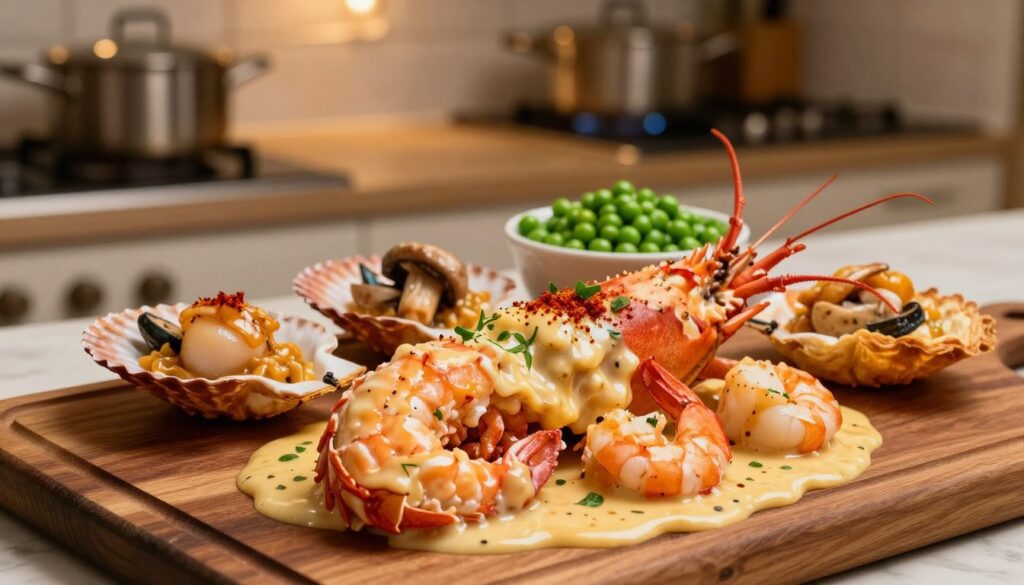
Serve hot Newburg over a suitable base for texture and to catch every drop of rich sauce. Spoon it over toasted brioche, crisp toast points, puff pastry shells, or English muffins. You can also use fluffy white rice or buttered egg noodles to absorb savory flavors.
Garnish each warm portion with freshly chopped parsley, a light paprika dusting, or a small lemon wedge for color. Always use warmed bowls or plates to help maintain the ideal serving temperature.
Build a balanced meal
Pair the main course with simple side dishes to keep attention on the seafood. Choose light options that will not compete with the rich cream sauce.
Consider a crisp green salad, steamed asparagus, tender green beans, or lightly roasted vegetables. The table below shows ideal pairings for your feast.
| Category | Recommended Option | Purpose |
|---|---|---|
| Base | Toasted Brioche or Puff Pastry | Absorbs sauce and adds texture |
| Side | Steamed Asparagus or Green Salad | Provides fresh, crisp contrast |
| Beverage | Dry White Wine or Sparkling Lemon Water | Cleanses the palate between bites |
Serve it safely and attractively
Serve the dish immediately while the sauce stays glossy and the seafood remains tender. Elegant plating needs no complicated techniques, but it does require proper timing and cleanliness.
For food safety, never leave seafood at room temperature for more than two hours. If indoor temperatures exceed 90 degrees Fahrenheit, reduce that window to one hour.
Adapt the Classic Seafood Newburg Recipe
This classic American cuisine staple lets you explore new flavors while respecting tradition. You can change the ingredients to fit your budget, pantry items, and health goals.
Use different seafood combinations
For a lobster-forward version, use generous lobster pieces and less shrimp. For a budget-friendly option, combine shrimp, crab, and scallops. Firm white fish also works, but cook it separately and fold it in gently at the end.
Modify the sauce for dietary needs
You can replace some heavy cream with half-and-half for a lighter sauce. For gluten-free cooking, replace all-purpose flour with a cornstarch slurry to thicken the pan mixture.
Control the richness and heat
In this classic American cuisine dish, use moderate sherry so delicate seafood remains the plate’s star. Review the quick adjustment options below to personalize your next kitchen creation.
| Goal | Adjustment | Result |
|---|---|---|
| Lighter Dish | Use half-and-half | Less rich sauce |
| Gluten-Free | Cornstarch slurry | Smooth texture |
| Mild Spice | Omit cayenne | Family-friendly |
Store, Reheat, and Troubleshoot Leftovers
Proper storage keeps your gourmet seafood dish delicious for days after preparation. Managing leftovers correctly lets you enjoy each bite safely while preserving its homemade flavor.
Store the finished dish correctly
Cool the meal promptly and transfer it into a shallow, airtight container. Refrigerate it within two hours of cooking to maintain safety. Consume it within three to four days for the best quality.
Freezing is generally not recommended because dairy sauces may separate during thawing. Delicate proteins can also become tough or watery.
Reheat without overcooking the seafood
Place leftovers in a saucepan over low heat, and stir often. Add a small splash of milk, cream, or stock if the sauce thickened in the refrigerator. Stop heating when the food is hot throughout.
Avoid repeated heating cycles because they raise the risk of ruining delicate ingredients.
Fix common problems
Fix a thin sauce by whisking in a tiny cornstarch slurry over gentle heat. Balance an overly rich sauce with fresh lemon juice or extra stock.
If proteins become a bit rubbery, shorten future heating times. Always discard the meal immediately if you notice an unpleasant odor or strange texture.
Conclusion
Making seafood at home takes care, from preparing the protein to sweating aromatics and building a smooth roux. First, dry the seafood and melt butter in a pan. Then whisk flour into the butter to create a rich sherry cream sauce.
Slowly add stock and heavy cream to prevent lumps, then stir in spices and dry sherry for deep flavor. Temper the egg yolks so the sauce thickens without scrambling. Gently fold in lobster, shrimp, or crab to keep the meat tender.
Taste the mixture before serving because seafood and stock already contain salt. Keep the heat low, and do not boil the sauce after adding dairy and eggs. Spoon the hot meal over toast, puff pastry, rice, or noodles.
This dish shows the best of classic American cuisine. Careful preparation and controlled heat can create an elegant dinner in your own kitchen tonight.
FAQ
Can I freeze leftover seafoof newburg?
Freezing is not recommended for this creamy seafood dish because dairy-based cream sauces often separate and turn grainy when thawed. Delicate lobster meat and other shellfish can also become rubbery or watery when frozen and reheated. For the best taste and texture, enjoy your gourmet seafood dish fresh or refrigerate leftovers for up to three to four days.
What is the best way to reheat this savory seafood recipe without ruining the seafood?
To reheat seafoof newburg safely, place leftovers in a saucepan over low heat and stir often. Add a small splash of milk, cream, or seafood stock if the sauce thickened too much in the refrigerator. Warm the dish gently throughout, and avoid high heat or boiling, which can overcook seafood and curdle the sherry cream sauce.
Can I use different types of seafood for this classic American cuisine dish?
Absolutely. Traditional seafood Newburg often features lobster meat, but you can adjust the recipe for your tastes or budget. A mix of shrimp, crab, scallops, or firm white fish works well in this luxurious seafood dinner. Ensure all seafood is fully cooked, thoroughly drained, and patted dry before gently folding it into warm sherry cream sauce.
