


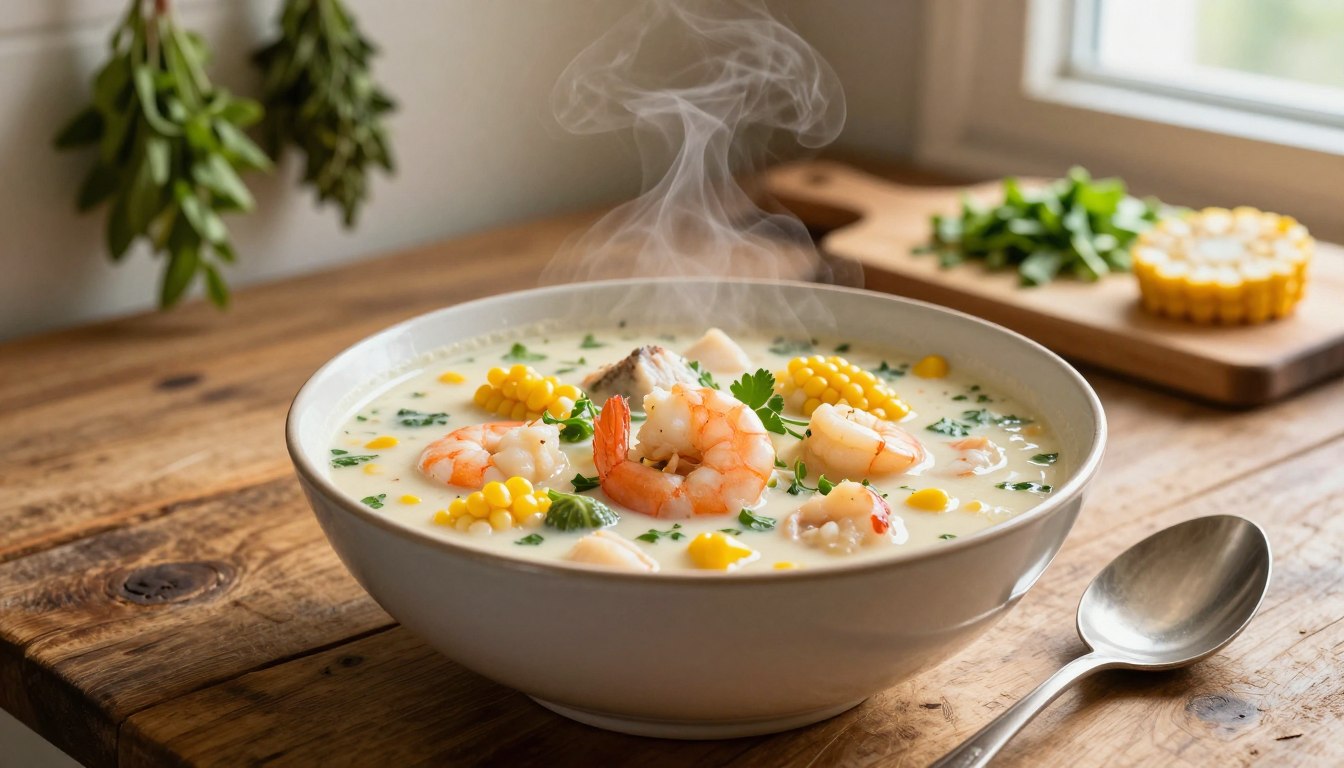
If you’re craving a warm, comforting meal filled with delicious seafood, this Seafood Chowder is the perfect recipe! Made with tender shrimp, flaky fish, sweet crab meat, potatoes, and vegetables simmered in a rich, creamy broth, this homemade chowder is hearty, satisfying, and full of wonderful flavor.
Every spoonful combines the natural sweetness of seafood with creamy potatoes, aromatic garlic, onions, and a touch of fresh herbs. It’s the kind of comforting meal that makes you want to go back for another bowl!
Whether you’re preparing a cozy family dinner, looking for a warming winter meal, or serving guests something special, this easy seafood chowder is sure to impress.
Best of all, it’s made with simple ingredients and comes together in about 40 minutes.
Table of Contents
Recipe Card: Seafood Chowder
Preparation Time: 15 minutes
Cooking Time: 25 minutes
Total Time: 40 minutes
Servings: 6
Course: Soup, Main Course
Cuisine: American, New England-Inspired
Cooking Method: Stovetop
Nutrition Information (Estimated Per Serving)
- Calories: 425 kcal
- Protein: 29g
- Carbohydrates: 27g
- Fat: 23g
- Saturated Fat: 12g
- Cholesterol: 175mg
- Sodium: 890mg
- Fiber: 3g
- Sugar: 5g
Nutrition information is estimated and may vary depending on seafood, stock, dairy products, and ingredient brands.
Why You’ll Love This Seafood Chowder Recipe
- Rich and creamy: A delicious broth creates a smooth and comforting texture.
- Loaded with seafood: Shrimp, white fish, and crab make every spoonful delicious.
- Hearty and satisfying: Potatoes and vegetables make this chowder a complete meal.
- Easy to prepare: Simple ingredients and straightforward cooking instructions.
- Perfect for any season: Especially comforting on chilly evenings.
- Family-friendly: A wonderful way to enjoy a variety of seafood in one dish.
Ingredients You’ll Need
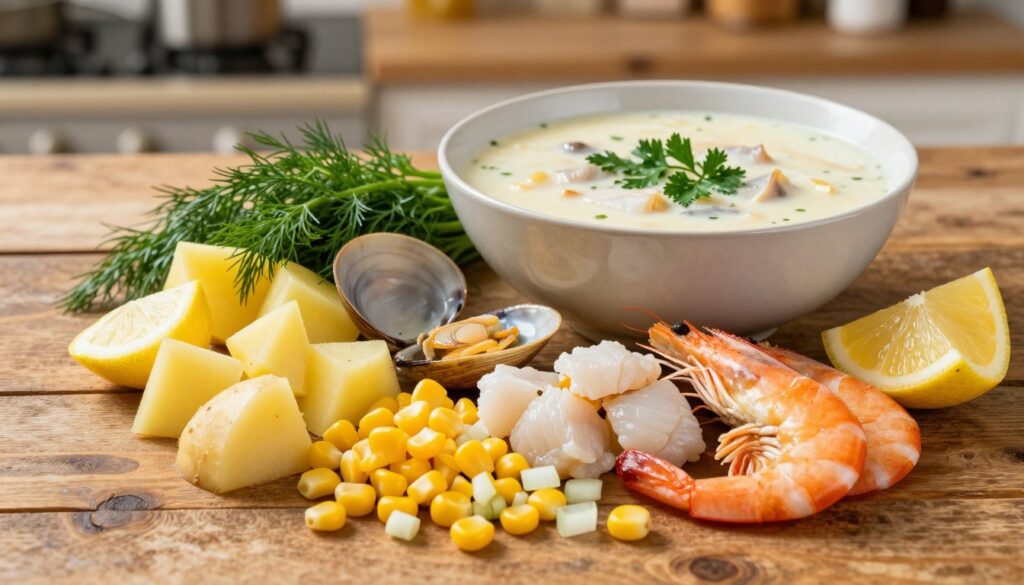
Here are the ingredients needed to make this delicious homemade seafood chowder.
- ½ pound large shrimp: Peeled and deveined.
- ½ pound white fish: Cod or haddock, cut into bite-sized pieces.
- ½ pound cooked crab meat: Adds a naturally sweet seafood flavor.
- 4 slices bacon: Chopped, for a smoky and savory base.
- 3 tablespoons butter: Adds richness to the broth.
- 1 medium yellow onion: Finely chopped.
- 2 celery stalks: Diced for extra flavor.
- 2 cloves garlic: Minced.
- 3 tablespoons all-purpose flour: Helps thicken the chowder.
- 3 medium potatoes: Peeled and diced.
- 3 cups seafood stock: Creates a flavorful broth.
- 1 cup whole milk: Adds creaminess.
- 1 cup heavy cream: Makes the chowder rich and smooth.
- 1 teaspoon Old Bay seasoning: Adds classic seafood seasoning.
- ½ teaspoon dried thyme: Provides a subtle herbal flavor.
- ½ teaspoon black pepper: For seasoning.
- ½ teaspoon salt: Adjust to taste.
- 2 tablespoons fresh parsley: Chopped for garnish.
- 1 tablespoon fresh lemon juice: Brightens the flavors.
How to Make Seafood Chowder
Follow these simple steps to create a delicious, creamy seafood chowder at home.
Step 1: Cook the Bacon
Place a large Dutch oven or heavy-bottomed soup pot over medium heat.
Add the chopped bacon and cook for approximately 5–7 minutes until crispy.
Remove the bacon with a slotted spoon and set aside. Leave about 1 tablespoon of bacon fat in the pot.
Step 2: Sauté the Vegetables
Add the butter to the same pot.
Stir in the chopped onion and celery. Cook for approximately 4–5 minutes until softened.
Add the minced garlic and cook for another 30 seconds until fragrant.
Step 3: Make the Chowder Base
Sprinkle the flour over the vegetables and stir continuously for about 1 minute.
Gradually pour in the seafood stock while stirring to prevent lumps.
Add the diced potatoes, Old Bay seasoning, thyme, black pepper, and salt.
Bring the mixture to a gentle boil, then reduce the heat and simmer for approximately 12–15 minutes, or until the potatoes are tender.
Step 4: Add the Cream and Milk
Pour in the whole milk and heavy cream.
Stir gently and allow the chowder to heat through over low to medium-low heat.
Avoid boiling vigorously after adding the cream.
Step 5: Add the Seafood
Add the white fish pieces and cook gently for approximately 3–4 minutes.
Next, add the shrimp and cook for another 2–3 minutes until pink, opaque, and cooked through.
Finally, gently fold in the cooked crab meat and heat for another 1–2 minutes.
Avoid stirring too vigorously so the fish stays in nice pieces.
Step 6: Finish with Flavor
Stir in the fresh lemon juice and most of the cooked bacon.
Taste and adjust the seasoning with additional salt or black pepper if needed.
Step 7: Garnish and Serve
Ladle the hot seafood chowder into serving bowls.
Top with the remaining crispy bacon and freshly chopped parsley.
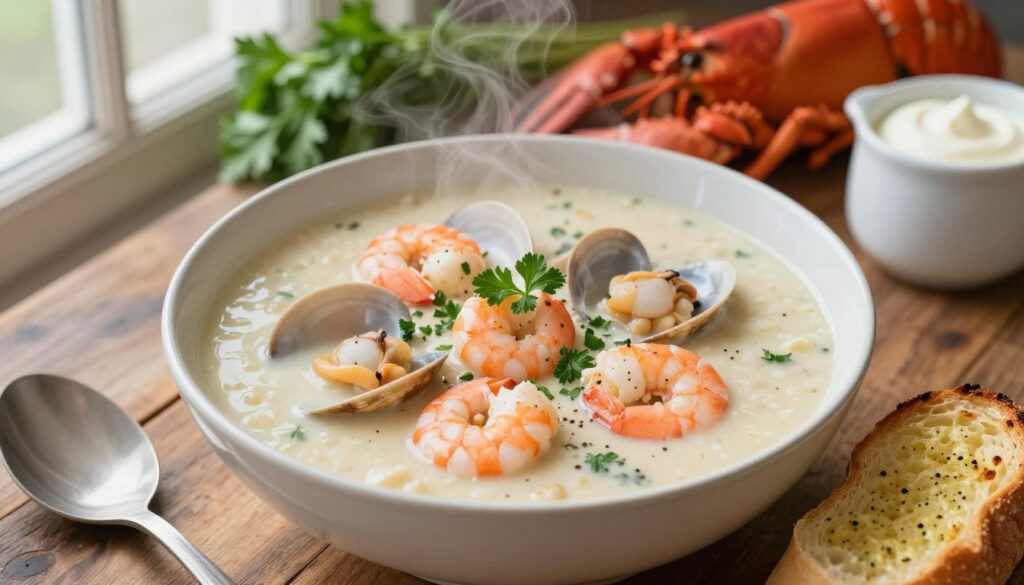
Serve immediately with crusty bread, oyster crackers, or warm garlic bread.
Enjoy every creamy and comforting spoonful!
Tips for the Best Seafood Chowder
- Use fresh seafood: Fresh shrimp and white fish provide wonderful flavor, although frozen seafood also works.
- Cut potatoes evenly: Similar-sized pieces help them cook at the same rate.
- Don’t overcook the seafood: Shrimp and fish cook quickly and can become tough if left in the broth too long.
- Use good-quality seafood stock: It creates a deeper, richer flavor.
- Add cream toward the end: This helps maintain a smooth, creamy consistency.
- Simmer gently: Avoid boiling the chowder after adding the milk and cream.
- Adjust the thickness: Add a little extra stock if the chowder becomes too thick.
Delicious Variations to Try
This seafood chowder is easy to customize depending on your favorite ingredients.
New England-Style Seafood Chowder
For a traditional New England-inspired version, use a combination of milk, cream, potatoes, butter, and seafood. Keep the seasoning simple and let the seafood shine.
Shrimp and Crab Chowder
Use extra shrimp and crab meat instead of white fish for a sweet and delicious seafood combination.
Salmon Seafood Chowder
Replace the white fish with fresh salmon pieces for a richer flavor and beautiful color.
Spicy Seafood Chowder
Add a pinch of cayenne pepper, smoked paprika, or red pepper flakes for a little heat.
Vegetable Seafood Chowder
Add corn, carrots, peas, or chopped bell peppers for extra color and texture.
Low-Carb Seafood Chowder
Replace the potatoes with cauliflower florets and use a suitable low-carbohydrate thickening alternative.
What to Serve with Seafood Chowder
Seafood chowder is delicious on its own, but these sides make the meal even better.
- Crusty bread: Perfect for dipping into the creamy broth.
- Garlic bread: Adds a delicious buttery flavor.
- Oyster crackers: A classic chowder topping.
- Fresh green salad: Balances the richness of the soup.
- Roasted asparagus: A light vegetable side.
- Cornbread: Adds a slightly sweet contrast to the savory chowder.
How to Store and Reheat Seafood Chowder
Refrigerator: Allow the chowder to cool promptly and transfer it to an airtight container. Refrigerate for up to 2 days.
Freezer: Freezing is not recommended because the cream-based broth and potatoes may change texture after thawing.
Reheating: Warm gently in a saucepan over low heat, stirring occasionally until heated through. Avoid boiling, as the cream may separate and the seafood may become overcooked.
Frequently Asked Questions
1. What seafood is best for seafood chowder?
Shrimp, cod, haddock, crab, scallops, and salmon are excellent choices. Combining different seafood varieties creates a delicious balance of flavors and textures.
2. Can I use frozen seafood?
Absolutely! Thaw the seafood completely in the refrigerator, drain excess liquid, and pat it dry before adding it to the chowder.
3. How do I make seafood chowder thicker?
You can add a little extra flour mixed with cold milk or use a small amount of cornstarch slurry. Simmer gently until the desired consistency is reached.
4. Can I make seafood chowder without bacon?
Yes! Simply skip the bacon and sauté the vegetables in butter or olive oil. The chowder will still be rich and delicious.
5. Can I make seafood chowder ahead of time?
You can prepare the vegetable and potato base ahead of time. For the best seafood texture, add the fish and shrimp shortly before serving.
6. What is the difference between seafood soup and seafood chowder?
Seafood soup generally has a thinner broth, while chowder is usually thicker, heartier, and often contains potatoes and milk or cream.
Final Thoughts
This Seafood Chowder is the ultimate comfort food for seafood lovers. With tender shrimp, flaky fish, sweet crab meat, creamy potatoes, and a rich, flavorful broth, every bowl is packed with delicious homemade goodness.
It’s perfect for cozy family dinners, weekend lunches, or special occasions when you want something warm and satisfying.
Serve it with crusty bread and fresh parsley, and enjoy a restaurant-quality seafood meal right in your own kitchen!
Give this easy seafood chowder recipe a try, and don’t forget to share it with your family and friends. Happy cooking!
FAQ
Seafood and Protein Options
Choose firm white fish, such as cod, haddock, pollock, or halibut, with shrimp, scallops, clams, or crab. Use one seafood type or several, cutting pieces evenly and adding each according to its cooking time.
Fresh seafood should smell clean, stay properly chilled, and cook quickly.
Vegetables, Aromatics, and Bacon
Use potatoes, onion, celery, carrots if desired, garlic, and bacon. Bacon gives your seafood chowder with bacon smoky fat and savory depth.
Creamy Broth Ingredients
Use butter or bacon fat, flour for the roux, seafood or chicken stock, milk, half-and-half, and heavy cream. Substitute vegetable stock, evaporated milk, gluten-free flour, turkey bacon, or extra olive oil as needed.
Seasonings, Garnishes, and Optional Add-Ins
Use salt, black pepper, Old Bay seasoning, thyme, parsley, chives, lemon juice, corn, leeks, hot sauce, and a little grated cheese. These ingredients add brightness and depth.
Clean and Cut the Seafood
Rinse seafood when appropriate, pat it dry, remove bones or shells, and cut fish into even pieces. Peel and devein shrimp, remove the small side muscle from scallops, and drain or thaw other seafood as directed.
Chop the Vegetables and Measure the Liquids
Dice potatoes and vegetables evenly so they cook at the same rate. Mince garlic, portion bacon, and measure stock, milk, and cream before cooking.
Follow Seafood and Kitchen Safety Practices
Wash your hands, use separate boards for seafood and produce, refrigerate properly, and prevent cross-contamination. Discard seafood with a strong ammonia-like odor.
Keep seafood cold until cooking, and check for visual signs of doneness.
1. Cook the Bacon Until Crisp
What to Do
Cook bacon slowly over medium heat until crisp. Remove it, but reserve the flavorful fat in the pot.
Do not burn the drippings.
Key Cooking Tip
Use moderate heat so the fat renders evenly without scorching the pan.
2. Build the Aromatic Vegetable Base
What to Do
Sauté onions, celery, and garlic in the bacon fat until soft and fragrant. Add thyme or bay leaf for extra depth.
How to Develop More Flavor
Let the vegetables sweat and lightly caramelize to unlock their natural sugars.
3. Make the Roux and Add the Broth
What to Do
Blend flour into the fat, cook it briefly, and slowly whisk in stock to create a smooth base.
How to Prevent Lumps
Add stock in small splashes while whisking vigorously.
4. Simmer the Potatoes Until Tender
What to Do
Add diced potatoes and cook them until fork-tender.
Important Temperature Tip
Keep a gentle simmer instead of a hard boil. This softens potatoes without breaking them apart or making the soup too starchy.
5. Add Milk and Cream Without Curdling
What to Do
Lower the heat, warm the dairy gradually, and stir it into the pot.
How to Control the Texture
Avoid prolonged boiling after adding dairy to prevent separation.
6. Add the Seafood in the Correct Cooking Order
Add Firm Fish First
Add dense fish pieces first because they need slightly more time to cook.
Add Quick-Cooking Seafood Last
Add shrimp, scallops, crab, or clams near the end of cooking.
Check Doneness Without Overcooking
Fish should look opaque and flake easily. Shrimp should be pink and curled.
Remove the pot from heat promptly.
7. Finish, Season, and Garnish the Chowder
Final Seasoning
Adjust salt and pepper to taste. Add lemon juice to brighten the rich flavors.
Finishing Touches
Top bowls with fresh herbs and reserved bacon. Serve them with oyster crackers or crusty bread.
Make a Classic New England-Style Version
Use a pale milk- or cream-based broth with potatoes, onions, herbs, and mild white fish. This creates a traditional coastal favorite.
Prepare a Seafood Chowder With Bacon
Add extra bacon, bacon fat, and a generous crispy garnish for stronger smoky flavor. Avoid making the soup too salty.
Make the Chowder Lighter
Use more stock, reduced-fat milk, half-and-half, or blended potatoes for body instead of only heavy cream.
Add Corn, Leeks, or Other Vegetables
Add sweet corn, tender leeks, peas, carrots, spinach, or fennel for color and seasonal flavor. Consider each ingredient’s cooking time.
Adjust the Chowder for Dietary Needs
Use gluten-free roux options, dairy-free milk, lower-sodium stock, shellfish-free substitutes, or vegetarian versions with mushrooms and extra vegetables.
Serve the Chowder at Its Best
Serve the chowder hot but not boiling. Top it with parsley, chives, bacon, lemon zest, or toasted bread.
Fix Common Texture and Flavor Problems
Chowder Is Too Thin
Stir in a small cornstarch slurry, extra cooked potato, or a carefully prepared roux.
Chowder Is Too Thick
Stir in warm stock or milk to thin the chowder.
Chowder Tastes Bland or Too Salty
Use herbs, pepper, lemon juice, unsalted stock, or a little dairy to restore balance. Do not add more salt.
Refrigerate and Reheat Leftovers Safely
Cool leftovers quickly in shallow containers and refrigerate them within two hours. Reheat gently over low heat until steaming hot, without boiling.
Freeze the Chowder Carefully
Cream-based chowders may separate after thawing, so freeze the soup before adding dairy when possible. For finished soup, use airtight containers with headspace, thaw it in the refrigerator, and reheat slowly.
What is the best fish to use in homemade seafood chowder?
Firm white fish, such as cod, haddock, pollock, or halibut, works well. It holds its shape during simmering without falling apart.
Can I make seafood chowder ahead of time?
Yes, prepare the soup base and cook the vegetables and potatoes ahead of time. Add delicate seafood and dairy near serving time to prevent overcooking.
How do I prevent the cream from curdling in my soup?
Lower the heat before adding dairy, and warm the milk and cream first. Avoid a rolling boil after adding the dairy.
What can I use instead of heavy cream to make it lighter?
Use half-and-half, whole milk, evaporated milk, or dairy-free milk. Add pureed potatoes to maintain a smooth texture.
How do I properly reheat leftover seafood chowder?
Reheat leftovers gently on the stovetop over low heat, stirring often. Avoid high-power microwaving to protect tender seafood and prevent separation.
