


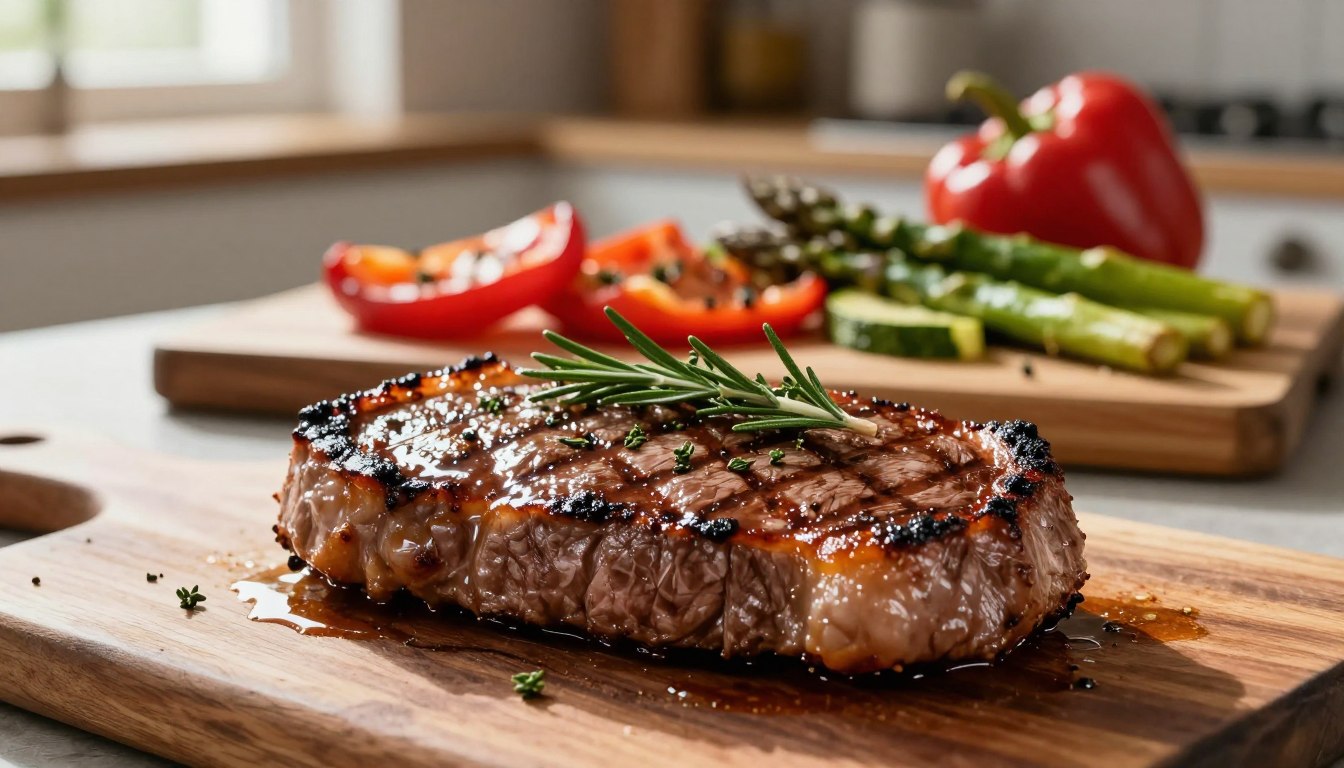
My first taste of a perfectly cooked flat iron steak at a local steakhouse changed everything. The rich, beefy flavor and tender texture made me a fan. It completely changed how I cook at home.
The flat iron steak has become a game-changer in American kitchens. Meat scientists found it in the early 2000s. It’s a flavorful and affordable cut that both home cooks and chefs love.
Imagine having the ultimate guide to making the best flat iron steak recipe. This guide is perfect for anyone, whether you’re new to cooking or a seasoned griller. It covers everything you need to know about this amazing beef cut.
Learn about its unique qualities and how to cook it perfectly. Discover why it’s a favorite for those looking for a tasty, affordable beef option. Get ready to improve your cooking and wow your loved ones with amazing flat iron steak dishes.
Table of Contents
What Makes Flat Iron Steak So Special
Discover the culinary marvel that has captured the attention of chefs and meat lovers alike. The flat iron steak transforms the humble chuck section into a gourmet dining experience.
The Cut’s Unique Characteristics
A flat iron steak comes from a specific muscle in the beef shoulder, known as the infraspinatus. Butchers carefully remove the tough connective tissue. This creates two perfectly shaped steaks with remarkable qualities:
- Rectangular, uniform shape for consistent cooking
- Typical weight of 8-10 ounces
- Ideal thickness of 3/4 to 1 inch
Marbling and Tenderness Profile
What sets the flat iron steak apart is its exceptional marbling. Research confirms it ranks as the second-most tender beef cut, surpassing popular options like ribeye and strip steaks. Its fine grain comes from the muscle’s unique location and function in the animal.
Why Butchers Love This Cut
Butchers love the flat iron steak for its economic and culinary value. This cut maximizes usage of the chuck primal, traditionally reserved for roasts and ground beef. Customers get a premium eating experience at a more affordable price, usually 30-40% less than comparable tender cuts.
Choosing the Perfect Flat Iron Steak
Finding the right flat iron steak can make your cooking amazing. Your eyes are key when picking a high-quality piece of meat.
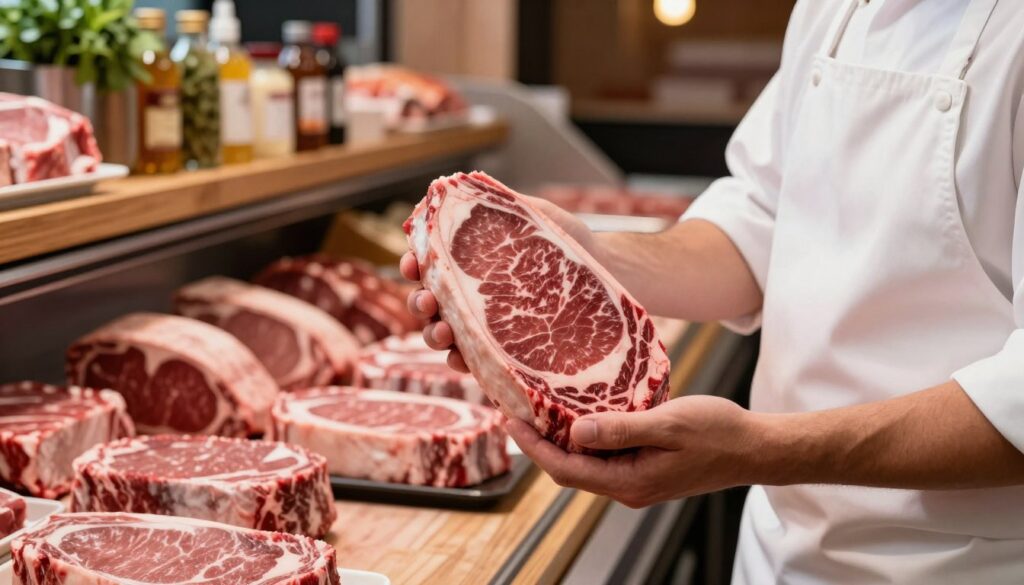
- Deep red color with vibrant, consistent appearance
- Abundant marbling throughout the meat
- Moist surface without excess liquid
- Thickness between 3/4 to 1 inch
Grading is important when picking your steak. USDA Prime is top-notch with lots of marbling. USDA Choice is a great choice for quality and price. Local butchers often have the best selection, so you can see the meat yourself.
For a great flat iron steak recipe, keep these tips in mind:
- Plan for 8-10 ounces per person
- Check for complete removal of connective tissue
- Verify freshness by checking the packaging date
- Consider specialty butchers for premium cuts
Storing your steak right is key to keeping it fresh. Refrigerate fresh steaks and cook within 3-4 days. Or, freeze for up to 6 months if wrapped well. Follow these steps for a delicious and tender meal every time.
Essential Flat Iron Steak Seasoning and Marinades
Turning your flat iron steak into a masterpiece starts with the right seasoning and marinade. The secret to amazing flavor is in how you prepare and enhance this delicious beef cut.
Simple Seasoning Techniques
Seasoning your flat iron steak is easy. The best method is straightforward:
- Use coarse kosher salt and freshly cracked black pepper
- Season the steak 40 minutes before cooking
- Pat the steak dry to get a great crust
For a pro tip, try adding spices like garlic powder, smoked paprika, or a good steak seasoning blend. It will boost the meat’s natural taste.
Best Marinade Recipes for Maximum Flavor
A top-notch marinade can change your meal. Here are four tasty options:
| Marinade Style | Key Ingredients | Marinating Time |
|---|---|---|
| Classic Steakhouse | Soy sauce, Worcestershire, garlic, olive oil | 2-4 hours |
| Asian-Inspired | Soy sauce, ginger, sesame oil, brown sugar | 4-6 hours |
| Chimichurri-Style | Fresh herbs, garlic, red wine vinegar | 2-3 hours |
| Balsamic Fusion | Balsamic vinegar, Dijon mustard, honey | 3-5 hours |
Remember: Marinate in a zip-top bag, and always bring the steak to room temperature before cooking.
When making your marinade, marinate for 2-8 hours. Longer times can make the meat tough. You want to add flavor, not overwhelm it.
How to Cook Flat Iron Steak on the Grill
Grilling a flat iron steak turns it into a top-notch meal for your backyard. To get the best flavor and tenderness, you need to know some key grilling techniques.
Getting your steak ready is the first step. Take it out of the fridge 30-45 minutes before you grill. This lets it warm up evenly, so it cooks better.
- Preheat your grill to high heat (450-500°F)
- Clean and oil the grill grates to prevent sticking
- Season the steak generously with salt and pepper
- Create a two-zone fire for more cooking control
When it’s time to grill, put the steak on the hottest part of the grate. To get nice grill marks, don’t move the steak too much. Cook for 4-5 minutes on each side, depending on how rare you like it.
Check the steak’s internal temperature with an instant-read thermometer. For medium-rare, it should be 130-135°F. After cooking, let it rest for 5-7 minutes. This makes the steak juicy and tender.
Pro tip: To make your flat iron steak even better, try basting it with herb butter during the last minute. Or add wood chips for a smoky flavor.
Pan Searing Your Flat Iron Steak to Perfection
Learning to pan sear a flat iron steak is key for home cooks aiming for top-notch results. This method creates a delicious crust and a juicy inside. It’s sure to wow steak enthusiasts.
Preparing Your Pan and Steak
To cook a flat iron steak well, you need the right tools and prep. Use a heavy cast-iron or stainless steel skillet that can handle high heat. Here are some important steps:
- Remove the steak from the fridge 30-45 minutes before cooking
- Pat the steak dry with paper towels
- Season it well with salt and pepper
- Choose oil with a high smoke point like avocado or refined peanut oil
Achieving the Perfect Crust
The crust is the highlight when cooking flat iron steak. Heat your pan to medium-high to high until it smokes. Add a thin layer of oil and place the steak in the pan. Let it sear for 4-5 minutes to get a deep, caramelized crust.
Resting and Slicing Techniques
After cooking, resting is crucial. Move the steak to a cutting board and cover it loosely with foil for 5-7 minutes. This helps juices spread and makes the steak tender. When slicing, cut against the grain in 1/4 to 1/2-inch slices. This makes the steak even softer.
By following these steps, you’ll make a flat iron steak that’s as good as any in a steakhouse. It will be crispy on the outside, juicy inside, and full of flavor.
Mastering Flat Iron Steak Temperature and Doneness
Cooking the perfect flat iron steak is all about precise temperature control. An instant-read meat thermometer is your best friend for perfect doneness every time.
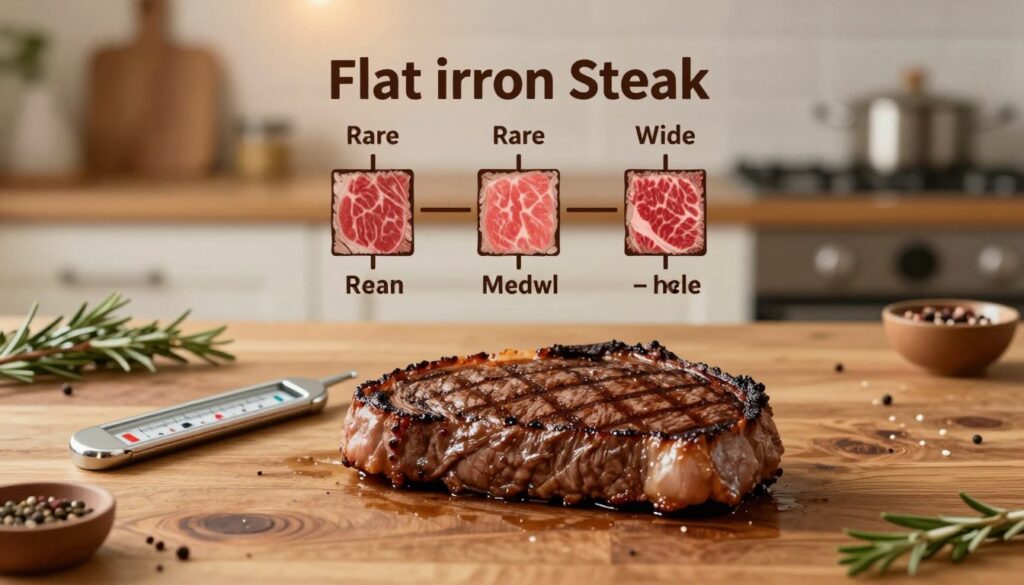
When managing flat iron steak temp, focus on these key temperature ranges:
- Rare: 120-125°F (Cool red center)
- Medium-Rare: 130-135°F (Warm red center – Recommended)
- Medium: 135-145°F (Warm pink center)
- Medium-Well: 145-155°F (Slightly pink center)
- Well-Done: 155°F+ (No pink remaining)
Professional chefs say medium-rare is the best flat iron steak temp. This temperature lets the marbled fat melt perfectly. It keeps the steak tender and juicy.
Pro tip: Take your steak off the heat 5 degrees before your target temperature. It will cook a bit more while resting, ensuring a perfect finish.
When checking flat iron steak temp, put the thermometer into the thickest part of the steak. Make sure not to touch the pan or grill grates for an accurate reading.
Remember, cooking time changes with steak thickness and heat. For a 1-inch thick steak, cook for about 8-10 minutes. Always check the temperature, not the time, for the best results.
Advanced Cooking Methods: Sous Vide Flat Iron Steak
Take your flat iron steak cooking to the next level with sous vide. This method ensures perfect doneness and keeps flavors locked in. It turns a tasty cut into a true culinary delight.
Sous vide cooking is a game-changer for flat iron steak. It uses controlled water temperatures to bring restaurant-quality results right to your kitchen.
Essential Equipment for Sous Vide Flat Iron Steak
- Immersion circulator
- Large cooking container
- Vacuum sealer or heavy-duty zip-top bags
- Instant-read thermometer
- Cast iron skillet for finishing
Precise Temperature and Timing Guidelines
| Doneness | Temperature | Cooking Time |
|---|---|---|
| Rare | 125°F | 1-2 hours |
| Medium-Rare | 129°F | 1-4 hours |
| Medium | 135°F | 1-4 hours |
| Medium-Well | 140°F | 1-4 hours |
Start by seasoning your steak with salt, pepper, and optional herbs. Place it in a vacuum-sealed or zip-top bag, getting rid of air. Then, cook it in the water bath at the right temperature for your desired doneness.
Once sous vide cooking is done, dry the steak well. Then, sear it in a very hot cast iron skillet for 60-90 seconds on each side. This step adds a delicious crust while keeping the inside tender and perfectly cooked.
Conclusion
Learning to cook flat iron steak is about turning an affordable cut into a gourmet meal at home. You’ve discovered how to pick, season, and cook this steak. You’ve learned about grilling and sous vide methods for tender, tasty results.
Flat iron steak is loved in restaurants, but now you can make it at home. This cut is versatile, letting you try different marinades and cooking styles. You can impress everyone with your cooking, whether it’s a quick dinner or a special meal.
Your journey with flat iron steak is just starting. Each time you cook, you’ll get better. Try using it in fajitas, on salads, or with unique sauces. The most important thing is to keep exploring and enjoying the cooking process.
It’s time to go to your local butcher or grocery store. Pick a beautiful flat iron steak and show off your new skills. Your cooking journey is just beginning, filled with delicious meals and your growing expertise in cooking this amazing beef cut.
FAQ
What exactly is a flat iron steak?
A flat iron steak is a tender cut from the top blade roast in the cow’s shoulder. It’s known for being very tender, with lots of marbling and a flat shape. It’s called a flat iron because it looks like an iron.
How do I choose the best flat iron steak at the store?
Look for a steak that’s deep red, has lots of marbling, and looks moist. Choose steaks that are 3/4 to 1 inch thick. They should be from USDA Choice or Prime grades. Make sure the middle connective tissue is removed, and plan for 8-10 ounces per person. Cook them within 3-4 days of buying.
What’s the best way to cook a flat iron steak?
You can grill it at 450-500°F for 4-5 minutes per side, pan-sear in a hot skillet, or sous vide at 129°F. Always cook to medium-rare (130-135°F) and let it rest for 5-7 minutes after cooking.
How should I season a flat iron steak?
Use coarse kosher salt and freshly cracked black pepper 40 minutes before cooking. You can also try garlic powder, smoked paprika, or a good steak seasoning. For more flavor, use marinades with soy sauce, Worcestershire, or herbs.
Can I marinate a flat iron steak?
Yes! Flat iron steak loves marinades. Use vinegar or citrus carefully, and marinate for 2-8 hours. Try Asian, classic steakhouse, or herb-based marinades. Always let the steak come to room temperature before cooking.
What internal temperature is best for flat iron steak?
Cook it to medium-rare (130-135°F) for the best tenderness and flavor. Use a meat thermometer to check the temperature. Remember, the temperature will rise about 5 degrees while it rests.
How do I slice a flat iron steak?
Slice it against the grain in 1/4 to 1/2-inch thick slices. This makes it tender and enjoyable. Let it rest for 5-7 minutes before slicing to keep the juices in.
How long can I store a flat iron steak?
You can refrigerate it for 3-4 days before cooking. If not cooking right away, freeze it for up to 6 months. Always thaw it in the fridge and use it within a day.
Is flat iron steak expensive?
No, it’s actually quite affordable. It’s 30-40% cheaper than cuts like ribeye or strip steak. This makes it a great choice for a high-quality steak without spending too much.
Can I use flat iron steak for other dishes?
Yes! It’s very versatile. You can slice it for fajitas, top salads, use in stir-fries, or serve as a classic steak dinner. Its tenderness and flavor work well in many dishes.
