This post may contain affiliate links. If you purchase through these links, we may earn a commission at no extra cost to you.
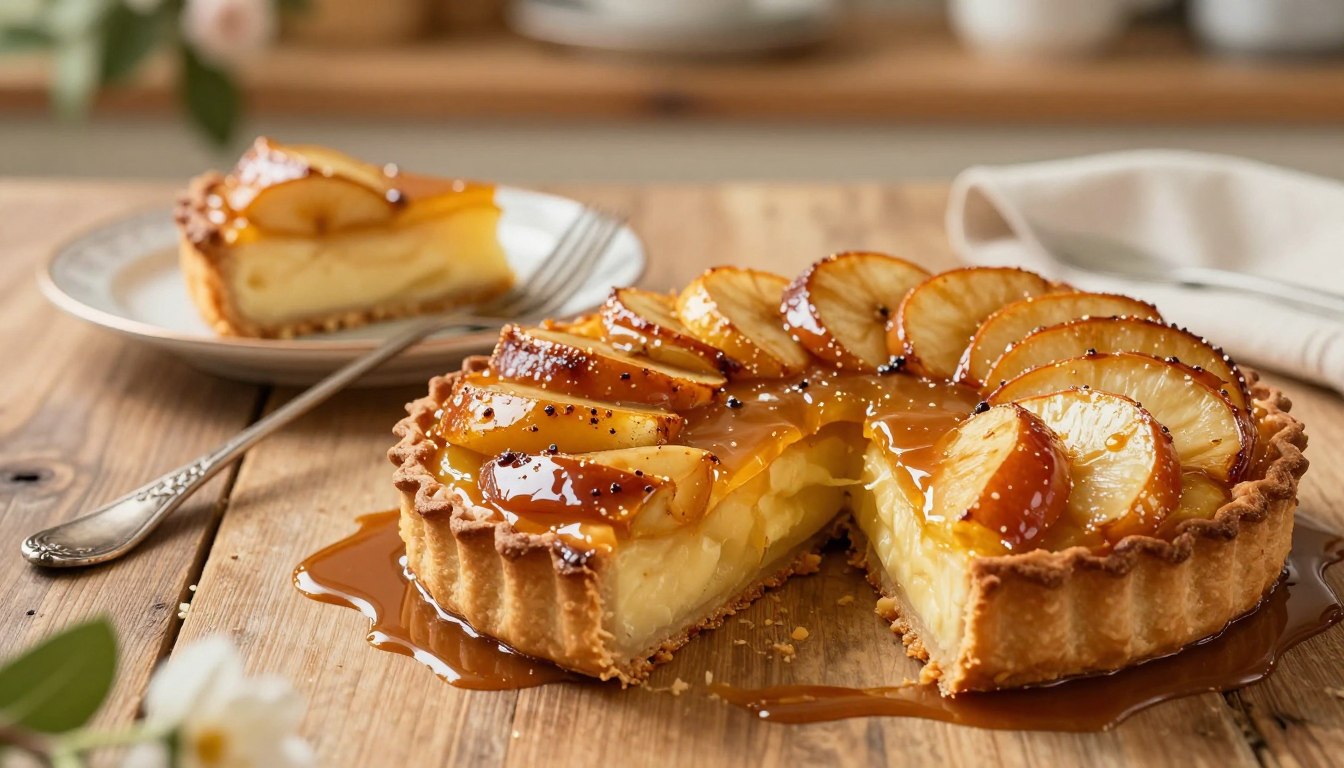
The first time I tasted a perfect tarte tatin, I knew why it’s loved everywhere. It’s a golden, caramelized apple tart that looks like magic. Flipped upside down, it shows off a shiny surface of brown fruit in buttery pastry.
This French dessert is more than just an apple pie. It’s a culinary wonder born from a kitchen mistake. It turns simple ingredients into an amazing treat. Its rich history and elegant look make it a standout dessert.
If you love baking or just enjoy food, making a realtarte tatin is a must. It’s a French tradition that’s surprisingly easy to master. You’ll find that it’s a recipe that boosts your baking skills.
Ready to dive into French pastry-making? It’s a journey where skill meets delicious art. Your tarte tatin adventure begins today.
The Enchanting Story Behind France’s Beloved Upside-Down Apple Tart
In the beautiful Loire Valley, the story of tarte tatin is a charming tale. It started in the 1880s at Hôtel Tatin in Lamotte-Beuvron. This dessert has won the hearts of food lovers for many years.
The Accidental Creation at Hôtel Tatin
The story of this famous dessert began with the Tatin sisters. Stéphanie and Caroline ran their family hotel with love and creativity. A kitchen mistake turned into a culinary wonder.
- Stéphanie Tatin forgot to put pastry in the pan.
- She saved an overcooked apple filling with quick thinking.
- She put pastry on top and flipped the dessert.
How a Kitchen Mistake Became a Culinary Legend
What was once a mistake became a hit. Hunters at the hotel loved the tart’s caramelized taste. Soon, it reached Maxim’s restaurant in Paris.
The tarte tatin shows that great food can come from unexpected moments. Your kitchen might create the next big French dessert!
What Makes Tarte Tatin Different from Traditional Apple Pie
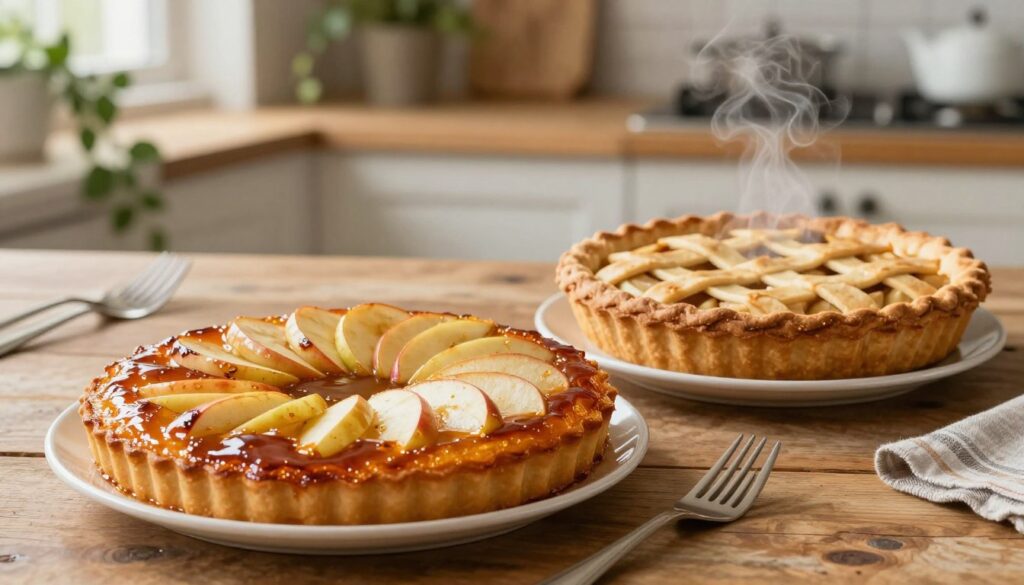
When you first try tarte tatin, you’ll see it’s unlike any apple pie. This French treat is a unique pastry that turns the classic apple dessert into a fancy dish.
The main differences between tarte tatin and traditional apple pie are clear:
- Preparation technique: Tarte tatin is baked upside-down, with pastry covering the caramelized apples
- Pastry style: Uses a single layer of puff pastry instead of a double-crust design
- Caramelization method: Apples are cooked directly in caramel before baking
In a traditional apple pie, the filling is mixed with sugar and spices, then wrapped in pastry. Tarte tatin, on the other hand, focuses on a glossy, intense caramel coating that’s the dessert’s star.
| Characteristic | Tarte Tatin | Traditional Apple Pie |
|---|---|---|
| Baking Method | Upside-down in skillet | Enclosed in pie dish |
| Pastry Coverage | Single top layer | Bottom and/or top crust |
| Apple Texture | Deeply caramelized, jammy | Distinct pieces in sauce |
Your tarte tatin will be a stunning, shiny dessert with caramelized apples on top. It’s a world away from the cozy look of a traditional apple pie.
-If you enjoy simple homemade desserts like this Tarte Tatin, you might also love these easy and delicious recipes from our kitchen...
Essential Ingredients for an Authentic Tarte Tatin
Making a great tarte tatin needs the right ingredients. These ingredients must work together to create a magical dessert. Choosing the right parts is key to turning simple items into a masterpiece.
Choosing the Right Apples for Caramelized Perfection
Not all apples are good for tarte tatin. You need firm, tart apples that keep their shape while cooking. The top picks are:
- Granny Smith
- Braeburn
- Honeycrisp
- Reinette (a French favorite)
Stay away from soft apples like McIntosh or Red Delicious. They’ll break down too fast and mess up your pastry’s texture. Pick apples that are the same size for even caramelization.
The Role of Butter and Sugar in Creating That Golden Caramel
The magic of tarte tatin is in its caramelization. You need high-quality unsalted butter and granulated sugar for that golden-amber color. When heated, they make a rich caramel that coats the apples, adding depth and complexity.
Your butter should be fresh and rich. The sugar must be watched carefully to avoid burning. The right mix turns simple ingredients into an amazing traditional French pastry that will wow everyone.
Step-by-Step Guide to Making Your First Tarte Tatin
Making an easy tarte tatin recipe might seem hard, but it’s not. Just break it down into simple steps. This way, anyone can make this classic French dessert.
First, prepare your ingredients. You’ll need:
- 4-5 firm apples (Granny Smith or Golden Delicious work best)
- 1/2 cup unsalted butter
- 3/4 cup granulated sugar
- 1 sheet of puff pastry
- Pinch of salt
Start by picking the right apples. Peel and core them, then cut them into halves or quarters. This makes sure they cook evenly.
- Melt butter in a 9-inch cast-iron skillet over medium heat
- Sprinkle sugar evenly across the melted butter
- Arrange apple pieces in a circular pattern, standing them upright
- Cook on stovetop for 15-20 minutes until caramel turns golden brown
- Cover apples with puff pastry, tucking edges inside the skillet
- Bake at 375°F for 25-30 minutes until pastry is golden
The secret to this easy tarte tatin recipe is its simplicity. Watch your caramel carefully – it can quickly go from perfectly golden to burnt. Remove from heat when it reaches a rich amber color.
After baking, let the tart cool for 10 minutes. Then, carefully flip it onto a serving plate. You’ll get a stunning, caramelized apple dessert that looks like it came from a Parisian bakery.
Mastering the Caramelization Technique for Perfect Results
Creating the perfect tarte tatin is all about mastering caramelization. This process turns simple ingredients into a stunning French dessert. It will impress even the most discerning pastry lovers.
Temperature Control and Timing Tips
Caramelization needs precision and patience. Follow these guidelines for that golden-amber perfection:
- Heat sugar slowly over medium-low heat
- Watch for color changes carefully
- Aim for a deep golden-amber shade
- Maintain temperature between 340-350°F
Pro tip: Visual cues matter more than precise temperature measurements. Look for a rich, amber color that signals perfect caramelization.
Avoiding Common Caramelization Mistakes
Preventing caramel disasters requires understanding potential pitfalls. Here are key strategies to ensure success:
- Prevent sugar crystallization by avoiding stirring
- Use a heavy-bottomed pan for even heat distribution
- Add butter carefully to prevent splattering
- Remove from heat immediately if caramel darkens too quickly
Your ultimate goal is a smooth, glossy caramel that coats the apples perfectly. Patience is your greatest ally in creating this classic French dessert.
The Art of the Flip: Inverting Your Tarte Tatin with Confidence
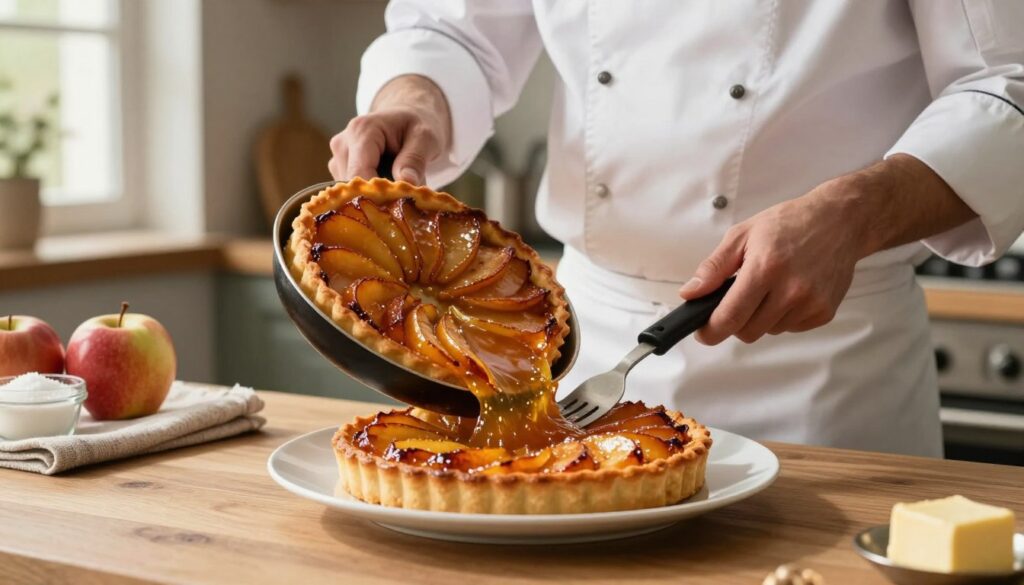
Flipping a tarte tatin might seem scary, but it’s doable with the right steps. Preparation and technique are key. Timing, plate choice, and a smooth motion are crucial for success.
Let your tarte tatin cool for 10-15 minutes before flipping. This helps the caramel set a bit. Choose a serving plate that’s:
- Larger than the baking pan
- Heat-resistant
- Has a slight rim to catch caramel
When you’re ready to flip, follow these steps:
- Place the serving plate face-down over the pan
- Grip the plate and pan together firmly with oven mitts
- Quickly and smoothly invert the entire setup in one confident motion
- Hold steady for a few seconds
- Carefully lift the pan
If some apples stick to the pan, just move them. If caramel stays in the pan, warm it up and drizzle it over the tart.
| Flipping Challenge | Solution |
|---|---|
| Apples stuck to pan | Carefully replace in original position |
| Caramel remains in pan | Reheat and drizzle over tart |
| Hesitant flip | Practice confident, quick motion |
The beauty of tarte tatin is its rustic charm. It’s not about perfection—it’s about enjoying the delicious imperfections of this French classic.
Serving Suggestions and Pairing Ideas for This Classic French Pastry
Your baked apple dessert needs a beautiful presentation to show off its rich flavors and soft textures. Serving tarte tatin is like creating a work of art. It turns a simple dessert into a memorable experience.
Traditional Accompaniments to Enhance Your Tarte Tatin
Classic French serving methods focus on enhancing the baked apple dessert with chosen accompaniments. The traditional approach includes several key elements:
- Serve warm, never hot or cold
- Pair with crème fraîche for a tangy contrast
- Add a scoop of vanilla ice cream
| Accompaniment | Flavor Profile | Recommended Pairing |
|---|---|---|
| Crème Fraîche | Tangy, Rich | Perfect with caramel notes |
| Vanilla Ice Cream | Creamy, Sweet | Temperature contrast |
| Sauternes Wine | Sweet, Complex | Elegant dessert pairing |
Modern Twists on Serving Your Baked Apple Dessert
Today’s chefs have put a new spin on tarte tatin with creative serving ideas. These add exciting dimensions to this classic dessert:
- Sprinkle fleur de sel for a sophisticated touch
- Drizzle with reduced apple cider
- Garnish with fresh thyme leaves
Pro tip: Store leftover tarte tatin at room temperature for a day or refrigerate for up to three days. Reheat gently in a warm oven. This will restore the pastry’s crisp texture and bring back those delightful caramel notes.
-If you enjoy simple homemade desserts like this Tarte Tatin, you might also love these easy recipes….
Conclusion
You’ve now explored the delightful world of tarte tatin. It started as a kitchen mistake at the Hôtel Tatin. Now, it’s a culinary treasure that anyone can master with patience and practice.
The beauty of tarte tatin is its rustic simplicity. You’ve learned to pick the perfect apples and make a golden caramel. And, of course, the dramatic flip that shows off the stunning upside-down pastry. Remember, it’s not about perfection—it’s about enjoying the flavors.
Now, step into your kitchen with confidence. Each try will make you better, and soon you’ll be making a dessert that connects you to French culinary tradition. Whether for a dinner party or a quiet evening, this classic dessert will impress and delight.
Your tarte tatin journey is just starting. Embrace the technique, trust your instincts, and don’t be afraid to try new things. With what you’ve learned, you’re ready to make an extraordinary dessert that tells a story of culinary creativity and delicious accidents.