


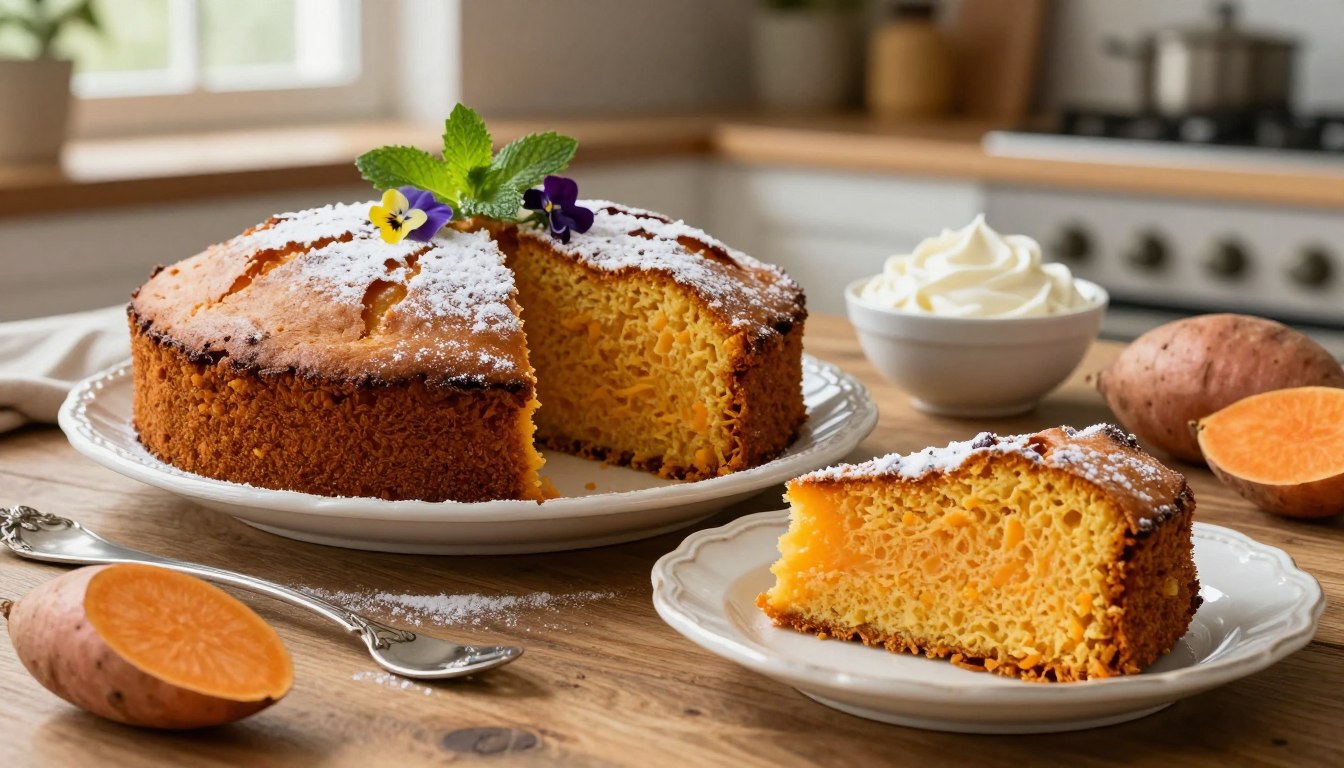
Remember your grandmother’s kitchen on a chilly Sunday afternoon? Autumn spices and baked goodness filled the air. Today, you can create that comfort with a tender sweet potato pound cake.
This guide helps you make a moist sweet potato pound cake for holidays, potlucks, or casual family dinners. You will learn to make smooth purée, balance spices, and avoid common baking mistakes.
Whether you use a traditional Bundt pan or standard loaf pan, success starts with simple ingredients and careful mixing. You will learn to add rich cream cheese frosting and store your finished masterpiece, so it stays fresh.
Table of Contents
What Makes This Sweet Potato Pound Cake Moist and Flavorful — 180 words
Fresh sweet potatoes add natural moisture to a remarkable pound cake. Cooked root vegetables give the batter a rich, velvety quality that butter cakes often lack. This classic method creates a tender crumb and gentle sweetness that stays on your palate.
How Sweet Potatoes Improve Pound Cake Texture
Natural starches and fibers hold the secret to this texture. When measured accurately, the purée adds body without making the cake heavy or dense. Make sure it is smooth and well-drained before mixing to prevent pockets and keep each slice velvety.
Warm Spices and Flavor Pairings That Complement Sweet Potatoes
Great flavor comes from aromatic additions that lift the vegetable’s earthy taste. These traditional baking staples can enhance the earthy base:
- Warm spices: Cinnamon, freshly grated nutmeg, and ground ginger add cozy depth.
- Citrus notes: Bright orange zest cuts through the rich butter.
- Nutty accents: Toasted pecans offer a delightful contrast in texture.
- Sweet enhancers: Pure maple syrup and dark brown sugar amplify the natural caramel notes.
What You Can Expect From This Homemade Sweet Potato Cake
When finished, you will enjoy a rich but balanced delicious sweet potato dessert. It has a beautiful interior, golden edges, and fragrant spices in every bite. This versatile recipe has enough structure to slice cleanly in a traditional Bundt pan or standard loaf pan.
Ingredients for the Best Sweet Potato Pound Cake — 300 words
To bake an incredible homemade sweet potato cake, choose your pantry staples carefully. Each ingredient helps create a moist crumb and rich flavor. Gathering supplies first makes baking smoother from start to finish.
Core Baking Components
Cooked Sweet Potatoes or Canned Sweet Potato Purée
You can use freshly cooked sweet potatoes or plain canned purée for this recipe. Make sure they contain no added syrup, butter, or seasonings. Plain vegetable purée provides natural moisture and a bright orange color.
Butter, Sugar, Eggs, and Dairy Ingredients
Softened unsalted butter creates a rich structure and tender crumb when creamed with sugar. Granulated sugar adds sweetness and helps form a golden crust. Whole eggs bind the batter and provide structure, while milk or buttermilk keeps it smooth.
All-Purpose Flour, Leavening, Salt, and Spices
All-purpose flour forms the reliable base of your dessert. Baking powder provides the right amount of lift. Salt balances sweetness, while cinnamon, nutmeg, and ginger add warm, inviting flavors.
Optional Ingredients for Extra Flavor
Vanilla Extract, Orange Zest, Pecans, and Toasted Coconut
Pure vanilla extract or fresh orange zest can enhance your bake. Chopped pecans and toasted coconut add crunch and nutty depth. These additions customize your dessert for family gatherings.
How to Choose Ingredients for the Best Results
Weigh dry goods with a kitchen scale for accurate measurements. Always check that your leavening agents are fresh. Full-fat dairy helps your homemade sweet potato cake keep a rich, dependable texture.
| Ingredient | Primary Role | Best Choice | Alternative |
|---|---|---|---|
| Sweet Potato | Moisture and Flavor | Fresh Cooked Mash | Plain Canned Purée |
| Butter | Richness and Tender Crumb | Unsalted Butter | Quality Margarine |
| Sugar | Sweetness and Browning | Granulated White Sugar | Light Brown Sugar |
| Flour | Structural Base | All-Purpose Flour | Cake Flour |
How to Prepare Sweet Potatoes for the Cake — 260 words
For the best sweet potato bake, start by preparing the root vegetables properly. Your dessert depends on how you select and cook these base ingredients. Careful preparation helps prevent texture problems later.
Step 1: Select and Cook the Sweet Potatoes
Choose firm, smooth root vegetables without soft spots or cracks. Your cooking method affects the batter’s moisture and sweetness.
Roasting for Concentrated Flavor
Roasting is the preferred option because dry heat caramelizes the flesh’s natural sugars. It also removes extra water, giving your dessert a richer flavor.
Steaming or Boiling for a Faster Method
When time is short, steaming or boiling softens the vegetables much faster. These wet methods add liquid, so manage moisture carefully.
Step 2: Mash the Sweet Potatoes Until Smooth
When the vegetables turn tender, process the flesh at once with a food processor, blender, or potato masher. A smooth purée gives your dessert a soft, velvety texture.
Removing Excess Moisture
After boiling or steaming, press the cooked flesh through a fine sieve with a rubber spatula. This step removes trapped water and keeps the batter from turning gummy.
Cooling the Purée Before Mixing the Batter
Let the smooth purée cool completely to room temperature before mixing it with eggs and butter. Hot vegetables can scramble the eggs or melt the butter too soon.
| Cooking Method | Moisture Level | Flavor Profile | Best Use Case |
|---|---|---|---|
| Roasting | Low | Deep and sweet | Maximum flavor concentration |
| Steaming | Medium | Mild and clean | Quick preparation |
| Boiling | High | Neutral | Fastest softening method |
How to Make Sweet Potato Pound Cake Step by Step — 900 words
Master baking with this easy sweet potato pound cake recipe. This guide shows each stage for a dense, moist, flavorful dessert made from scratch. Simple steps help you get professional results in your kitchen.
Gather your tools and clear your counters before you begin. Careful preparation and attention to detail support every great bake.
Step 1: Prepare Your Pan and Oven
Greasing and Flouring a Bundt Pan or Loaf Pan
Proper preparation helps the cake release smoothly without tearing. Grease every nook of a complex Bundt pan with solid vegetable shortening or softened butter. Dust it with flour or fine sugar, then tap out the excess.
Preheating the Oven and Positioning the Rack
Set the oven temperature accurately before mixing the batter. Place the rack in the lower-middle position for even heat around your heavy pan.
Step 2: Cream the Butter and Sugar
Beating the Mixture Until Light and Fluffy
Creaming builds the dessert’s structure. Beat butter and sugar on medium-high speed for at least five minutes. This adds tiny air pockets that help dense batter rise.
Why Room-Temperature Ingredients Matter
Cold ingredients resist aeration and may make the batter curdle. Let butter and dairy items sit on the counter for at least an hour before mixing.
Step 3: Add the Eggs and Flavorings
Adding the Eggs One at a Time
Add eggs to the creamed mixture one at a time. Beat well after each addition so the fat and liquid emulsify properly.
Mixing in Vanilla Extract and Optional Citrus Zest
Add pure vanilla extract and a pinch of fresh orange or lemon zest. These aromatic additions brighten the bake’s rich flavor.
Step 4: Combine the Dry Ingredients
Whisking Flour, Baking Powder, Salt, Cinnamon, Nutmeg, and Ginger
In a separate bowl, whisk all-purpose flour, baking powder, salt, cinnamon, nutmeg, and ginger. Whisking spreads the leavening agents and spices evenly through the flour.
Preventing Uneven Spice Distribution
A well-whisked mixture prevents pockets of strong spice or salt in the dessert. Take an extra minute to blend these ingredients thoroughly.
Step 5: Add the Sweet Potato and Dry Ingredients
Alternating the Dry Ingredients With Milk or Buttermilk
Add the dry flour mixture to the butter base in three portions, alternating with small splashes of milk or buttermilk. Add smooth sweet potato purée with these alternating portions.
Folding the Batter Without Overmixing
Use a spatula or mix on low speed just until the flour disappears. Overmixing develops gluten, which can make the tender crumb tough.
Step 6: Fill the Pan and Smooth the Batter
Leaving Space for the Cake to Rise
Spoon thick batter into the prepared pan, stopping at the three-quarter mark. Leave room for the cake to expand safely during baking.
Removing Large Air Pockets From the Batter
Tap the pan gently on your counter a couple of times. This forces hidden air bubbles to the surface, keeping the crumb uniform.
Step 7: Bake the Cake
Recognizing When the Cake Is Fully Baked
Bake until the top is rich golden brown and the edges pull slightly from the pan. Your kitchen will fill with a warm, comforting aroma.
Using a Toothpick or Instant-Read Thermometer to Check Doneness
Insert a wooden toothpick into the deepest part; it should emerge clean or with a few moist crumbs. An instant-read thermometer in the center should read between 200°F and 210°F.
Step 8: Cool and Remove the Cake
Cooling the Cake in the Pan
Let the cake rest in the pan on a wire rack for fifteen to twenty minutes. This rest allows the structure to firm up safely.
Turning the Cake Out Without Breaking It
Place your cooling rack over the pan, hold everything firmly, and invert it smoothly. Lift the pan away gently to reveal your golden homemade dessert.
How to Make Sweet Potato Cake With Cream Cheese Frosting — 350 words
Making a stunning sweet potato cake with cream cheese frosting takes only a few simple steps. Turn your cooled cake into a polished centerpiece with ease. The right technique brings out its natural, warm spice flavors.
Prepare the Cream Cheese Frosting
For a smooth, professional topping, bring all dairy ingredients to room temperature first. This step helps the frosting mix evenly.
Beating Cream Cheese and Butter Until Smooth
Place softened butter and cream cheese in a large mixing bowl. Beat them on medium speed until light and fluffy. This keeps unwanted lumps out of the frosting.
Balancing Powdered Sugar, Vanilla, and Salt
Add powdered sugar gradually for a smooth, velvety texture. Stir in pure vanilla extract and a tiny pinch of salt. This balance highlights the dessert’s warm spices.
Choose a Finishing Style
Your finishing method depends on your cake’s shape. Let the cake cool completely first, or the frosting may melt.
Spreading a Thick Frosting Layer Over a Loaf Cake
Use an offset spatula to spread a thick layer over a standard loaf. Make casual swirls for a rustic, homemade look. The creamy topping contrasts with each bite.
Drizzling a Thin Glaze Over a Bundt Cake
If you baked a Bundt cake, thin the frosting with a splash of milk. Spoon it over the ridges so it flows down the sides. This light drizzle keeps the pan’s detailed shape visible.
Add Decorative Toppings
Simple garnishes can make your presentation stand out. Plan your design before decorating.
Using Toasted Pecans, Cinnamon, or Candied Ginger
- Sprinkle finely chopped toasted pecans for a delightful crunch.
- Dust a tiny pinch of ground cinnamon over the center for color.
- Add finely minced candied ginger for a bold, zesty kick.
Applying Toppings Before the Frosting Sets
Add garnishes right after applying the frosting. Then, every nut and spice will stick securely. These finishing touches make your sweet potato cake with cream cheese frosting look and taste amazing.
Common Baking Mistakes and How to Fix Them — 300 words
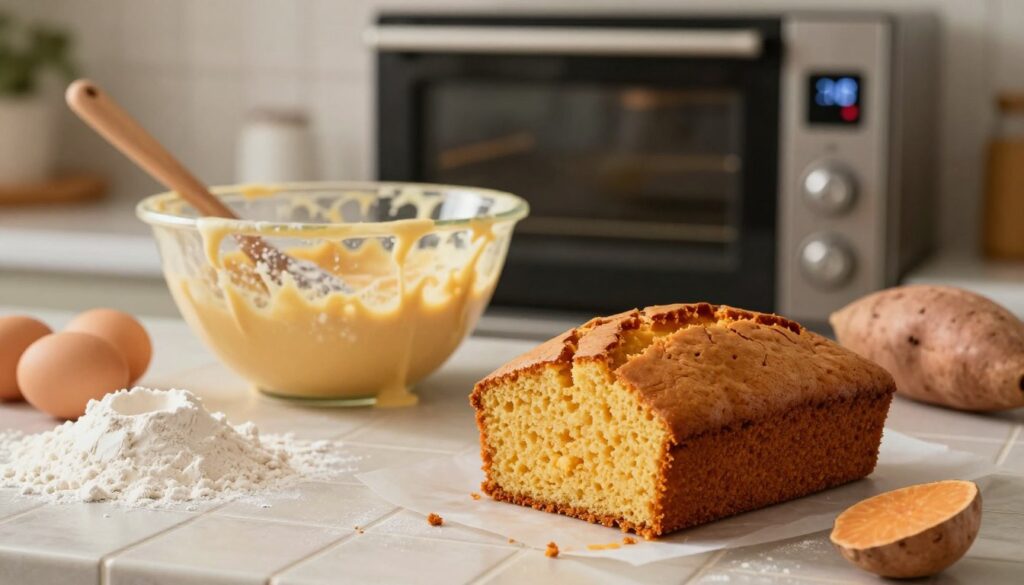
Do not let a dense crumb or sunken center ruin your homemade sweet potato pound cake. Even experienced home bakers face kitchen problems. Understanding the root cause helps rescue your bake and brings better results next time.
Why the Cake May Turn Out Dense or Gummy
Overmixing the Batter
Beating the flour mixture too long quickly develops too much gluten. Gently fold in dry ingredients until they are just combined.
Using Too Much Sweet Potato or Liquid
Too much moisture or heavy purée upsets your dessert’s structure. Measure ingredients carefully to keep the crumb light and tender.
Why the Cake May Sink in the Center
Opening the Oven Too Early
A rush of cool air can make the delicate structure collapse too soon. Keep the oven door closed during the first half of baking.
Using an Incorrect Pan Size or Oven Temperature
A pan that is too small makes the batter rise too quickly. Check your oven temperature with a separate thermometer to find hidden hot or cold spots.
Why the Cake May Stick to the Pan
Preparing Detailed Bundt Pan Shapes
Intricate metal grooves easily trap batter without enough coating. Brush every crevice with solid shortening, then dust it lightly with flour.
Cooling and Releasing the Cake Correctly
Leaving the dessert in the pan too long creates suction as sugars cool. Invert the pan onto a wire rack after exactly ten minutes.
How to Prevent Dry Edges or an Undercooked Center
Checking the Oven for Temperature Accuracy
Many kitchen ovens run twenty degrees hotter or colder than their dials show. Use an independent hanging thermometer for accurate results.
Adjusting Baking Time Without Overbaking
Test doneness by inserting a wooden skewer into the dessert’s thickest part. Remove the pan at once when the pick comes out clean or with a few moist crumbs.
Ways to Serve This Delicious Sweet Potato Dessert — 250 words
Explore the best sweet potato dessert ideas for any gathering and make your baking more exciting. Thoughtful garnishes can turn a simple cake slice into a memorable treat. Presentation matters at formal dinners and during quiet evenings at home.
Everyday Serving Ideas
Keep the end of daily meals exciting with simple textures and flavors. A little creativity goes a long way when serving homemade treats.
Serving Slices With Whipped Cream or Vanilla Ice Cream
Serve a warm slice with a generous dollop of freshly whipped cream or rich vanilla bean ice cream. Cool, creamy dairy balances the cake’s dense, spiced crumb. Add a light dusting of powdered sugar for an elegant bakery finish.
Pairing the Cake With Coffee, Tea, or Warm Cider
Pair your afternoon slice with a hot beverage to enhance the crumb’s warm spices. Robust black tea, a spiced chai latte, or steaming apple cider cuts through the rich butter. This combination creates comfort on chilly days.
Presentation Ideas for Special Occasions
These sweet potato dessert ideas fit holidays and large gatherings. Use festive styling to impress your guests.
Decorating a Bundt Cake for Thanksgiving
Drizzle a rich cream cheese glaze over your Bundt cake, letting it drip down the sides. Add toasted pecans and a pinch of ground cinnamon for a stunning holiday centerpiece. This style highlights seasonal flavors right away.
Serving a Loaf Cake at Brunch or a Potluck
Bake your batter in a traditional loaf pan for easy transport to potlucks and weekend brunches. Slice the loaf ahead of time and arrange the pieces on a rustic wooden board. Guests can easily grab a piece while mingling.
Making Individual Portions
Smaller servings offer versatility for parties and portion control. Changing your baking approach creates fun new possibilities.
Adapting the Batter for Mini Loaves or Cupcakes
Divide your prepared batter into mini loaf pans or lined muffin tins for cute individual servings. These handheld options work well for casual backyard parties and school events.
Adjusting Baking Time for Smaller Pans
Remember that smaller pans bake much faster than a standard Bundt or large loaf pan. Check mini cakes early with a toothpick or digital thermometer to prevent dryness.
Storage, Freezing, and Make-Ahead Instructions — 220 words
Protecting your moist sweet potato loaf keeps each slice as good as the first. Proper care after baking keeps moisture inside and stops the crumb from drying.
How to Store Baked Sweet Potato Pound Cake
Different frosting styles need different storage methods to keep your dessert fresh. These details can help your dessert last longer.
Keeping Unfrosted Cake at Room Temperature
An unfrosted cake stays fresh when wrapped tightly in plastic wrap at room temperature. It keeps its tender texture for up to three days.
Refrigerating Cake With Cream Cheese Frosting
Any cake with cream cheese frosting must be refrigerated. Keep it in a covered container to protect it from cold, dry air.
How to Freeze the Cake
Freezing your moist sweet potato loaf lets you enjoy it well after baking day. Wrap it well to help prevent freezer burn.
Wrapping Individual Slices and Whole Cakes
First, wrap individual slices or whole cakes tightly in plastic wrap. Then cover them with aluminum foil or place them in a heavy-duty freezer-safe bag.
Thawing the Cake Without Losing Moisture
Move frozen portions to the refrigerator, or let them sit at room temperature before unwrapping. Slow thawing protects the delicate crumb.
Make-Ahead Planning for Holidays and Gatherings
You can bake your dessert a couple of days before a major holiday. Frost it closer to serving time to make entertaining much easier.
Easy Variations for a Homemade Sweet Potato Cake — 220 words
New flavors can reinvent a traditional sweet potato dessert with ease. These twists keep your homemade bake tender while satisfying different cravings. Your cake stays moist and keeps its dependable crumb.
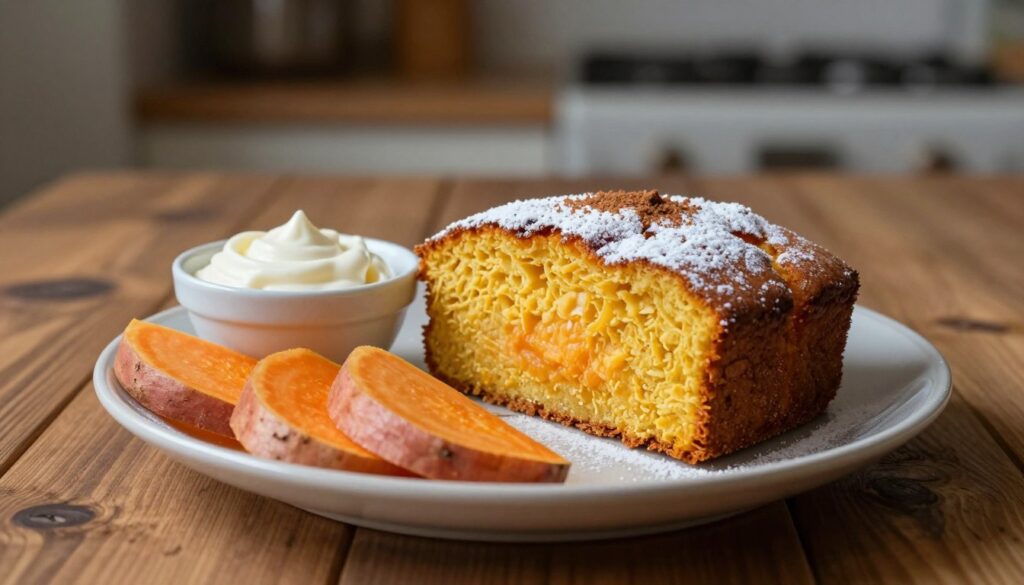
Sweet Potato Pecan Pound Cake
For a crisp bite, fold toasted, chopped pecans into the thick batter. You can also scatter candied pecans over cream cheese frosting for added visual appeal.
Maple Sweet Potato Pound Cake
Replace some granulated sugar with pure maple syrup for cozy, rich sweetness. Reduce the liquid ingredients slightly to balance the syrup’s extra moisture.
Brown Sugar and Bourbon-Style Flavor Variation
Swap white sugar for dark brown sugar to add deep molasses notes. A splash of moderate bourbon flavoring creates a sophisticated profile reminiscent of classic southern bakes.
Gluten-Free and Dairy-Free Adaptation Considerations
For allergy-friendly baking, use a measured gluten-free flour blend with xanthan gum for structure. Replace traditional dairy butter and milk with quality plant-based alternatives for identical richness.
How to Keep Ingredient Substitutions From Changing the Texture
Adjust fats, flours, and sugars with care because substitutions change the final crumb structure. Measure alternative ingredients carefully to preserve your homemade cake’s moist, dense quality.
Conclusion
Making a homemade sweet potato pound cake brings warmth and comfort to your kitchen. First, prepare a smooth, cooled purée from fresh sweet potatoes. Careful measuring creates balance, while thoroughly creaming butter and sugar builds the essential foundation for a tender crumb.
Mix gently after adding the dry ingredients. Bake your sweet potato pound cake until fully set, then cool it completely before decorating. Serve it plain, add rich cream cheese frosting, or adapt the batter for different pans.
This recipe makes a reliable sweet potato pound cake with warm spices and a moist texture. You can prepare it ahead for holidays, weekend brunches, family gatherings, or everyday baking.
FAQ
Can I use canned sweet potato purée instead of fresh sweet potatoes for this sweet potato pound cake?
Yes, you can use plain canned sweet potato purée for your homemade sweet potato cake. Buy 100% pure sweet potato without added sugars, syrups, spices, or butter. Canned purée saves time when making an easy sweet potato pound cake without roasting or boiling fresh roots.
Should I bake this cake in a Bundt pan or a loaf pan?
Choose a Bundt pan or loaf pan based on your desired look for this traditional sweet potato dessert. A Bundt pan creates an impressive presentation for holidays and special gatherings. A moist sweet potato loaf suits casual family dinners, potlucks, and weekend brunches.
How do I prevent my sweet potato pound cake from sticking to the Bundt pan?
Grease every crevice of your intricate Bundt pan with solid shortening or baking spray that contains flour. Then dust it lightly with all-purpose flour and tap out the excess. Let it cool 10 to 15 minutes, then gently invert it onto a wire rack for a clean release.
Can I make this sweet potato cake with cream cheese frosting ahead of time?
You can bake the cake a day or two ahead. Wrap it tightly and store it at room temperature if unfrosted, or refrigerate it after adding cream cheese frosting. Freeze whole unfrosted cakes or individual slices for up to a few months.
What causes a sweet potato pound cake to turn out dense or gummy?
A dense or gummy texture can result from overmixing the batter after adding flour. Incorrect flour measurements or too much liquid and sweet potato purée can also cause it. Measure dry ingredients carefully, fold flour gently just until combined, and ensure cooked sweet potatoes are well-drained and completely smooth.
