


This post may contain affiliate links. If you purchase through these links, we may earn a commission at no extra cost to you.
Growing up in a busy kitchen, I learned that roasted chicken is more than a meal. It’s a journey that turns simple ingredients into something magical. The smell of a perfectly roasted chicken can make any evening special.
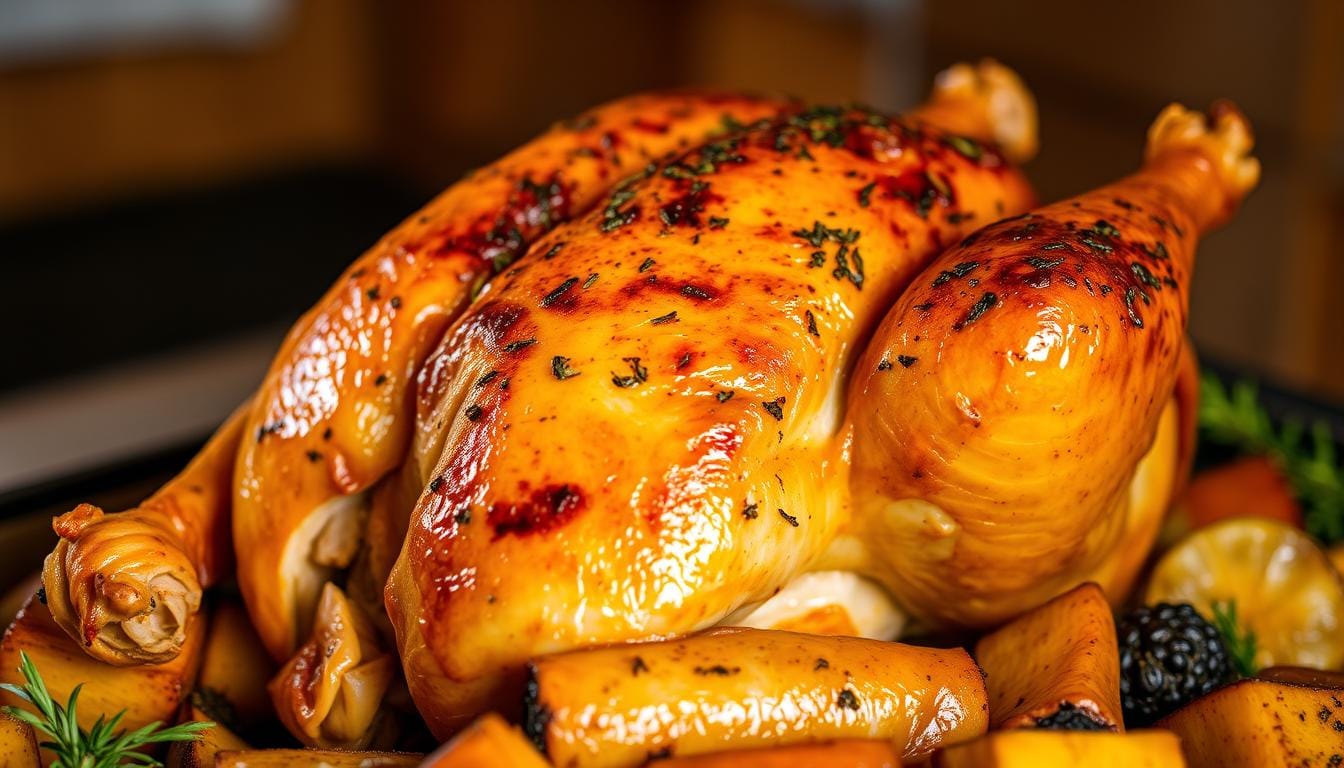
Everyone wants to make that golden-brown roasted chicken with crispy skin and juicy meat. Whether you’re new to cooking or have years of experience, mastering this dish will wow your loved ones.
In this guide, you’ll learn how to make an amazing roasted chicken that’s as good as restaurant food. We’ll cover picking the best ingredients, cooking techniques, and flavor combinations. Your chicken recipe will be unforgettable.
From choosing the right chicken to getting that perfect crispy skin, you’ll learn it all. Get ready to improve your cooking and make meals that everyone will love. You’ll be making dishes that everyone will ask for more of.
Essential Kitchen Tools and Ingredients for Perfect Roasted Chicken
To make the best roasted chicken, you need the right tools and ingredients. Whether you’re new to cooking or have lots of experience, the right tools can make your chicken amazing.
Must-Have Equipment for Success
Here are the essential kitchen tools for a tasty homemade roasted chicken:
- Sturdy roasting pan with rack
- Digital meat thermometer
- Sharp kitchen knife
- Kitchen twine for trussing
- Basting brush
Quality Ingredients That Make a Difference
Choosing top-notch ingredients is key to a great roasted chicken. Look for:
- Organic, free-range chicken
- Fresh, high-quality butter
- Locally sourced eggs
- Unrefined sea salt
Seasoning and Aromatics Selection
Use fresh herbs and aromatics to make your chicken special. Herbs like rosemary, thyme, and sage can turn a simple dish into a masterpiece. Try making your own herb mix for a personal touch.
Pro tip: Always pick fresh, high-quality ingredients for the best flavor and texture in your roasted chicken.
How to Prepare Your Chicken Before Roasting
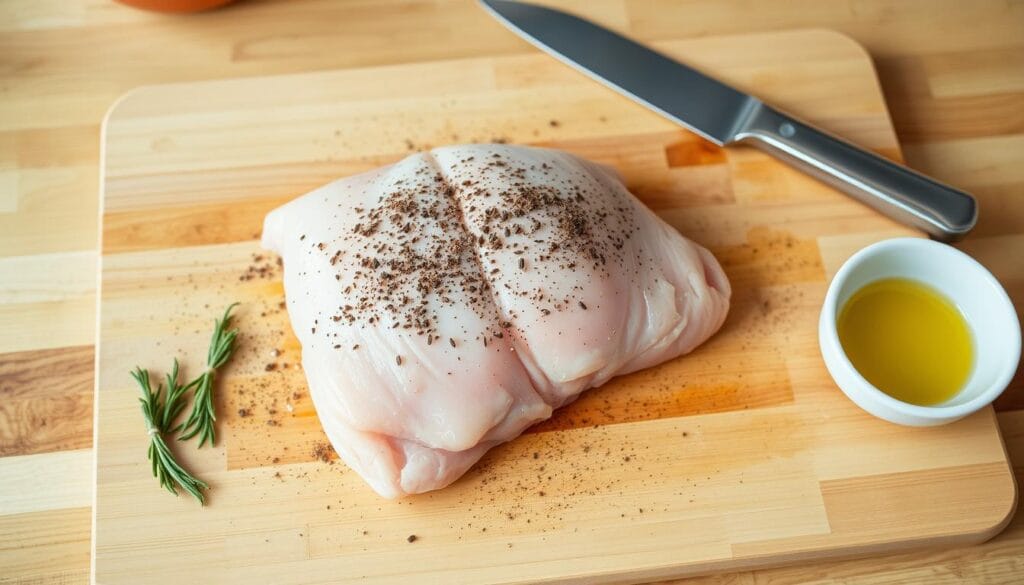
Getting your chicken ready right is key to a delicious roasted chicken. It can turn a simple meal into a flavorful feast. The right steps make the chicken tender and tasty.
First, take the chicken out of its packaging and dry it with paper towels. Dry skin is essential for crispy skin. Use clean towels or lots of paper towels to dry it well.
- Remove giblets from the chicken cavity
- Check for any excess fat or loose skin
- Trim unnecessary parts with kitchen shears
For a flavorful chicken, follow these steps:
- Trussing the chicken: Tie the legs together for even cooking
- Remove wing tips to prevent burning
- Create space between skin and meat for better seasoning
Brining can make your chicken even better. You have two main options:
| Brining Method | Benefits | Time Required |
|---|---|---|
| Wet Brining | Adds moisture and flavor | 4-12 hours |
| Dry Brining | Concentrates flavor, creates crispy skin | 1-24 hours |
Spending a bit of time on preparation makes a big difference. You’ll get a chicken that’s perfectly cooked and loved by all.
The Ultimate Guide to Roasted Chicken Seasoning
Turning a simple roasted chicken into a masterpiece starts with seasoning. The right herbs, spices, and techniques can make it unforgettable.
Seasoning is more than just salt and pepper. It’s about adding layers of flavor to make your chicken stand out. The right mix can turn a basic dish into something amazing.
Classic Herb and Butter Combinations
Traditional seasoning methods offer timeless flavors. Try these classic mixes:
- Rosemary and thyme with garlic butter
- Sage and parsley with lemon zest
- Tarragon and chives with unsalted butter
International Flavor Profiles
Discover global tastes to spice up your roasted chicken. Here are some unique spice blends:
- Mediterranean: Oregano, za’atar, and olive oil
- Moroccan: Ras el hanout and preserved lemon
- Asian-inspired: Five-spice powder and ginger
Creating Your Signature Spice Blend
Make your own spice blend to create a chicken that’s uniquely yours. Start with salt and pepper. Then, mix in dried herbs and spices to make it special.
Remember, balance is key. Mix bold flavors with subtle ones for a seasoning that complements the chicken’s natural taste.
Step-by-Step Roasting Temperature and Timing
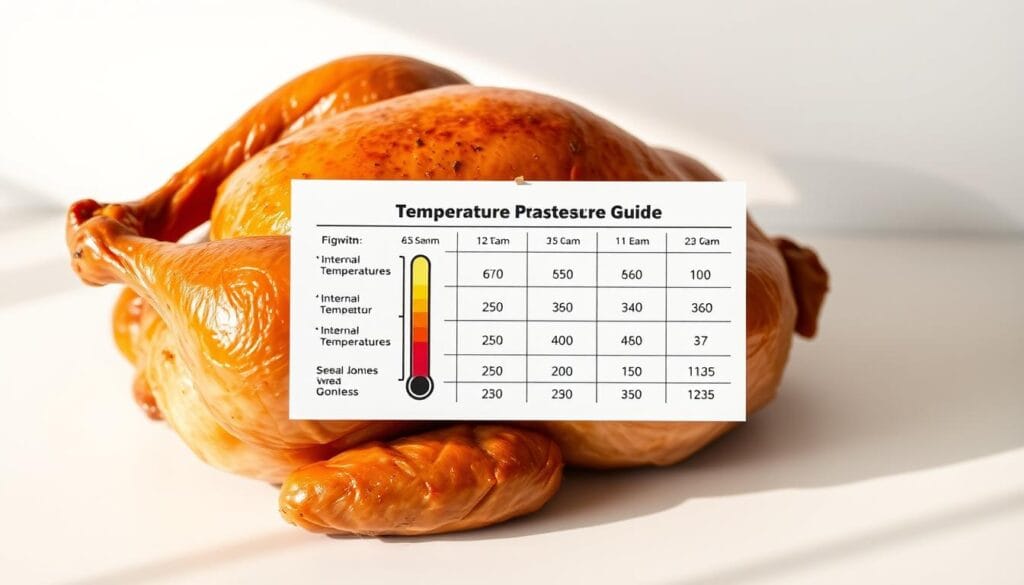
To make a crispy roasted chicken, you need to get the temperature and timing right. Your aim is to turn a simple chicken into a juicy, flavorful dish that everyone will love.
First, heat your oven to the ideal temperature. For most people, 425°F is the best choice. It helps get the chicken skin crispy while keeping the meat juicy.
- Whole chicken (3-4 lbs): Roast for 1 to 1.5 hours
- Larger chickens (5-6 lbs): Roast for 1.5 to 2 hours
- Chicken pieces: Roast for 35-45 minutes
For a juicy chicken, check the internal temperature. Use a meat thermometer to make sure it hits 165°F at its thickest part. Pro tip: Let the chicken rest for 10-15 minutes after roasting to lock in those delicious juices.
Different cuts need different approaches. Bone-in, skin-on pieces usually make the crispiest chicken. The bone helps even out the heat, and the skin adds a crunchy texture.
Cooking times can change based on your oven and chicken size. Always check with a meat thermometer to ensure your chicken is safe and perfectly cooked.
Achieving Perfectly Crispy Skin and Juicy Meat
Making a crispy roasted chicken that’s juicy inside is an art. It needs precision and skill. Your goal is to turn a simple chicken into a dish that wows everyone at dinner.
The secret to a crispy roasted chicken is in a few key steps. Your cooking method decides if the meat is dry or juicy. This makes all the difference in the taste.
Moisture Control Techniques
Keeping moisture in check is key for a crispy chicken. Here are some expert tips:
- Pat the chicken dry with paper towels before seasoning
- Use a wire rack to elevate the chicken while roasting
- Make sure air can circulate around the whole bird
- Try baking powder to dry out the skin
Temperature Management Tips
Right temperature control is vital for a juicy chicken. Start by preheating your oven correctly. Use a meat thermometer to check the chicken’s internal temperature.
- Roast at a high temperature (425°F) to crisp the skin
- Lower the temperature to 350°F for even cooking
- Cook until the internal temperature hits 165°F
Basting and Monitoring Methods
Smart basting can make your chicken amazing. Use these methods to keep it moist and flavorful:
- Baste with melted butter or olive oil
- Use a turkey baster for even distribution
- Check the chicken every 20-30 minutes while it’s roasting
- Let it rest for 10-15 minutes after cooking
With these tips, you’ll get the hang of making a crispy roasted chicken that’s juicy and tasty every time.
Common Mistakes to Avoid When Making Roasted Chicken
Making an easy roasted chicken seems simple, but mistakes can happen. Even skilled cooks can mess up. Knowing these common errors will help you make the best roasted chicken every time.
- Overcrowding the Roasting Pan: Too many ingredients around the chicken can stop air from circulating. This leads to uneven cooking and soggy skin.
- Skipping Pat-Drying: Moisture stops the skin from getting crispy. Always dry your chicken well with paper towels before seasoning.
- Incorrect Temperature Monitoring: Not using a meat thermometer can cause undercooked or dry chicken. Always check for an internal temperature of 165°F.
Managing temperature is key for a great roasted chicken. Start with meat at room temperature and preheat your oven fully. Try not to open the oven door too often. This can lower the temperature and make cooking take longer.
Seasoning is also very important. Don’t be shy with herbs and spices, but avoid over-salting. A good balance ensures the chicken tastes great without being too salty.
- Use kosher salt for better absorption
- Let seasoned chicken rest before roasting
- Consider brining for extra moisture
Remember, letting your chicken rest after roasting is just as important as cooking it. Give it 10-15 minutes to let juices spread. This makes your meal juicy and full of flavor.
Side Dishes That Complement Your Roasted Chicken
Adding the right side dishes can make your roasted chicken dinner special. The perfect sides can turn a simple meal into a memorable experience. They help create a balanced and tasty plate that will wow your guests.
Your roasted chicken needs side dishes that match its flavors. The goal is to pick sides that balance and highlight the main dish.
Traditional Flavor Combinations
- Creamy mashed potatoes
- Classic roasted root vegetables
- Herb-infused rice pilaf
- Buttery dinner rolls
Seasonal Vegetable Delights
Fresh seasonal veggies add color and nutrition to your meal. Here are some great options:
| Season | Vegetable Suggestions |
|---|---|
| Spring | Asparagus, baby carrots, sugar snap peas |
| Summer | Grilled zucchini, corn on the cob, cherry tomatoes |
| Fall | Roasted butternut squash, Brussels sprouts, sweet potatoes |
| Winter | Roasted parsnips, glazed carrots, braised kale |
Grain and Potato Perfection
Grains and potatoes are great for soaking up chicken juices. Here are some tasty options:
- Quinoa with herbs
- Garlic herb roasted potatoes
- Wild rice blend
- Couscous with Mediterranean spices
Pro tip: Always think about your roasted chicken’s flavors when picking sides. This way, you’ll create a meal that’s sure to please your taste buds.
Conclusion
Your journey to making the perfect roasted chicken is now over. You’ve learned key techniques, picked top ingredients, and tried different seasonings. Now, you can turn a simple chicken recipe into a dish that everyone loves.
Every roasted chicken you make is a chance to try new flavors and methods. You can go for classic herbs or try spices from around the world. Your skills will make meals that wow your family and friends. The secret is to keep practicing and be open to new ideas.
Getting good at roasted chicken takes time and effort. Start with the basics from this guide and then add your own twist. Focus on using the best ingredients, controlling the temperature, and choosing the right seasonings. This will make your cooking better and your meals unforgettable.
Your roasted chicken can be the star of many meals. It’s perfect for weeknights or big events. The skills you’ve gained will help you make dishes that are both tasty and creative. This shows your love for cooking and making great food at home.
