


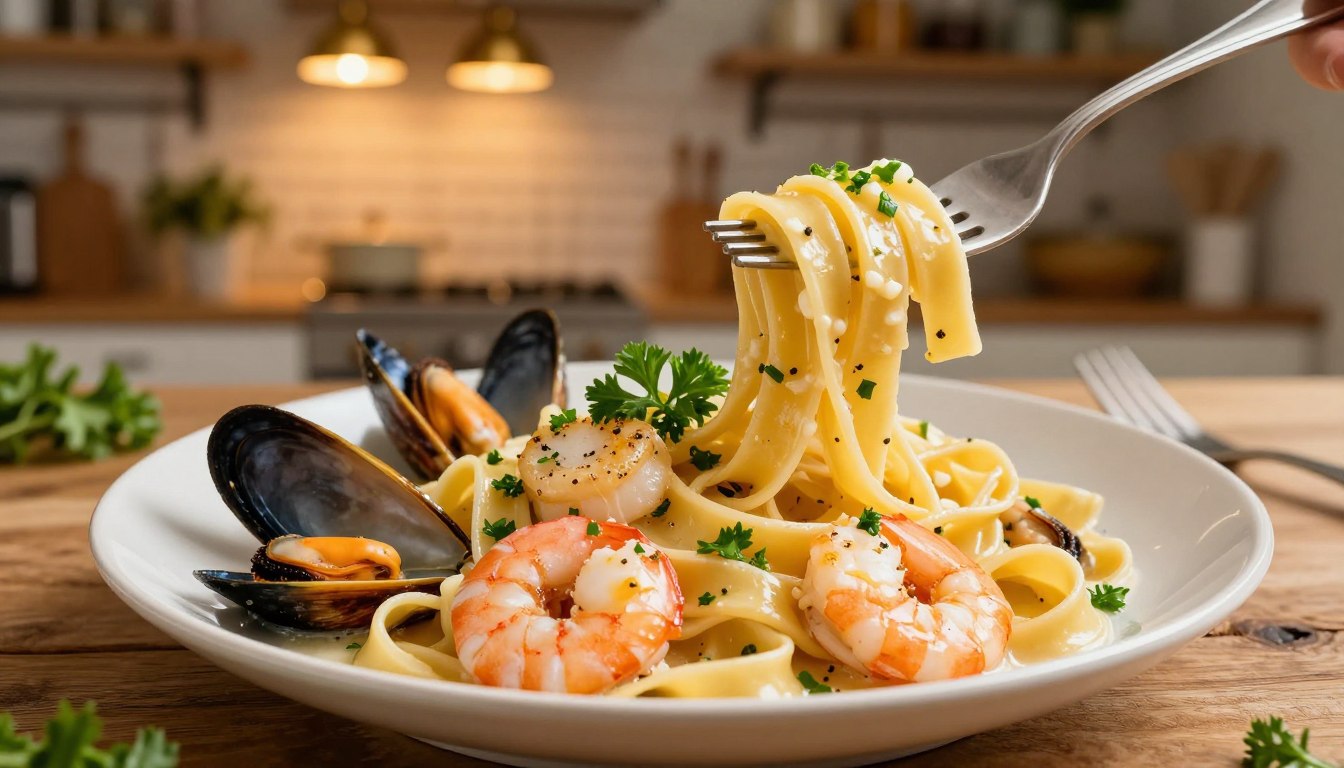
Creamy seafood fettuccine combines tender pasta, succulent seafood, garlic, Parmesan cheese, and a smooth cream sauce for a comforting dinner at home. A little lemon juice and dry white wine balance the richness, while fresh parsley adds a bright finish.
This recipe uses shrimp, scallops, and calamari, but you can adapt the seafood selection to suit your preferences. The key is to cook each type just until done and combine everything with the sauce shortly before serving.
Table of Contents
Why You’ll Love This Seafood Fettuccine
- Creamy garlic-Parmesan sauce: A rich sauce with garlic, cheese, and a touch of lemon.
- Tender seafood: Cooking the seafood separately helps prevent overcooking.
- Simple ingredients: Pasta, cream, butter, seafood, and a few pantry staples create a satisfying meal.
- Easy to customize: Use your preferred seafood or replace the wine with additional stock.
Ingredients for Seafood Fettuccine
For the pasta and seafood
- 12 ounces (340 g) dried fettuccine
- 12 ounces (340 g) peeled and deveined shrimp
- 6 ounces (170 g) sea scallops, side muscles removed
- 6 ounces (170 g) cleaned calamari rings, optional
- 1 tablespoon olive oil
- 1/2 teaspoon salt, divided, or to taste
- 1/4 teaspoon black pepper
For the creamy sauce
- 2 tablespoons unsalted butter
- 3 garlic cloves, minced
- 1 small shallot, finely chopped
- 1/2 cup (120 ml) dry white wine
- 1/2 cup (120 ml) seafood stock or low-sodium chicken stock
- 1 cup (240 ml) heavy cream
- 1/2 cup (50 g) finely grated Parmesan cheese
- 1 teaspoon lemon zest
- 1–2 teaspoons fresh lemon juice, to taste
- 2 tablespoons chopped fresh parsley
- Red pepper flakes, optional
How to Make Creamy Seafood Fettuccine
1. Prepare the Ingredients
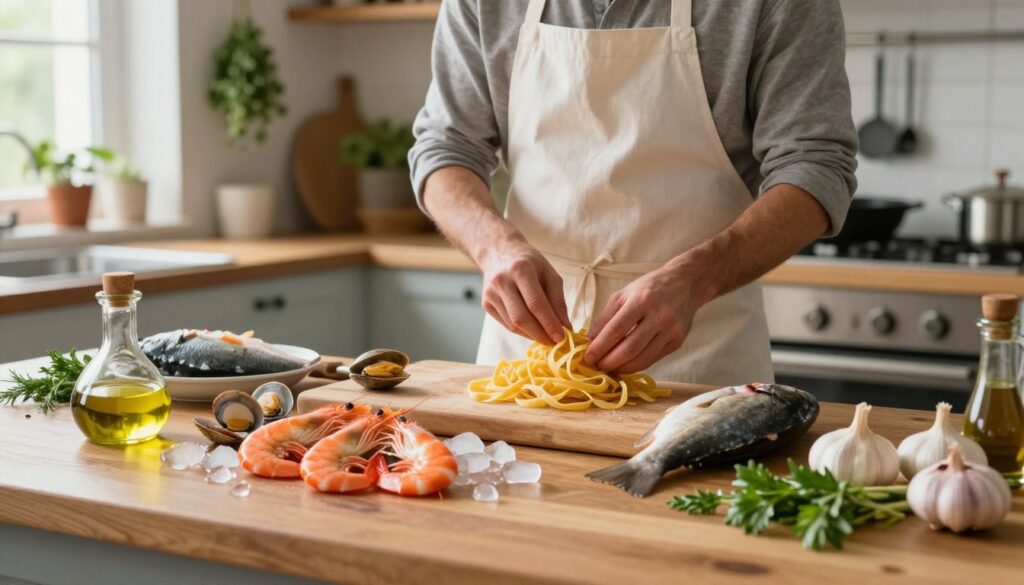
If using frozen seafood, thaw it safely in the refrigerator. Pat the shrimp and scallops dry with paper towels. Make sure the calamari is cleaned and cut into rings.
Mince the garlic, chop the shallot and parsley, and measure the sauce ingredients before cooking. Keep raw seafood separate from ready-to-eat ingredients and wash your hands and utensils after handling it.
2. Cook the Fettuccine
Bring a large pot of water to a boil and season it with salt. Add the fettuccine and cook according to the package instructions until al dente.
Before draining, reserve about 1 cup of pasta water. Drain the pasta without rinsing it.
3. Cook the Seafood
Heat the olive oil in a large skillet over medium-high heat.
Cook the scallops for approximately 2–3 minutes per side, depending on their size, until golden and cooked through. Transfer them to a clean plate.
Add the shrimp in a single layer and cook, turning once, until opaque and cooked through, usually about 2–4 minutes total depending on size. Remove them from the skillet.
If using calamari, cook it briefly over high heat, stirring, until opaque and tender, generally around 1–2 minutes depending on thickness. Transfer it to the plate.
Avoid crowding the pan. Cook in batches if necessary, and do not leave the seafood sitting in the hot skillet while preparing the sauce.
4. Build the Garlic and White Wine Sauce
Reduce the heat to medium and add the butter to the skillet. Add the shallot and cook for 2–3 minutes until softened. Stir in the garlic and cook for about 30 seconds, taking care not to brown it.
Pour in the white wine and scrape up any flavorful browned bits from the bottom of the skillet. Simmer for 2–3 minutes, allowing the liquid to reduce slightly.
Add the seafood stock and heavy cream. Bring the mixture to a gentle simmer and cook for 3–5 minutes, stirring occasionally, until it begins to thicken. Avoid boiling it vigorously.
5. Add the Parmesan and Lemon
Reduce the heat to low. Gradually stir in the grated Parmesan until melted into the sauce.
Add the lemon zest, 1 teaspoon of lemon juice, black pepper, and a small amount of salt. Taste before adding more salt because Parmesan and seafood can already contribute saltiness.
If the sauce becomes too thick, add reserved pasta water a tablespoon at a time.
6. Combine the Pasta and Seafood
Add the drained fettuccine to the skillet and toss gently until the strands are coated with sauce.
Return the cooked shrimp, scallops, and calamari to the pan. Fold them in gently and cook just long enough to warm through, ensuring the seafood remains properly cooked.
Stir in the chopped parsley. Taste and add the remaining lemon juice or a pinch of red pepper flakes if desired.
7. Serve Immediately
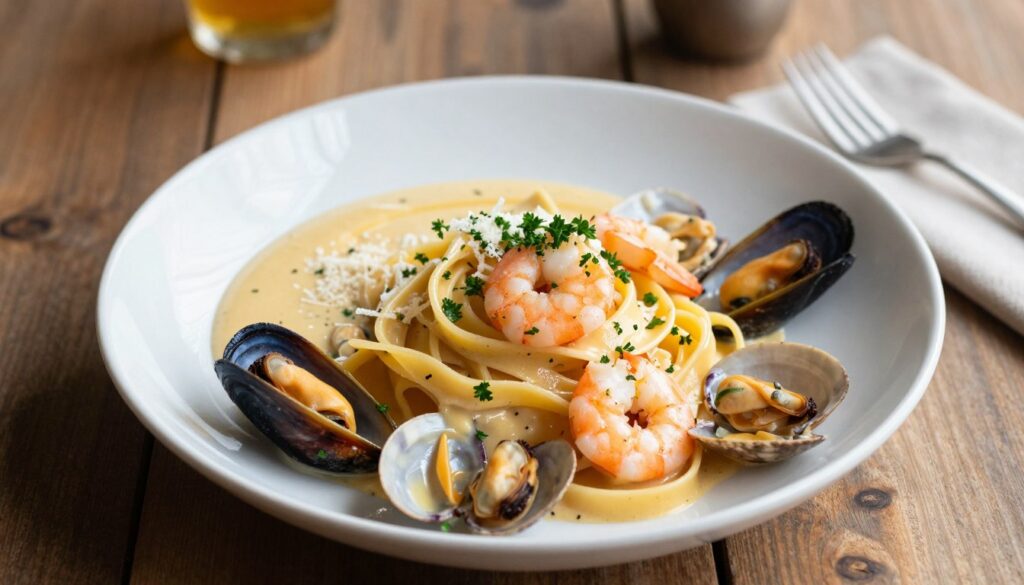
Divide the seafood fettuccine between warm serving bowls. Spoon the creamy sauce over the pasta and arrange the seafood on top.
Finish with a little extra Parmesan, chopped parsley, and freshly ground black pepper. Serve immediately with a green salad or crusty bread.
Tips for the Best Seafood Fettuccine
- Dry the seafood before cooking: Excess moisture makes it harder to brown shrimp and scallops.
- Cook seafood separately: Different seafood types need different cooking times.
- Keep the sauce at a gentle simmer: Vigorous boiling can cause a cream sauce to separate.
- Add Parmesan over low heat: Finely grated cheese melts more evenly.
- Save pasta water: Its starch helps the sauce cling to the fettuccine.
- Adjust the lemon gradually: A little acidity balances the richness without overpowering the seafood.
Variations
Seafood Fettuccine Without Wine
Replace the white wine with an equal amount of seafood stock or low-sodium chicken stock. Add lemon juice gradually at the end to provide brightness.
Seafood Fettuccine with Mussels or Clams
You can replace some of the shrimp, scallops, or calamari with mussels or clams. Cook live shellfish separately in a covered pan with a little stock or wine until the shells open. Discard shellfish that remain closed after cooking, and follow local food-safety guidance.
Add Spinach or Cherry Tomatoes
Stir a handful of baby spinach into the sauce near the end until wilted. Alternatively, sauté halved cherry tomatoes before adding the cream for a fresher, slightly tangy variation.
Storage and Reheating
Refrigerate leftovers promptly in a covered container within 2 hours of cooking. Use refrigerated leftovers within 3–4 days, and reheat them thoroughly to 165°F (74°C).
To reheat, place the pasta in a skillet over low heat with a splash of stock, milk, or water. Stir gently until hot, avoiding prolonged cooking that can toughen the seafood or separate the sauce.
For the best texture, serve the dish freshly made. Freezing is not recommended because the cream sauce may separate and the seafood may become tougher after thawing.
Frequently Asked Questions
What seafood works best in seafood fettuccine?
Shrimp and scallops work particularly well because they pair nicely with creamy garlic-Parmesan sauce. Calamari, mussels, and clams are also options, provided each is cooked appropriately.
Can I use frozen seafood?
Yes. Thaw it in the refrigerator, drain any excess liquid, and pat it dry before cooking. Follow the package instructions if the seafood is already cooked.
How do I stop the cream sauce from becoming too thick?
Add reserved pasta water a tablespoon at a time while tossing the pasta. Keep the heat low and stop when the sauce coats the noodles smoothly.
Can I make seafood fettuccine without heavy cream?
You can use a suitable cooking cream alternative, but the flavor and texture may differ. Unsweetened dairy-free cream is an option for a dairy-free variation; Parmesan must also be replaced to make the dish fully dairy-free.
Conclusion
Creamy seafood fettuccine brings together tender pasta, seafood, garlic, Parmesan, and a smooth sauce for a satisfying meal. Prepare the ingredients before cooking, handle each seafood type carefully, and combine everything just before serving for the best texture and flavor.
FAQ
What is the best seafood fettuccine recipe for beginners?
The best seafood fettuccine recipe starts with prepared ingredients, dry seafood, and separate cooking for each protein. Combine al dente fettuccine with a rich seafood fettuccine with white wine sauce for restaurant-quality results at home.
How can I make an easy seafood fettuccine on a busy weeknight?
For easy seafood fettuccine on a busy weeknight, use pre-cleaned shrimp, shelled mussels, and frozen sea scallops that only require thawing and drying. Chop your aromatics and measure your wine before turning on the stove.
Can I prepare this dish as an authentic seafood fettuccine without heavy cream?
Yes, make an authentic seafood fettuccine with a light emulsion of olive oil, garlic, fresh lemon juice, and starchy pasta water. Add a splash of dry white wine or clam juice. This traditional approach highlights the natural sweetness of the shrimp, clams, and calamari.
How do I ensure my seafood fettuccine with creamy sauce does not break or separate?
Keep your seafood fettuccine with creamy sauce smooth by lowering the heat before adding grated Parmesan cheese and heavy cream. Remove the skillet from the burner if needed. High heat can curdle dairy, so gentle warmth creates a velvety finish.
What is the secret to a seafood fettuccine restaurant-quality presentation?
For a seafood fettuccine restaurant-quality look, twirl pasta into the center of a warm bowl. Arrange the seared scallops, shrimp, and shellfish on top so they stay visible. Finish with fresh parsley, lemon zest, and cracked black pepper.
