



Imagine making your weeknight dinner special with little effort. Balsamic-glazed salmon fillets are a fancy solution that brings top-notch food to your home. This easy recipe combines fancy flavors with simple steps.
Seafood fans and home cooks know the charm of a great salmon dish. The salmon’s rich taste mixed with a tangy-sweet balsamic glaze makes a meal that’s both fancy and easy. You’ll see how a few ingredients can turn your cooking into something unforgettable.
Whether it’s for family or a dinner party, balsamic-glazed salmon fillets are a hit. This guide will help you every step of the way. You’ll learn how to pick the right ingredients and make a dish that’s sure to impress.
Why Balsamic-Glazed Salmon Fillets Are Perfect for Weeknight Dinners
Looking for a simple yet tasty salmon recipe for weeknights? Balsamic-glazed salmon fillets are your answer. They’re quick, healthy, and full of flavor.
Quick Preparation Time
Life gets busy, and you need meals that are fast. This recipe is ready in 25-30 minutes. It’s easy to prepare and cook.
- 5-10 minutes prepping ingredients
- 15-20 minutes cooking
- Minimal cleanup required
Nutritional Benefits of Salmon
Salmon is not only tasty but also packed with nutrients. Each serving offers:
- High omega-3 fatty acids for heart health
- Quality protein for muscles
- Vitamins D and B complex
- Selenium for the immune system
Versatile Flavor Profile
This salmon recipe is versatile. The balsamic glaze adds a tangy sweetness that pairs well with salmon. Try different herbs and seasonings to suit your taste.
Essential Ingredients for Your Balsamic Salmon Recipe
Making a tasty balsamic-glazed salmon begins with top-notch ingredients. Your simple fish recipe needs the right ingredients to go from good to great.
Core Ingredients for Balsamic Salmon
- Fresh salmon fillets (4-6 ounces per serving)
- High-quality balsamic vinegar (minimum 1/3 cup)
- Honey or brown sugar (2-3 tablespoons)
- Fresh garlic (2-3 cloves)
- Extra virgin olive oil
- Kosher salt and freshly ground black pepper
The quality of your balsamic vinegar glaze is key. Aged balsamic vinegars offer a deeper, more complex taste than regular ones.
Optional Flavor Enhancers
- Fresh herbs (thyme, rosemary, basil)
- Dijon mustard
- Soy sauce
- Red pepper flakes
| Ingredient | Substitution Option | Purpose |
|---|---|---|
| Honey | Maple syrup | Sweetness in glaze |
| Soy Sauce | Coconut aminos | Umami depth |
| Balsamic Vinegar | Red wine vinegar | Acidic component |
Pro tip: Always keep ingredients at room temperature before cooking. This ensures even cooking and the best flavor in your balsamic vinegar glaze.
Selecting the Best Salmon Fillets at Your Local Market
Choosing the right salmon is key for a great seafood dish. Your recipe needs the best ingredients. Knowing how to pick premium fillets makes a big difference.
Finding the right salmon at the seafood counter can be tough. But with the right tips, you’ll become a pro. Let’s look at what makes the best fillets for your next meal.
Fresh vs. Frozen Options
Frozen salmon is worth considering. High-quality frozen options can be fresher than “fresh” ones. Here’s what to keep in mind:
- Fresh salmon is best for cooking right away
- Frozen salmon has:
- Longer shelf life
- Is often cheaper
- Is flash-frozen at peak freshness
Identifying Quality Salmon
When picking salmon, look for these signs of quality:
- Firm, springy flesh
- Vibrant color (deep red to pale pink)
- Fresh, ocean-like smell
- Moist appearance without too much liquid
Pro tip: Different salmon types have unique flavors. Some popular ones are:
| Salmon Variety | Flavor Profile |
|---|---|
| Sockeye | Rich, deep flavor |
| Coho | Mild, delicate taste |
| King (Chinook) | Buttery, luxurious texture |
Start with the best ingredients for a great salmon recipe. Take your time and follow these tips. Choose a fillet that will make your next meal unforgettable.
Creating the Perfect Balsamic Vinegar Glaze
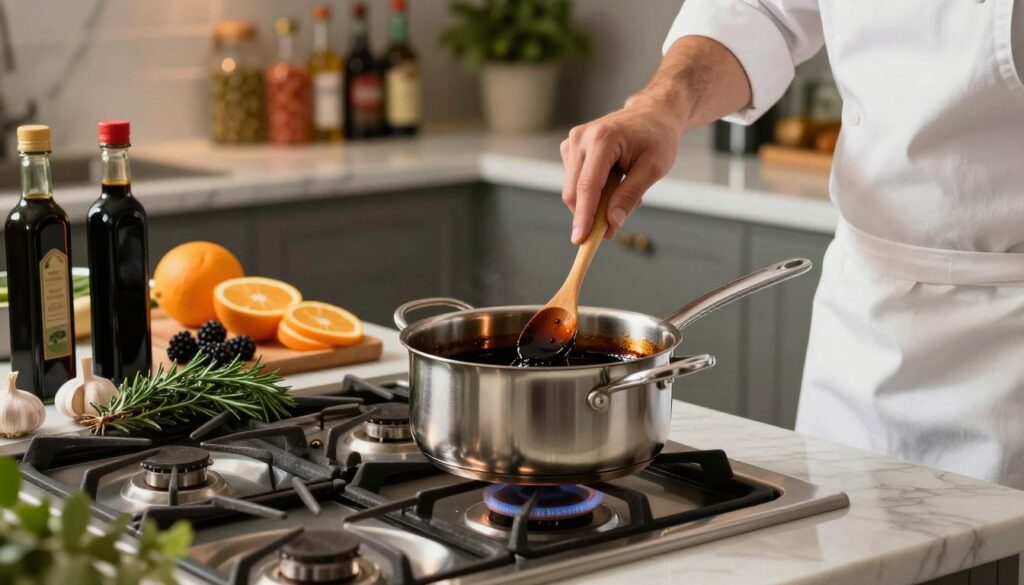
Making the perfect balsamic vinegar glaze can turn your salmon into a masterpiece. It’s all about finding the right mix of ingredients and cooking methods. This creates a rich, shiny coating that enhances the taste.
First, gather your essential ingredients for the glaze:
- High-quality balsamic vinegar
- Natural sweetener (honey or maple syrup)
- Fresh garlic
- Optional herbs like thyme or rosemary
Now, mix these ingredients in a small saucepan. Low and slow is the key to a great glaze. Heat it on medium-low, letting it simmer until the liquid thickens and flavors intensify.
Here’s how you know your glaze is ready:
- The mixture has reduced by about half.
- It’s now syrupy.
- The glaze sticks to the back of a spoon.
- It takes 8-12 minutes to reach this point.
For a glossy finish, whisk in a bit of butter at the end. This will make your glaze even richer and your salmon more appealing.
Step-by-Step Guide to Cooking Your Salmon
Turning a simple fish recipe into a gourmet dish is all about the details. Whether you’re new to cooking or have years of experience, learning to make flavorful salmon is straightforward.
Preparing Your Salmon Fillets
Begin by picking the best salmon fillets. Getting the preparation right is key for the perfect texture and taste:
- Pat the salmon dry with paper towels for a crispy outside
- Remove any pin bones with clean tweezers
- Season both sides well with salt and pepper
- Let the fish sit at room temperature for 15-20 minutes
Pan-Searing Techniques
Pan-searing is a great way to get a tasty crust on your salmon. Here’s how to do it right:
- Heat a cast-iron skillet over medium-high heat
- Add oil with a high smoke point
- Put salmon skin-side down first
- Cook for 4-5 minutes without moving the fillet
- Carefully flip and cook for another 2-3 minutes
- Apply balsamic glaze during the last minute of cooking
Oven-Baking Methods
Oven-baking is a low-effort method that still yields great results:
- Preheat oven to 400°F
- Line a baking sheet with parchment paper
- Place seasoned salmon fillets on it
- Bake for 12-15 minutes based on thickness
- Broil briefly to caramelize the glaze
Pro tip: Use a meat thermometer to check doneness. Aim for an internal temperature of 125-130°F for medium-rare salmon.
Delicious Side Dishes to Complement Your Seafood Dish
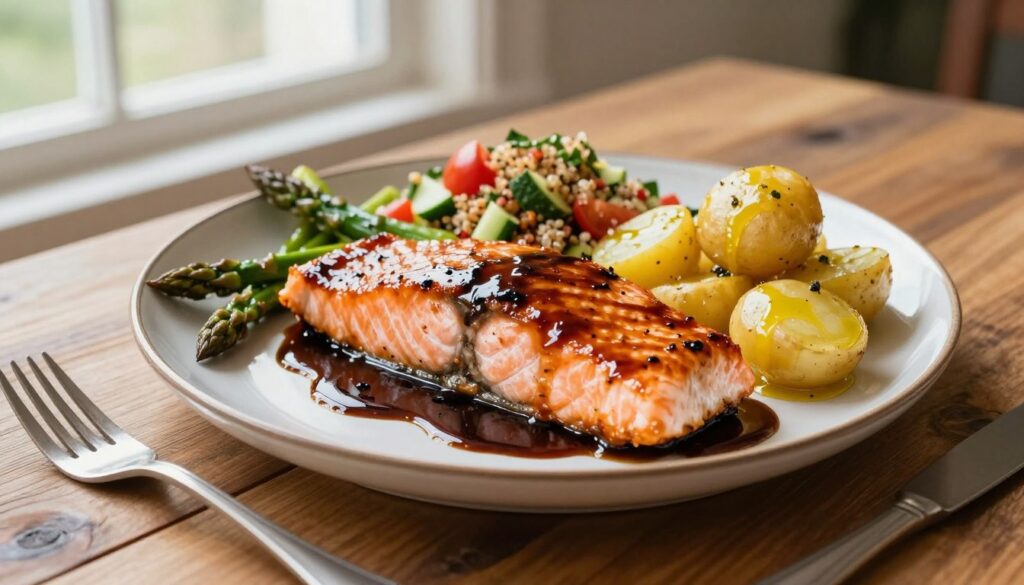
To make your balsamic-glazed salmon a standout, pick the right side dishes. These can turn your meal into a special occasion. It will impress everyone at the table.
Choose sides that balance out the flavors of your salmon. Add some color and nutrition with these vegetable options:
- Roasted asparagus with lemon zest
- Garlic-sautéed green beans with toasted almonds
- Balsamic-roasted Brussels sprouts
- Grilled zucchini and bell pepper medley
For starch sides, pick options that add texture and taste:
- Creamy garlic mashed potatoes
- Wild rice pilaf with dried cranberries
- Herbed quinoa
- Crusty artisan bread for soaking up glaze
It’s all about coordination. Pick sides that cook fast so everything is ready at once. Aim for dishes that take 15-20 minutes to prepare. This way, your balsamic salmon will shine, and the sides will add to the feast.
Tips for Achieving Restaurant-Quality Results at Home
To make your balsamic-glazed salmon fillets as good as a restaurant’s, you need some special skills. Learning a few key techniques will take your salmon from great to amazing.
Professional chefs see making perfect balsamic-glazed salmon as an art. It’s all about precision and skill. With the right steps, your home kitchen can make food that rivals restaurants.
Mastering Temperature Control
Getting the temperature right is key when cooking salmon. Here are some pro tips:
- Let salmon fillets warm up to room temperature before cooking
- Use an instant-read thermometer to check if it’s done
- Shoot for an internal temperature of 145°F for the best fish
- Take salmon off heat 5 degrees before your target temperature
Advanced Glazing Techniques
To get that shiny, professional look on your balsamic-glazed salmon, you need to be precise:
- Put glaze on during the last 2-3 minutes of cooking
- Brush on thin layers for the best flavor and shine
- Use a broiler for a final caramelized touch
- Let salmon rest 3-5 minutes before serving
With these methods, you’ll make flavorful salmon that looks and tastes like it’s from a fancy restaurant. Keep practicing and you’ll get better at making balsamic-glazed salmon fillets every time.
Conclusion
Creating delicious sweet and savory salmon is more than just a recipe—it’s an adventure in healthy cooking. You’ve learned the essential skills to transform a simple salmon fillet into a restaurant-worthy dish. This dish delights both your palate and nutritional needs.
By mastering techniques like proper temperature control and crafting the perfect balsamic glaze, you’ve expanded your culinary repertoire. The beauty of this recipe lies in its flexibility. While you now understand the foundational steps for preparing balsamic-glazed salmon, don’t be afraid to experiment.
Try different vinegars, incorporate unique spices, or add unexpected ingredients that reflect your personal taste. Each time you cook, you’ll gain confidence and develop your own signature approach to this versatile seafood preparation.
Remember that healthy cooking doesn’t mean sacrificing flavor. This salmon recipe proves you can enjoy a nutrient-dense meal that’s both delicious and simple to prepare. With practice, you’ll become more efficient and creative, turning this dish into a regular part of your dinner rotation.
Your kitchen is now a space of culinary exploration, where every meal is an opportunity to surprise and satisfy yourself and your loved ones. Embrace the skills you’ve learned. Your balsamic-glazed salmon journey is just beginning, and the possibilities are as limitless as your imagination.
Enjoy the process, savor the results, and keep exploring the wonderful world of home cooking.
