


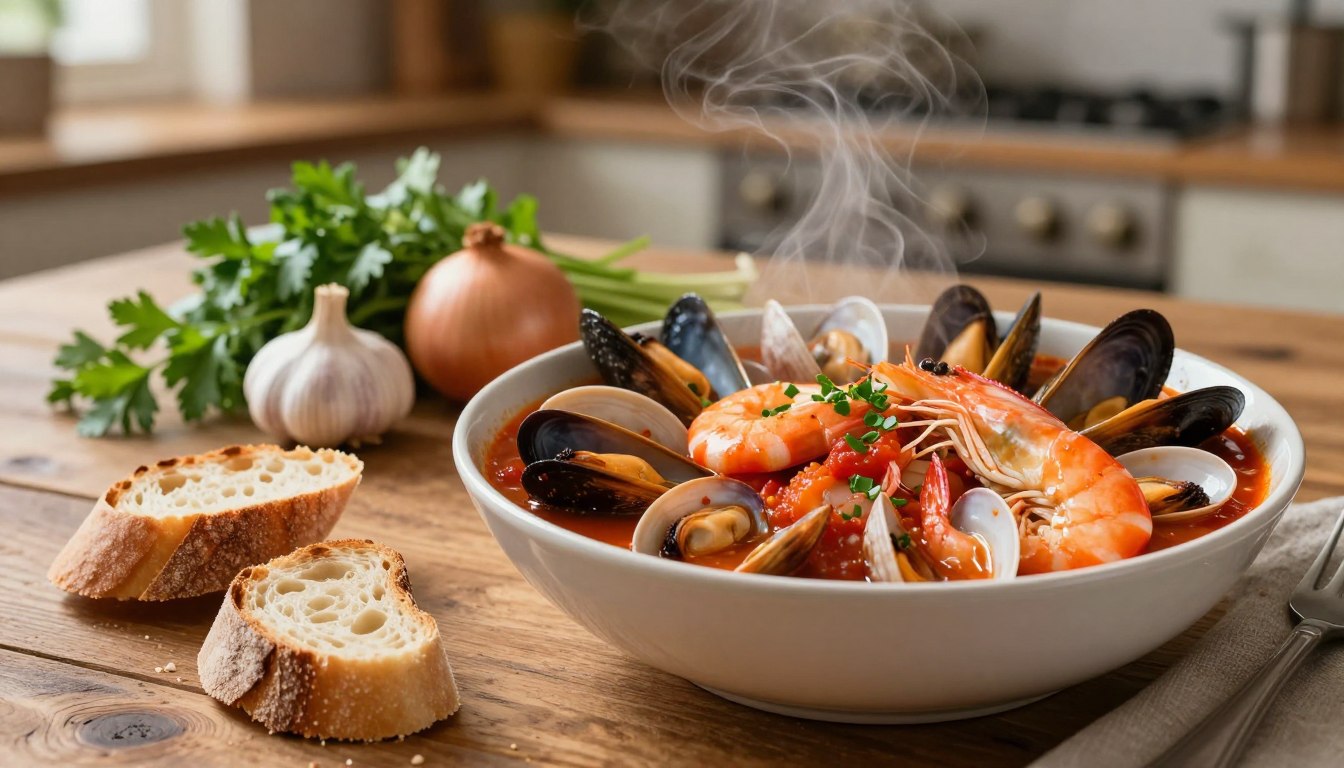
Few things match the comfort of entering a kitchen filled with bubbling tomato broth. You do not need professional culinary training to make a restaurant-quality seafood cioppino, an Italian-American classic, at home.
This comforting stew combines a rich, aromatic base with tender shrimp, flaky fish, and fresh shellfish for an unforgettable meal. Prepare your ingredients first, and the cooking process will feel simple and stress-free.
Timing matters because delicate proteins cook much faster than sturdier ingredients in the pot. This seafood cioppino guide covers key steps, from choosing the freshest catch to serving a steaming bowl at your table.
You will learn to build deep flavors, handle ingredients safely, and solve minor problems. Then impress family and friends with a magnificent homemade dish that tastes like it came straight from the coast.
Table of Contents
Key Takeaways
- Master the art of crafting a rich, tomato-based stew right in your home kitchen.
- Learn how to select and handle fresh fish and shellfish safely.
- Understand the critical timing required for cooking different types of proteins.
- Organize your ingredients beforehand to make the cooking process smooth and simple.
- Discover expert tips for serving, storing, and troubleshooting your meal.
1. Understand What Makes Seafood Cioppino Special — 180 words
Before cooking, learn what makes this Italian seafood stew unique. You will explore a tradition that brings coastal flavor to your kitchen table.
Define this San Francisco cioppino-style Italian seafood stew
Cioppino is a famous San Francisco specialty with deep Italian-American roots. Local fishermen created this hearty Italian seafood stew by combining their daily catch in flavorful tomato broth. This version follows historic waterfront recipes, not a strict standard formula.
Set expectations for flavor, texture, servings, and cooking time
Expect savory, slightly acidic broth with the sweet, briny taste of fresh shellfish. Firm fish should stay tender and whole, while shrimp turn opaque and mussels open naturally. Timing and texture matter most in this recipe.
This Italian seafood stew makes about four hearty servings and works as a filling main course. You can finish the entire process in about one hour. Serve it with crusty bread to soak up every drop of broth.
2. Gather the Ingredients and Equipment — 320 words
A delicious bowl of San Francisco cioppino starts before the stove heats. A complete checklist helps you shop well and organize the kitchen. Then, you will not feel rushed when cooking begins.
Choose the Seafood Medley
Explain how to combine firm fish, shrimp, crab, mussels, and clams
Build a balanced seafood mix for your stew. Use firm white fish, such as cod or halibut, peeled shrimp, sweet crab meat, and clean mussels and clams.
Describe fresh, frozen, and sustainable seafood options
Fresh seafood is best when it smells clean and briny. High-quality frozen seafood also works when thawed safely. Always check local sustainability guidance and fish-counter tags.
Prepare the Tomato-Based Broth Ingredients
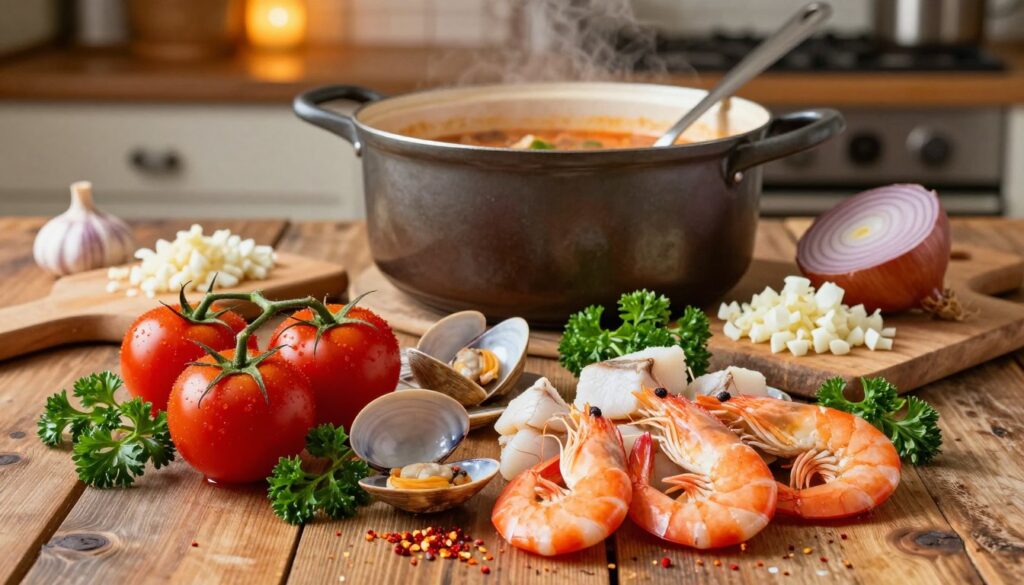
List tomatoes, seafood stock, white wine, onion, garlic, fennel, herbs, and seasonings
Your list should include crushed tomatoes, seafood stock, dry white wine, onion, garlic, and fennel bulb. Also add fresh parsley, bay leaves, red pepper flakes, salt, black pepper, and olive oil.
Explain suitable substitutions for wine, stock, fennel, and herbs
Use low-sodium chicken or vegetable stock instead of seafood stock, if needed. Replace wine with lemon juice or extra stock. Celery can replace fennel, and dried herbs work when fresh ones are unavailable.
Prepare Cookware and Serving Equipment
Have a large, heavy-bottomed Dutch oven or stockpot ready. You also need a sturdy cutting board, sharp chef knife, precise measuring tools, reliable ladle, wide serving bowls, and crusty bread.
Explain the Ingredient Order and Timing Before Cooking
Arrange ingredients in the order you will cook them to prevent delays. Staging them first helps prevent overcooking and keeps the San Francisco cioppino process smooth.
3. Step 1: Prepare the Seafood Safely — 250 words
Before cooking any seafood soup recipe, prepare each ingredient with care for safety and flavor. Make food safety part of your routine, not an afterthought, to protect your health. Handle every protein carefully for the best results.
Thaw frozen seafood and keep it chilled
Use refrigerator thawing and avoid leaving seafood at room temperature
Thaw frozen items in a covered container inside the refrigerator. Thawing overnight helps them thaw evenly. Never leave raw protein at room temperature, where unsafe bacteria can multiply quickly; keep seafood chilled until needed.
Clean and inspect shellfish
Scrub mussels, remove beards, rinse clams, and discard cracked or open shells that do not close when tapped
Scrub mussels under cold running water, pull away visible beards, and rinse clams well. Inspect every shell in the batch, discard cracked ones, and tap open shells firmly. Throw away shells that stay open, but wait briefly because healthy shells may close slowly.
Cut fish and organize the seafood for staged cooking
Pat seafood dry and keep delicate items separate from firm fish
Cut firm fish into even pieces for consistent cooking. Pat each piece dry with paper towels to reduce excess water and preserve the rich broth flavor. Keep shrimp, crab, mussels, and clams separate until adding them in stages.
Prevent cross-contamination by washing hands, utensils, and surfaces
Wash your hands with soap and warm water before and after handling raw proteins. Use separate, or thoroughly sanitized, cutting boards, knives, bowls, and work surfaces. Good hygiene keeps your kitchen safe and makes your seafood soup recipe enjoyable.
4. Step 2: Build the Savory Cioppino Broth — 450 words
Build the flavorful broth before adding proteins. This key step turns pantry staples into a rich, fragrant base for the main ingredients.
Take your time here so every spoonful delivers full flavor.
Sauté the aromatics to create the flavor base
Heat plenty of olive oil in a large, heavy-bottomed pot over medium heat. This provides the cooking base for your main flavor builders.
Cook onion and fennel until softened before adding garlic
Add diced yellow onion and thinly sliced fennel bulb to the warm oil. Cook them slowly until soft and translucent.
Prevent the garlic and aromatics from browning too aggressively
Add minced garlic during the vegetables’ final minute. Stir constantly until it smells fragrant but does not burn.
Burned garlic tastes bitter and can overpower your dish. Moderate heat protects the delicate flavors of the aromatics.
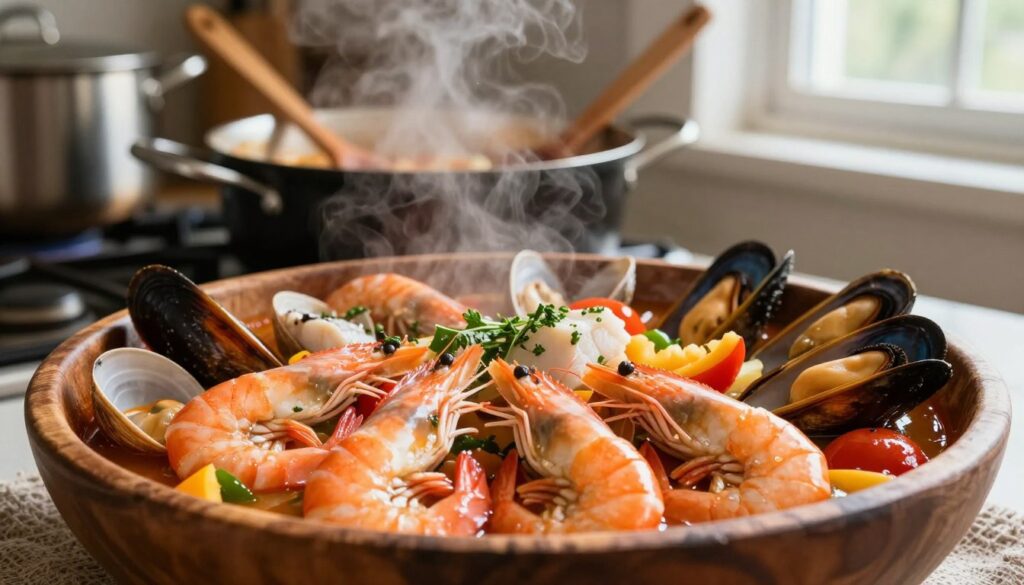
Add tomatoes, wine, stock, and seasonings
When the aromatics soften, build the stew’s liquid base. Add the wet ingredients, then sprinkle in the dry spices.
Use crushed tomatoes, seafood stock, dry white wine, bay leaf, parsley, and red pepper flakes
Stir in crushed canned tomatoes, rich seafood stock, and a splash of dry white wine. Add a fresh bay leaf, chopped parsley, and red pepper flakes for heat.
Explain how wine acidity and stock contribute to the broth
Dry white wine adds bright acidity that cuts through rich tomatoes. Seafood stock brings savory depth and strengthens the natural taste of your seafood medley.
Simmer the broth until it tastes balanced
Bring the liquid to a gentle boil, then lower the heat. A proper simmer blends each component into one cohesive broth.
Simmer uncovered so the broth develops depth without becoming overly thick
Simmer the pot uncovered so excess liquid evaporates gradually. This reduction concentrates flavor without creating an overly thick, heavy sauce.
Adjust salt, pepper, acidity, spice, and sweetness before adding seafood
Taste the liquid before adding proteins. Adjust salt, black pepper, acidity, heat, and sweetness until the base tastes balanced.
Correct common broth problems before proceeding
Sometimes the broth needs a quick adjustment before you continue. Fixing small issues now prevents bigger problems later.
Fix a broth that is too thin, salty, acidic, spicy, or bland
Simmer a thin broth longer, or dilute a salty one with water or unsalted stock. Balance high acidity with sugar and tame excess spice with extra broth. Brighten bland broth with lemon juice, fresh herbs, or salt.
Your final seafood medley will add natural brininess. Therefore, the broth should taste robust, balanced, and well seasoned before cooking.
5. Step 3: Add the Seafood in the Right Order — 500 words
The flavor and texture of your tomato-based seafood stew depend on when each ingredient enters the pot. Add ingredients in stages to protect delicate proteins from overcooking. This sequence helps fish and shellfish cook perfectly.
Start with firm fish and dense seafood
Dense proteins need more time to absorb flavors and cook through. Add them before ingredients that cook quickly.
Add cod, halibut, salmon, or another firm fish first so it cooks gently in the broth
Add thick fish chunks to the simmering liquid early. These firm varieties hold their shape and build the stew’s hearty base.
Keep pieces similar in size for even cooking
Cut the fillets into equal portions before cooking. Similar sizes help every piece finish at the same time.
Add crab, shrimp, mussels, and clams in stages
Delicate shellfish cook faster than dense fish fillets. Careful timing keeps them from becoming rubbery.
Place clams and mussels in the simmering broth and cover the pot
Place the scrubbed bivalves in the liquid and cover the pot. Trapped steam helps the shells open quickly.
Add crab and shrimp according to their size and whether they are raw or already cooked
Add raw shrimp during the final minutes. Add pre-cooked crab near the end, just long enough to warm it.
Use shell opening and shrimp color as practical doneness cues
Look for clear signs that the seafood is done. These cues make timing easier and more reliable.
Finish cooking without overcooking the seafood
Careful heat control keeps seafood tender and juicy. Safe doneness matters more than a strict cooking schedule.
Maintain a gentle simmer rather than a vigorous boil
Keep the broth at a low bubble. A rolling boil can break fish apart and toughen shellfish.
Remove the pot from the heat as soon as the seafood is opaque and the shells have opened
Remove the pot from the burner when the seafood looks done. Residual heat will finish cooking it safely.
Follow seafood safety checks
Quick checks help protect you and your guests from unsafe or spoiled seafood. Always check safety before serving.
Discard mussels or clams that remain closed after cooking
Throw away bivalves that stay closed after cooking. Closed shells usually signal a bad piece of shellfish.
Confirm that fish and shrimp are fully cooked and serve the cioppino promptly
Make sure shrimp are pink and opaque throughout. Serve the tomato-based seafood stew promptly because hot broth continues cooking seafood.
| Seafood Type | Preparation Stage | Cooking Time | Doneness Indicator |
|---|---|---|---|
| Firm Fish (Cod, Halibut) | First stage | 4 to 6 minutes | Opaque and flakes easily |
| Raw Shrimp | Second stage | 2 to 3 minutes | Pink and curled |
| Clams and Mussels | Second stage | 3 to 5 minutes | Shells pop open |
| Cooked Crab | Final stage | 1 to 2 minutes | Warmed through |
6. Step 4: Finish and Serve Your Seafood Cioppino — 300 words
Turning your bubbling stew into a stellar seafood dinner idea depends on final presentation and balance. Make each bowl shine without overwhelming your palate.
Adjust the finished stew
Taste the broth and add lemon juice, parsley, salt, pepper, or red pepper flakes as needed
Take a quick spoonful of broth before plating. Add a splash of lemon juice to brighten the flavor. Stir in a pinch of salt, cracked pepper, or red pepper flakes for more flavor.
Choose garnishes and accompaniments
Use fresh parsley, basil, lemon wedges, and a drizzle of olive oil
Top each bowl with fresh parsley, basil, and lemon wedges. A light drizzle of extra virgin olive oil adds a rich finish.
Serve with toasted sourdough, garlic bread, or crusty French bread for dipping
Pair this hearty seafood dinner idea with warm, crusty bread. It helps you soak up every drop of flavorful tomato broth.
Portion and present the stew
Ladle broth and seafood into wide bowls while keeping shellfish visible
Use wide soup bowls for this seafood dinner idea. Ladle in the hot liquid first, then arrange the fish and shellfish on top.
Store and reheat leftovers correctly
Refrigerate leftovers promptly, use them within a safe period, and reheat gently without repeatedly boiling
Cool leftovers quickly in shallow containers. Refrigerate them and eat them within two days. Reheat only the portion you plan to eat over low heat, without repeated boiling, to keep seafood tender.
7. Customize the Recipe and Solve Common Problems — 300 words
Adapting a classic dish makes cooking more fun. This easy cioppino recipe fits your pantry and budget.
Adapt the seafood medley to availability and budget
You do not need expensive ingredients for a great meal. Smart pairings lower costs while keeping flavor high.
Suggest combinations using cod, haddock, salmon, shrimp, scallops, crab, mussels, or clams
Pair affordable cod with sweet shrimp and mussels. Haddock works well with clams and crab. For a richer version, add salmon, scallops, or mixed shellfish.
Explain how to adjust cooking times for larger or smaller seafood pieces
Thick fish pieces and jumbo shrimp need more time to cook. Small fish pieces and tender bay scallops cook quickly, so add them near the end.
Make practical ingredient substitutions
Pantry swaps save time and money when specific items are missing. They help preserve the stew’s true character.
Replace seafood stock, white wine, fennel, fresh herbs, or canned tomato varieties without losing the stew’s character
Use unsalted vegetable stock instead of seafood stock. Mix lemon juice with extra stock to replace white wine. Use celery or fennel seeds for fresh fennel, and blended canned tomatoes work well.
Prevent the most common cioppino mistakes
Small errors can harm texture and taste. Careful heat and timing prevent kitchen disasters.
Avoid overcrowding, boiling the broth, adding all seafood simultaneously, and overcooking delicate ingredients
Do not crowd the pot or boil the broth too hard. Add seafood in stages, or the fish may turn mushy.
Adjust the finished texture and flavor
Getting the broth right takes little effort. Simple changes can quickly alter its overall profile.
Explain how to make the broth richer, lighter, thicker, milder, or spicier
Simmer the pot longer for a thicker broth. Add extra stock for a lighter broth, or use chili flakes for more heat.
| Goal | Adjustment Strategy | Best Ingredient to Use |
|---|---|---|
| Thicker Broth | Simmer uncovered longer | Tomato paste or reduced stock |
| Richer Flavor | Boost fats and umami | Extra virgin olive oil or crab |
| Spicier Kick | Increase heat elements | Red pepper flakes or hot sauce |
| Milder Taste | Reduce sharp spices | A splash of cream or extra broth |
Conclusion — 100 words
Making a delicious Italian seafood stew depends on trusted techniques, not one rigid formula. Chill seafood safely, build a rich broth with softened aromatics, and time each addition with care.
Gentle heat protects tender fish and shellfish. Simple finishing touches with fresh lemon juice, herbs, salt, and black pepper complete the flavor profile.
Serve your steaming bowl immediately with crusty sourdough bread to soak up the savory liquid. Adapt ingredients to market freshness, sustainability goals, and your personal budget.
This step-by-step process gives you a reliable foundation for every batch you cook. Use these culinary habits to shape the best cioppino recipe in your own kitchen.
FAQ
What is the best way to make authentic San Francisco cioppino at home?
Make this iconic Italian seafood stew at home with a rich, savory tomato broth. Add your seafood medley in stages, based on cooking times. Follow an organized, step-by-step approach so firm fish, shrimp, crab, mussels, and clams cook without overcooking.
Can I use frozen seafood to make a seafood cioppino?
Yes, high-quality frozen seafood is a practical, delicious choice for your seafood dinner idea. Thaw frozen fish and shellfish safely in the refrigerator overnight, in a covered container. Do not leave it at room temperature, and pat it dry before adding it to your pot.
What ingredients belong in a traditional tomato-based seafood stew broth?
A classic broth uses crushed or diced tomatoes, seafood stock, dry white wine, and olive oil. It also includes onion, garlic, fennel, parsley, and bay leaf. Add a pinch of red pepper flakes, salt, and black pepper for balanced flavor.
How do I know when the shellfish and fish are fully cooked in my easy cioppino recipe?
Firm white fish is done when it turns opaque and flakes easily with a fork. Shrimp are ready when they turn pink and curl gently. Mussels and clams are cooked when their shells open; discard any shellfish that remain tightly closed after cooking.
What are the best side dishes to serve with a hearty Italian seafood stew?
Serve this robust soup piping hot in wide bowls. Add plenty of crusty French bread, toasted sourdough, or garlic bread. Bread is essential for soaking up the flavorful, savory tomato broth at the bottom of your bowl.
