


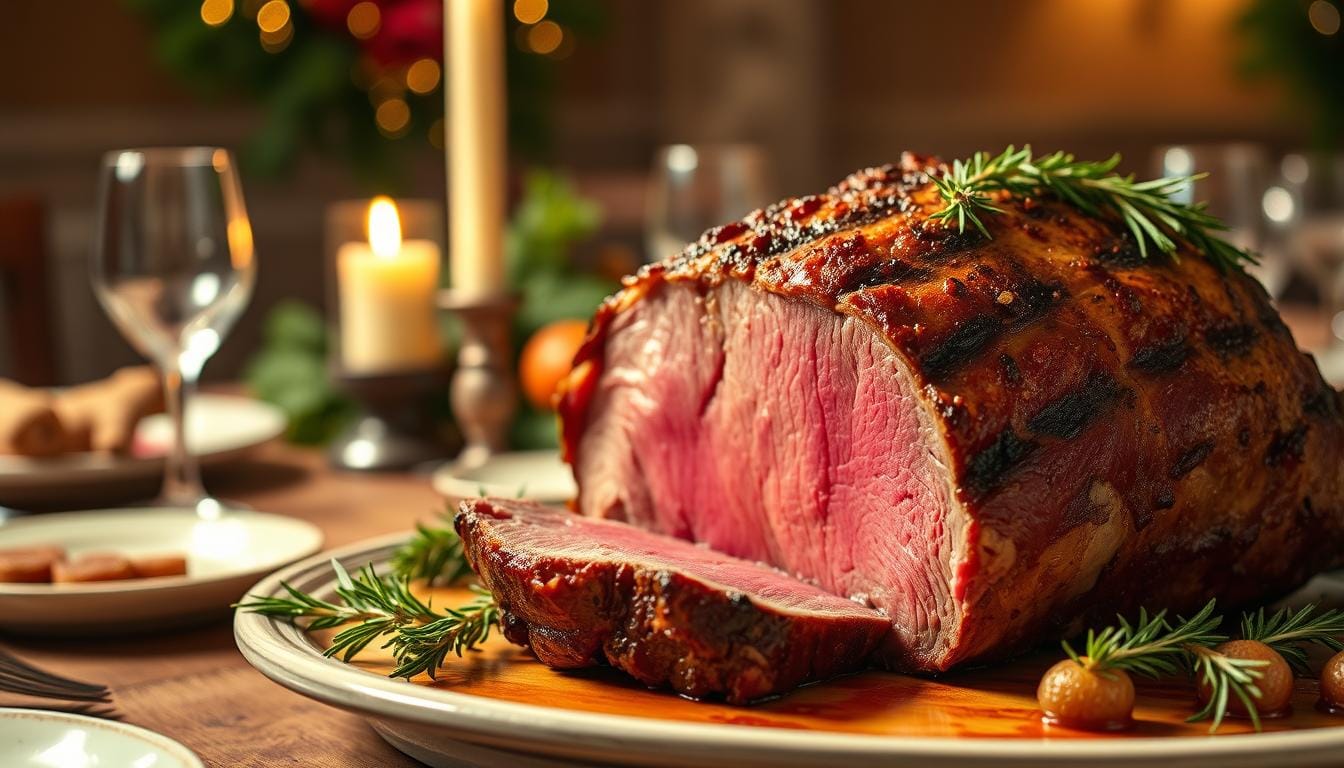
The smell of a perfectly roasted prime rib can make any meal special. My family’s gatherings always revolve around this dish. Chef John’s prime rib recipe is more than just a holiday meal; it’s a feast of flavors and tradition.
Chef John’s prime rib is unique because it makes a challenging dish easy for home cooks. It brings restaurant-quality taste to your home. Each slice is tender, flavorful, and unforgettable, leaving everyone wanting more.
Creating the perfect prime rib is about passion, precision, and cooking skills. Chef John’s method simplifies complex techniques, making it accessible to all. Whether for a holiday feast or a special meal, this recipe will impress and enhance your cooking abilities.
Table of Contents
The Story Behind Chef John’s Prime Rib
Culinary magic starts with passion and dedication. Chef John’s journey to create the ultimate prime rib recipe was filled with learning and improvement. His love for cooking turned a simple dish into a memorable experience.
Culinary Roots and Inspiration
Chef John’s culinary adventure began in small kitchens. There, creativity and technique came together. His prime rib recipe came from years of experimenting and understanding meat.
This recipe is more than cooking. It shows his deep culinary philosophy.
- Learned traditional cooking techniques
- Studied meat preparation methods
- Developed unique seasoning approaches
What Makes This Prime Rib Recipe Unique
The prime rib recipe is special because of its focus on temperature and seasoning. Chef John knew that making a perfect prime rib needed more than just following recipes. It needed intuition and respect for the ingredients.
| Key Differentiators | Chef John’s Approach |
|---|---|
| Seasoning Technique | Layered, complex flavor profile |
| Cooking Method | Precise temperature management |
| Resting Process | Carefully timed to preserve juiciness |
Recipe Evolution
The prime rib recipe wasn’t created overnight. It was carefully crafted through many attempts. Each try taught Chef John something new about cooking meat.
His dedication to learning and adapting made a good recipe into an amazing one.
Years of experience led to this exceptional prime rib recipe. It shows Chef John’s commitment to cooking.
Essential Ingredients and Equipment for the Perfect Roast
Creating a top-notch beef roast needs the right ingredients and tools. Learning to cook prime rib starts with knowing the key elements. These elements turn a simple cut into a dish to remember.
Premium Cut Selection Guide
Choosing a prime rib is all about quality. Here’s what to look for:
- USDA Prime or Choice grade meat
- Thick marbling throughout the cut
- Bright red color with creamy white fat
- Recommended weight: 4-7 pounds for optimal roasting
Must-Have Kitchen Tools
For a great beef roast, you need the right gear:
- Meat thermometer – Essential for precise temperature monitoring
- Heavy-duty roasting pan with rack
- Sharp carving knife
- Kitchen twine for trussing
Signature Seasonings and Herbs
Take your prime rib to the next level with these seasonings:
- Kosher salt and freshly ground black pepper
- Garlic powder
- Fresh rosemary and thyme
- Optional: Dijon mustard for extra flavor depth
With quality ingredients and the right tools, your prime rib cooking will be unforgettable.
Chef John’s Prime Rib: Step-by-Step Preparation
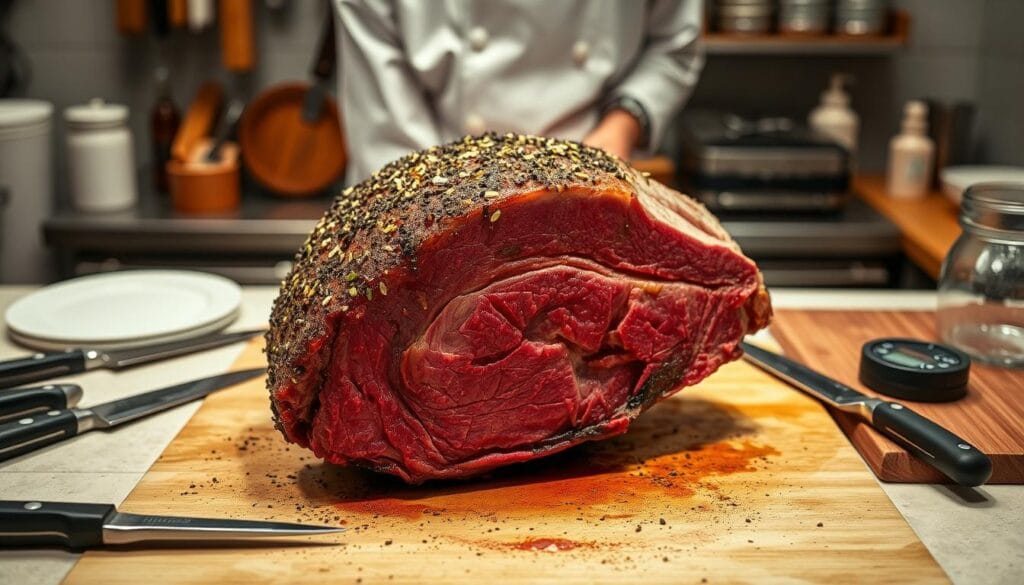
Learning to cook prime rib needs precision and care. Chef John’s recipe turns a simple cut into a dish that wows everyone. It’s perfect for impressing food lovers.
Start by getting your ingredients and tools ready. A great prime rib begins with careful prep and attention to detail.
- Select a high-quality prime rib roast with excellent marbling
- Remove the meat from refrigerator 2-3 hours before cooking
- Pat the meat completely dry with paper towels
- Create a flavorful herb rub using kosher salt and fresh herbs
Chef John’s secret is in his seasoning. Generously coat the entire roast with a blend of herbs and spices. This ensures the meat is full of flavor.
- Preheat the oven to 450°F for initial high-heat searing
- Place the roast bone-side down in a heavy roasting pan
- Cook at high temperature for 15 minutes to create a beautiful crust
- Reduce oven temperature to 325°F for even cooking
Cooking times vary based on roast size and desired doneness. A meat thermometer is key for perfect temperature.
Master Tips for Temperature Control and Timing
To make a delicious prime rib, you need to control the temperature and timing well. The quality of your roast can greatly improve with these cooking skills.
When cooking prime rib, watch the temperature and resting time closely. Chefs say that getting these right makes a big difference. It turns a simple roast into a special dish.
Temperature Milestones
It’s important to check the meat’s internal temperature for the right doneness. Use a meat thermometer to track these key points:
- Rare: 125°F (internal temperature)
- Medium-rare: 135°F (recommended for most diners)
- Medium: 145°F
- Well-done: 160°F
Resting Period Essentials
The resting time is crucial for a tender prime rib. Let the meat rest for 15-20 minutes after cooking. This helps the juices spread out and makes the meat tender.
| Resting Time | Weight of Roast | Recommended Action |
|---|---|---|
| 15 minutes | 3-4 pounds | Smaller cuts |
| 20 minutes | 5-7 pounds | Medium roasts |
| 25-30 minutes | 8-10 pounds | Large roasts |
Troubleshooting Common Issues
Even skilled home cooks face challenges with prime rib. Here are quick fixes for common problems:
- Uneven cooking: Bring meat to room temperature before roasting
- Dry meat: Use a meat thermometer and avoid overcooking
- Lack of flavor: Season generously and use high-quality herbs
By mastering these temperature control tips, you can make your prime rib taste like it’s from a restaurant. It will impress your guests every time.
Conclusion
Learning to make Chef John’s prime rib recipe turns a simple dinner into a memorable event. This holiday recipe does more than feed you. It makes lasting memories with your family.
Getting the perfect prime rib might seem hard, but it’s doable. The secret is patience, precision, and a love for cooking.
- Select a high-quality cut of meat
- Follow temperature guidelines carefully
- Allow proper resting time
- Season generously
Imagine the proud moment when you present a perfectly roasted prime rib to your family and friends. The golden-brown outside, the juicy inside, and the rich flavors will make your meal unforgettable.
Whether it’s for Christmas, Thanksgiving, or a weekend get-together, this prime rib technique will impress everyone. It will show off your cooking skills and win over even the toughest critics at your table.
Keep practicing, trying new things, and most importantly, have fun. Creating a culinary masterpiece that becomes a family tradition is a joy.
The Story Behind Chef John’s Prime Rib
Chef John’s prime rib recipe started with a love for cooking. He grew up in a family that loved food. This made him appreciate good meat from a young age.
His journey began at a famous culinary school. Experimenting with different cooking methods, he found a way to make prime rib special. This method made it possible for home cooks to make a dish like a restaurant.
- Learned traditional roasting techniques from classic French chefs
- Developed a personalized seasoning blend for prime rib
- Refined temperature control methods through years of practice
Chef John’s prime rib stands out because of his focus on details. He worked hard to get the roast just right. It’s juicy inside and crispy outside.
His recipe is not just about cooking. It’s about enjoying great flavors and sharing meals with family and friends.
Essential Ingredients and Equipment for the Perfect Roast
To make a memorable beef roast, you need the right ingredients and tools. The key to a great dish is choosing top-quality beef and preparing it well.
When picking your beef roast, keep these tips in mind:
- Choose well-marbled prime rib or top-quality ribeye
- Look for cuts with even fat distribution
- Buy from trusted local butchers or specialty meat markets
Having the right equipment is crucial for a perfect roast. Chefs say you should have these tools:
- A meat thermometer for accurate temperature checks
- A heavy-duty roasting pan with a rack
- A sharp carving knife
- Kitchen twine for tying the roast
Seasonings can make your beef roast stand out. A classic mix includes:
- Kosher salt
- Freshly ground black pepper
- Dried herbs like rosemary and thyme
- Garlic powder
With premium beef, the right tools, and the best seasonings, you’ll have a dish that impresses everyone.
Chef John’s Prime Rib: Step-by-Step Preparation
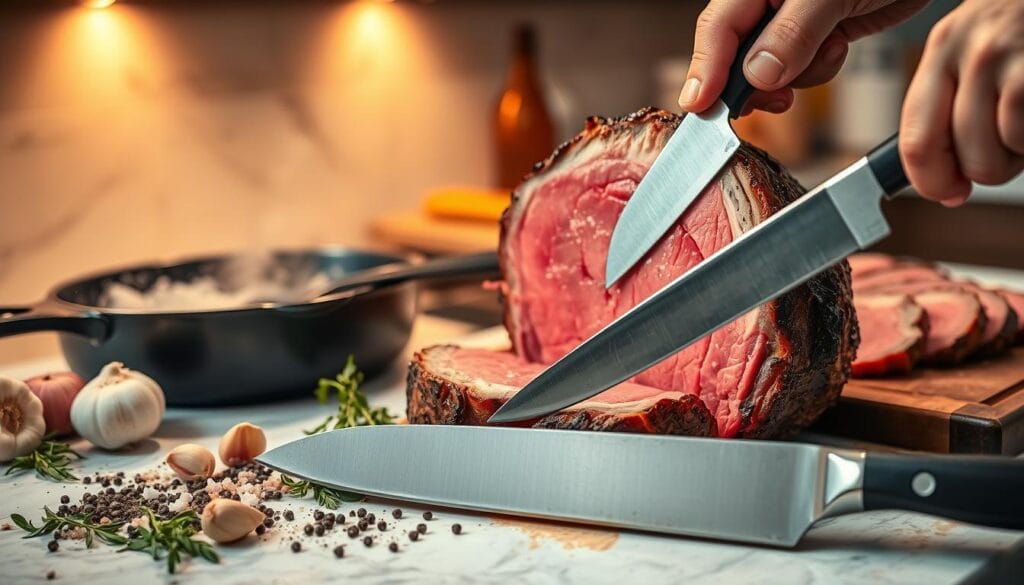
Preparing chef john’s prime rib needs precision and passion. The journey starts with picking the perfect cut and knowing key preparation techniques.
Begin by choosing a high-quality prime rib roast with great marbling. The right cut ensures rich flavor and tender meat.
- Select a bone-in prime rib (preferably USDA Prime grade)
- Trim excess fat, leaving a thin layer for moisture
- Allow meat to reach room temperature before cooking
Seasoning is key when cooking prime rib. Chef John suggests a simple yet powerful mix:
| Ingredient | Quantity | Purpose |
|---|---|---|
| Kosher Salt | 2 tablespoons | Primary seasoning |
| Black Pepper | 1 tablespoon | Adds depth of flavor |
| Fresh Rosemary | 2 sprigs | Aromatic herb |
Pro tip: Rub the seasonings into the meat well, for full flavor absorption.
- Pat the roast dry with paper towels
- Apply seasoning mix evenly
- Tie the roast with butcher’s twine for uniform cooking
- Place on a roasting rack
Proper preparation is the key to an amazing prime rib experience. It turns a simple cut into a culinary masterpiece.
Master Tips for Temperature Control and Timing
Cooking a delicious prime rib needs precision and skill. The secret is in temperature control. It turns a simple roast into a special meal that wows your guests. Knowing the right meat temperature is crucial for perfect doneness.
Meat thermometers are essential for prime rib cooking. They give accurate readings, helping you track the internal temperature confidently. Here are key temperature guidelines for different doneness levels:
- Rare: 125°F (internal temperature)
- Medium-rare: 135°F (most chefs recommend)
- Medium: 145°F
- Well-done: 160°F
Here are some pro tips for temperature control:
- Take the roast out of the fridge 1-2 hours before cooking for even temperature
- Use a reliable instant-read meat thermometer
- Put the thermometer in the thickest part of the meat
- Let it rest after cooking to redistribute juices
For a memorable prime rib, remember patience is key. Let the meat rest after cooking. This ensures it’s tender and full of flavor.
Conclusion
Chef John’s prime rib recipe makes any holiday dinner special. By following the guide, home cooks can make a roast that wows everyone. It’s a recipe for a restaurant-quality meal.
Success in this recipe comes from being precise, patient, and passionate. Choosing the right cut and controlling the temperature are key. It’s perfect for any special occasion or to improve your cooking.
Don’t be shy to try new things and make the recipe your own. Each time you cook it, you’ll get better. Cooking is like an art that gets better with practice. Chef John’s method is a great start to making a delicious prime rib.
With practice and care, anyone can make this dish. It will create unforgettable meals that everyone will remember.
