This post may contain affiliate links. If you purchase through these links, we may earn a commission at no extra cost to you.
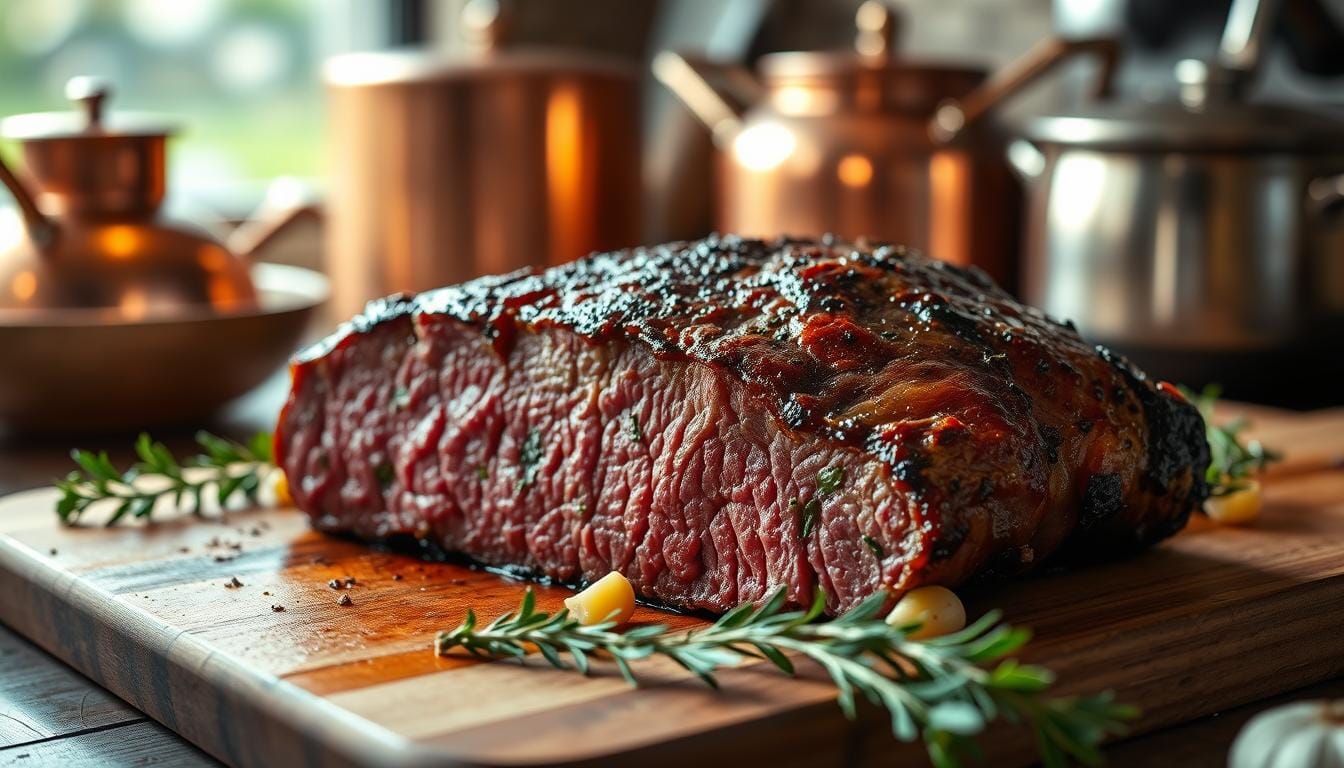
Growing up, I learned that a perfectly roasted beef tenderloin can make any dinner special. It’s not just about cooking. It’s about making memories at the dinner table.
Every home cook wants to make a beef tenderloin that wows family and friends. This meat is more than a meal. It’s a celebration of cooking skill and passion. Whether it’s for a special dinner or a weekend meal, learning to roast beef tenderloin can make you a kitchen hero.
In this guide, we’ll share the secrets to a juicy, flavorful, and perfectly cooked beef tenderloin. You’ll learn how to choose the right cut and master cooking techniques. You’ll make a dish so good, everyone will want seconds.
Table of Contents
Essential Tips for Selecting the Perfect Beef Tenderloin
Choosing the right beef tenderloin is key to a great dish. It’s all about understanding what makes your meat top-notch.
Understanding USDA Grades and Marbling
The USDA grading system is your guide to meat quality. It looks at marbling – the white fat streaks that make meat taste better and feel softer.
- Prime Grade: Highest quality with lots of marbling
- Choice Grade: Good marbling, perfect for cooking beef tenderloin
- Select Grade: Leaner cut with less marbling
Size and Weight Considerations
Choosing the right size of beef tenderloin is important. Aim for 6-8 ounces per person for the best serving.
| Number of Guests | Recommended Tenderloin Weight |
|---|---|
| 4-6 people | 2-3 pounds |
| 8-10 people | 4-5 pounds |
Fresh vs. Aged Beef Selection
For the best flavor, think about the aging process. Fresh beef is tender right away. Dry-aged beef has a deeper, nutty taste.
- Fresh beef: Best for immediate cooking
- Dry-aged beef: More intense flavor, pricier
- Wet-aged beef: Convenient, more affordable
Essential Kitchen Tools and Preparation Methods
To make an easy beef tenderloin recipe, you need the right tools and techniques. Professional chefs say that using the right equipment and preparation is key. This ensures your beef tenderloin turns out perfectly roasted and juicy.
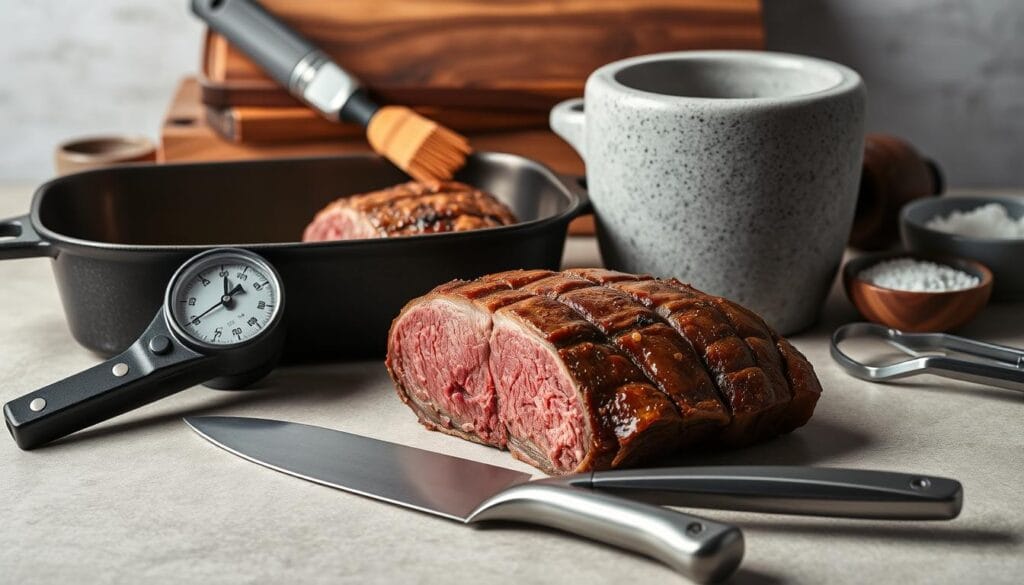
- Reliable meat thermometer
- Sharp chef’s knife
- Roasting pan with rack
- Kitchen twine
- Heavy-duty aluminum foil
Getting your beef tenderloin ready is crucial for a tender, flavorful roast. Start by taking the beef out of the fridge 30-45 minutes before cooking. This lets the meat get to room temperature. Even cooking and maximum juiciness are the results.
Here are the essential steps for preparing your juicy beef tenderloin:
- Trim excess fat and silver skin
- Pat the meat dry with paper towels
- Tie the tenderloin with kitchen twine for uniform shape
- Season generously with salt and pepper
| Tool | Purpose | Importance Level |
|---|---|---|
| Meat Thermometer | Check internal temperature | High |
| Roasting Pan | Ensure even heat distribution | Medium-High |
| Kitchen Twine | Maintain uniform meat shape | Medium |
Investing in quality tools and mastering preparation techniques will help you make an easy beef tenderloin recipe. It will impress everyone every time.
Roasted Beef Tenderloin: Step-by-Step Cooking Guide
Learning to roast beef tenderloin is all about precision and technique. This guide will help you make a beef tenderloin that will wow everyone. You’ll learn how to cook it perfectly.
Temperature and Timing Guidelines
To get the perfect roast, you need to control the temperature. Cooking time depends on the meat’s size and how done you want it. Here’s a quick guide for internal temperatures:
- Rare: 125°F (internal temperature)
- Medium-rare: 135°F
- Medium: 145°F
- Medium-well: 150°F
- Well-done: 160°F
Seasoning and Marinade Options
The right seasoning makes a beef tenderloin recipe stand out. Here are some flavor options for your roast:
| Seasoning Style | Key Ingredients | Flavor Profile |
|---|---|---|
| Classic Herb Rub | Rosemary, thyme, garlic | Earthy and robust |
| Spicy Cajun | Paprika, cayenne, black pepper | Bold and fiery |
| Balsamic Marinade | Balsamic vinegar, olive oil, herbs | Tangy and sophisticated |
Resting and Serving Techniques
The secret to a great beef tenderloin is resting it after roasting. Let it rest for 10-15 minutes. This helps the juices spread evenly, making each slice tender and flavorful.
When you slice, use a sharp knife and cut against the grain. This makes the meat even more tender. Serve it right away on a warm platter to keep it hot and look great.
Expert Tips for Achieving the Perfect Crust and Doneness
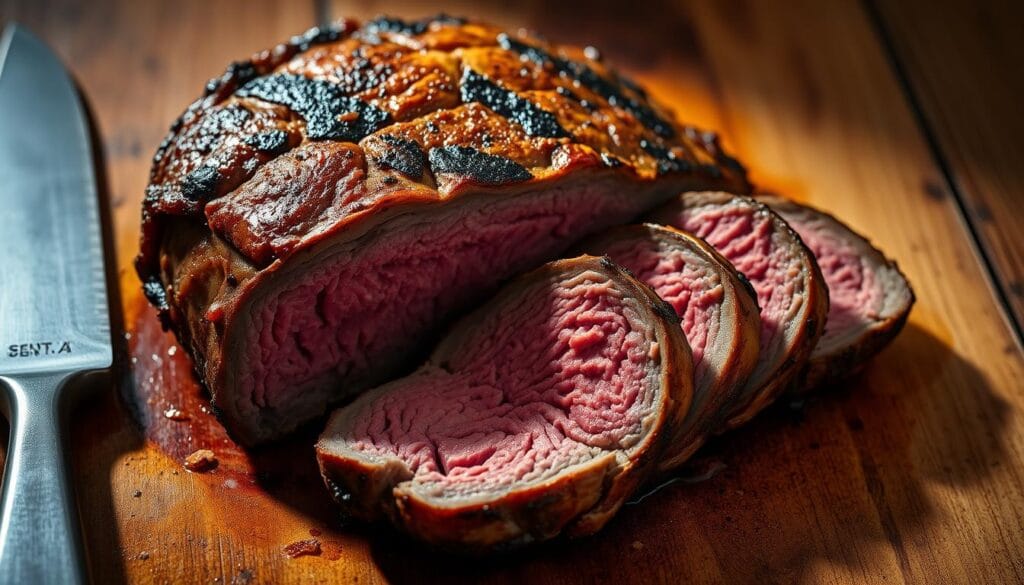
Making the best roasted beef tenderloin is all about mastering a few key techniques. The secret to a truly remarkable dish is a perfect golden-brown crust and a juicy interior.
To get that exceptional crust, follow these steps:
- Pat the beef tenderloin completely dry with paper towels
- Use high-heat cooking oil like avocado or grapeseed
- Sear the meat at extremely high temperatures
- Use a cast-iron skillet for maximum heat retention
For a juicy beef tenderloin, temperature control is key. Invest in a reliable meat thermometer. Aim for 135°F (57°C) for a medium-rare that’s warm pink in the center.
Here are more tips for a great crust:
- Bringing meat to room temperature before cooking
- Using herb-infused butter for additional flavor
- Allowing proper resting time after cooking
- Basting the meat during the final cooking stage
Seasoning is also important for flavor. A mix of kosher salt, fresh black pepper, and dried herbs can make your dish taste like it’s from a restaurant.
Complementary Sauces and Side Dishes
Enhancing your beef tenderloin is more than just roasting it right. The right sauces, sides, and wines can turn a simple meal into a feast. Choosing the best accompaniments will bring out the full flavor of your beef tenderloin.
Classic Pan Sauce Recipes
A delicious pan sauce can make your beef tenderloin even better. These sauces use the meat’s juices to create a rich flavor.
- Red Wine Reduction: Use strong red wine to deglaze the pan
- Creamy Dijon Sauce: Mix pan drippings with mustard and cream
- Herb-Infused Butter Sauce: Add fresh thyme and rosemary
Seasonal Vegetable Pairings
Pair your beef tenderloin with vegetables that are in season:
- Spring: Roasted asparagus with lemon zest
- Summer: Grilled zucchini with herb butter
- Autumn: Maple-glazed roasted root vegetables
- Winter: Caramelized brussels sprouts
Wine Pairing Suggestions
Choose wines that complement the flavors of your beef tenderloin:
- Cabernet Sauvignon: A bold red that pairs well with rich meat
- Malbec: A robust wine with spicy notes
- Pinot Noir: A lighter option with a refined taste
Conclusion
Preparing the perfect roasted beef tenderloin is a journey of skill, technique, and passion. It’s about understanding meat selection, seasoning, and cooking methods. Home chefs can turn this premium cut into a memorable dining experience.
The secret to a great tender roasted beef tenderloin is in the preparation and details. Choosing high-quality USDA-graded meat and mastering cooking temperatures are key. Each step helps create a dish that will wow your guests.
With practice and patience, anyone can master the art of roasted beef tenderloin. Try different marinades and cooking techniques. Don’t be afraid to find your own way. Remember, cooking is both art and science, and each try brings you closer to perfection.
We encourage food lovers and home cooks to share their stories. Share your experiences, challenges, and successes with this elegant dish. Your stories can inspire and help others, creating delicious memories at dinner time.