


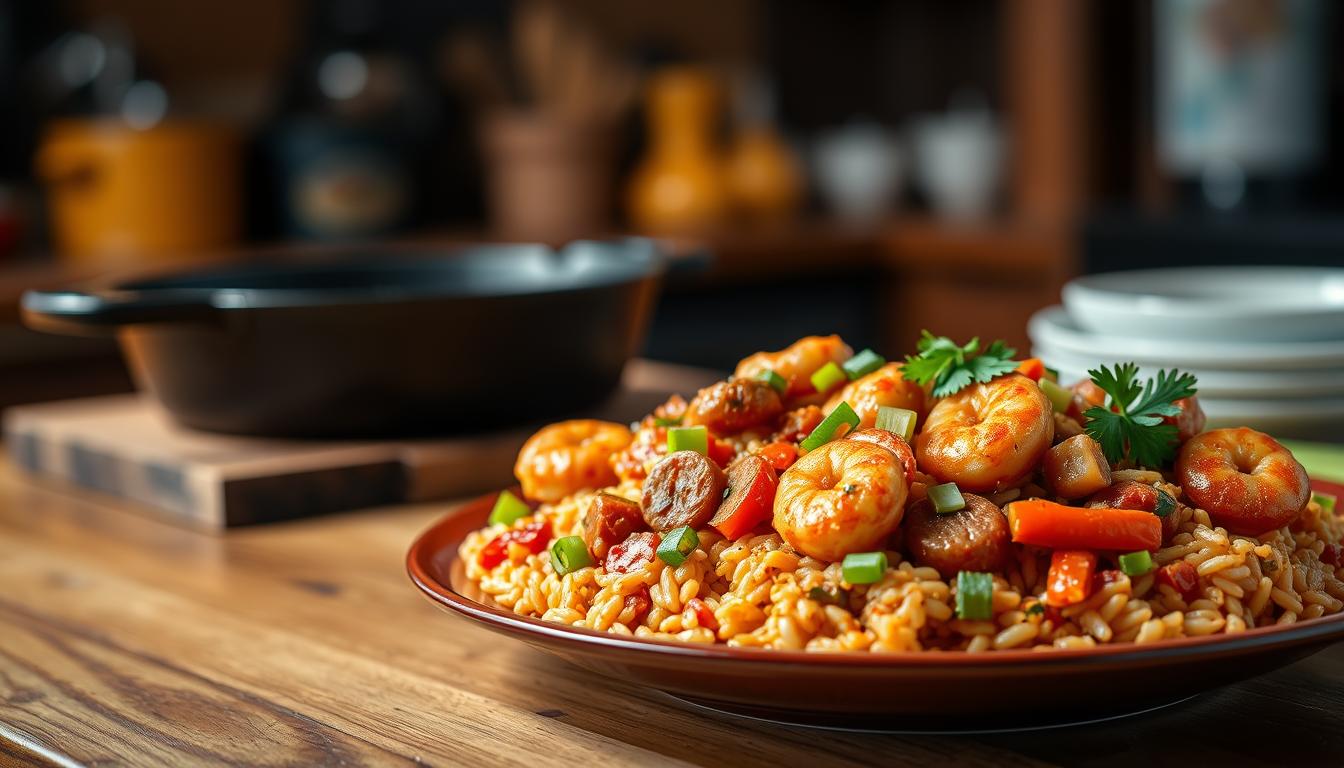
When you try jambalaya, you’ll see why it’s loved by so many. In the South, family gatherings were special with a big pot of jambalaya. It filled the kitchen with amazing smells of spices and meats.
Cajun cooking is more than food; it’s a celebration of culture and tradition. Jambalaya is the heart of Louisiana’s cuisine, mixing flavors that share a story of culinary heritage. This guide will help you make the perfect jambalaya, whether you’re an experienced cook or just starting out.
Jambalaya has come a long way from its humble beginnings to becoming a favorite comfort food. You’ll discover how to make a dish that captures the essence of New Orleans. Get ready for a tasty adventure into authentic Cajun cooking!
Table of Contents
What Makes Jambalaya a Beloved Louisiana Dish
Jambalaya is a true gem in Louisiana’s cuisine. It’s more than just a meal. It’s a mix of flavors, ingredients, and culture.
Jambalaya is special because it’s versatile and brings people together. It’s a dish that turns simple ingredients into a big feast. It shows how creative and resourceful cooking can be.
- Combines diverse ingredients in a single pot
- Reflects multicultural culinary traditions
- Adapts to different protein and vegetable combinations
- Serves as an economical meal option
Jambalaya stands out in Creole cuisine because it mixes cultures. It’s a delicious mix of:
- French cooking techniques
- Spanish rice traditions
- African spice profiles
- Native American ingredient selections
Exploring jambalaya shows it’s more than food. It’s a story of resilience, creativity, and community. Every bite tells a story.
| Cultural Influence | Contribution to Jambalaya |
|---|---|
| French | Cooking techniques and flavor foundations |
| Spanish | Rice cooking methods |
| African | Spice blends and one-pot cooking style |
Every bite of jambalaya is a journey through Louisiana’s culture. It’s a celebration of history and community.
The Rich History Behind This Iconic Cajun Rice Dish
Jambalaya is a tasty tale of cultural blending in Louisiana. It’s a beloved Creole dish born from a mix of traditions. These traditions turned simple ingredients into something amazing. The history of jambalaya is deeply rooted in New Orleans’ diverse culture.
- French settlers wanting to make paella with local ingredients
- Spanish rice-cooking techniques
- West African cooking traditions
French and Spanish Influences on Creole Cuisine
French colonists came to Louisiana looking for familiar tastes. They couldn’t find saffron for paella, so they used local spices and meats. Spanish immigrants brought rice-cooking skills that fit perfectly with Creole cooking.
How Jambalaya Became a New Orleans Tradition
Jambalaya moved from Cajun kitchens to New Orleans streets. Communities added their own twist, making two styles: red and brown jambalaya. Each style tells a part of Louisiana’s culinary story.
Now, jambalaya brings people together with its rich flavors. It’s a delicious symbol of Louisiana’s diverse culture.
Understanding the Two Main Types of Jambalaya
Exploring jambalaya, you’ll find two main styles. These styles show off Louisiana’s rich food culture. Each has its own taste and cooking way.
The two main types are Creole and Cajun. Each has its own way of making this beloved rice dish:
- Creole Jambalaya (Red Jambalaya)
- It comes from New Orleans’ urban cooking
- It has tomatoes, making it red
- It’s a bit tangy and saucy
- Cajun Jambalaya (Brown Jambalaya)
- It’s from rural Louisiana’s cooking
- No tomatoes are used
- It focuses on browning meat and veggies
- It has a deep, smoky taste
Choosing between these jambalayas depends on what you like and how you cook. Both are true to Louisiana’s food creativity. Some cooks mix both styles to make their own jambalaya.
Whether you pick one or mix them, enjoy the rich flavors and traditions. Each bite shares a piece of Louisiana’s food story.
Essential Ingredients for Authentic Southern Comfort Food
Making the perfect jambalaya means knowing the key ingredients. These elements come together to create a dish that’s unforgettable. The secret to Cajun cooking is in choosing the right mix of ingredients.
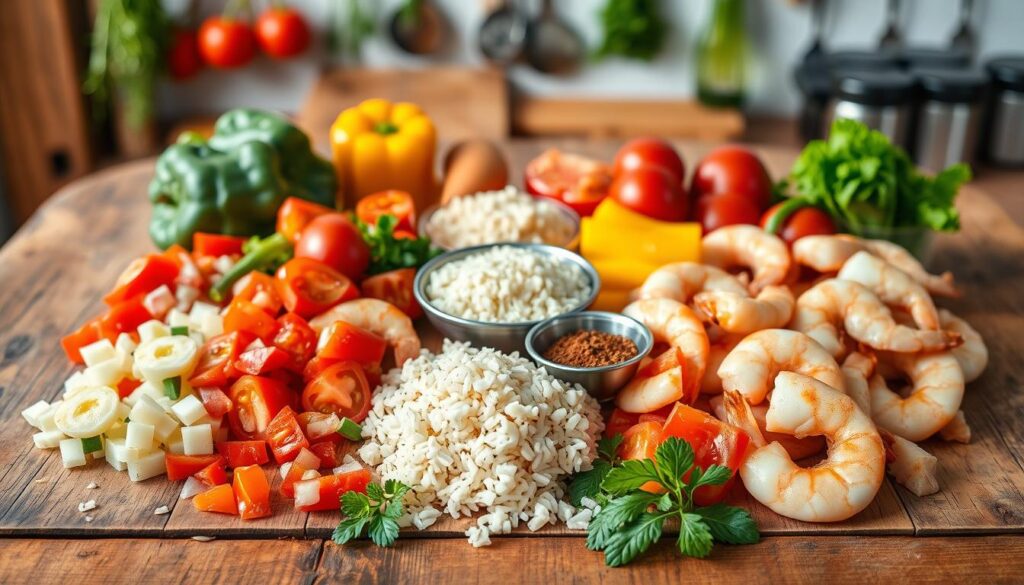
Choosing the Right Sausage and Seafood Combinations
Your choice of sausage and seafood is crucial. Andouille sausage is the top pick for jambalaya. It adds a smoky, spicy flavor that’s essential for the dish’s taste.
- Andouille Sausage: Spicy and smoky, the traditional protein choice
- Chicken: Preferably dark meat for maximum moisture
- Seafood options:
- Shrimp
- Crawfish
- Occasional crab additions
The Holy Trinity of Cajun Cooking
The Holy Trinity is a must in Cajun cooking. It’s a mix of onions, celery, and bell peppers. This blend adds depth and complexity to your jambalaya.
| Ingredient | Proportion | Importance |
|---|---|---|
| Onions | 40% | Base flavor |
| Celery | 30% | Aromatic depth |
| Bell Peppers | 30% | Color and sweetness |
Pro tip: Cut vegetables uniformly. This ensures even cooking and balanced flavor in your dish.
How to Make Perfect Jambalaya at Home
Making jambalaya at home needs skill and care. This Cajun dish mixes rich tastes and hearty ingredients. It’s a meal that takes you to Louisiana’s lively food scene.
First, get your key ingredients for a true jambalaya taste. You’ll need:
- Andouille sausage
- Chicken or shrimp
- Long-grain white rice
- Bell peppers
- Onions
- Celery
- Cajun seasoning
Preparation is crucial for jambalaya. Follow these steps for the best results:
- Brown the sausage to release its flavorful oils
- Cook chicken or seafood until golden
- Sauté the Holy Trinity vegetables (onions, peppers, celery)
- Add garlic and spices to bloom flavors
- Pour in chicken stock and tomatoes
- Stir in rice evenly
- Cover and simmer without stirring
For the best jambalaya, use a heavy-bottomed Dutch oven. Keep the heat medium-low. And don’t stir the rice once it’s in.
Cooking time is about 30-45 minutes. When the rice is tender and liquid is absorbed, let it rest for 10 minutes. This lets the flavors blend perfectly.
Tips for Achieving the Right Level of Spicy Food Heat
Mastering spicy food in Cajun cooking is about finding the right balance. Jambalaya is a great dish to explore different spice levels. It makes your taste buds happy without being too much.
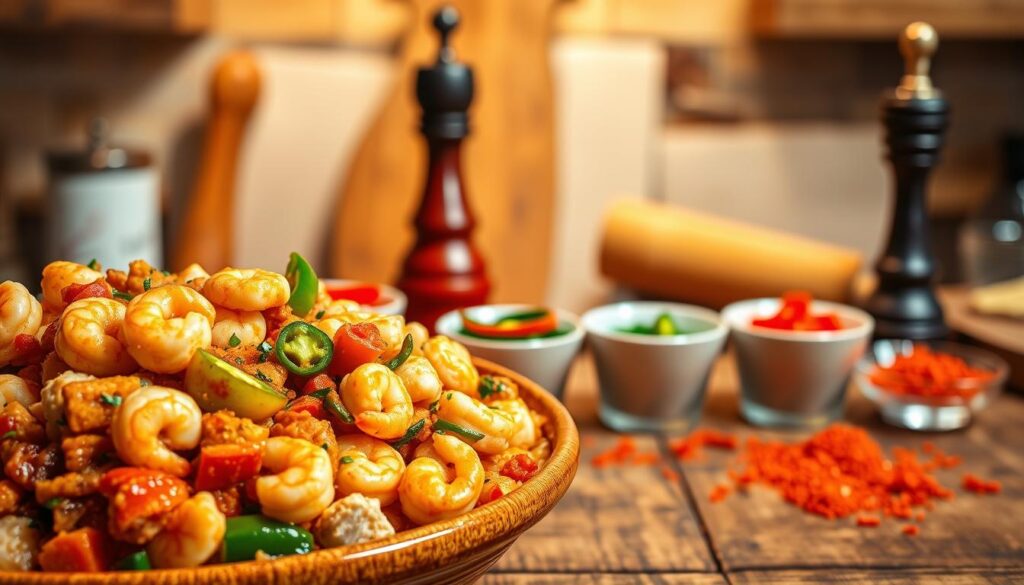
It’s important to know where the heat comes from in Cajun cooking. Your spicy food journey starts with understanding the heat sources:
- Cayenne pepper
- Hot sauce varieties
- Spicy andouille sausage
- Fresh or dried chilies
Navigating Flavor Intensity
When making jambalaya, start with a little spice and add more as you go. This way, you can control the heat and avoid a too-hot dish. Tasting and adjusting during cooking is key to get the spice just right.
| Spice Level | Adjustment Technique |
|---|---|
| Mild | Reduce cayenne, use mild sausage |
| Medium | Add moderate hot sauce, mix pepper types |
| Hot | Increase cayenne, use spicy andouille |
Real Cajun cooking is not just about heat. It’s about creating a rich flavor experience. The aim is to layer tastes that enhance the spiciness. This way, every bite is a joy for your taste buds.
Conclusion
Diving into jambalaya opens a world of delicious Louisiana cuisine. It’s more than just food; it’s a story of cultural mix, creativity, and family traditions. Whether you prefer Creole or Cajun style, making jambalaya is about exploring flavors and making it your own.
Mastering jambalaya takes time and practice. Your first try might not be perfect, but each attempt brings you closer to mastery. This dish is flexible, allowing you to try different proteins and spices. You’ll create a meal that connects you to Louisiana’s rich food history.
When you start cooking, see jambalaya as an invitation to southern cooking. It’s a chance to make memories and share a piece of history with your family. Begin your jambalaya journey today and enjoy the joy of cooking a dish that brings people together.
Your kitchen is now ready to turn simple ingredients into a remarkable meal. Embrace Louisiana’s spirit, trust your instincts, and enjoy every moment of making jambalaya.
