This post may contain affiliate links. If you purchase through these links, we may earn a commission at no extra cost to you.
Picture a warm kitchen on a chilly evening, filled with rich, savory aromas. This hearty meal brings family and friends together around the dinner table. This classic italian beef sandwich guide offers a dependable method, not a complicated restaurant technique.
You will learn to choose and prepare a tender roast, build flavorful broth, and make thin, restaurant-quality slices. Mastering the balance of proper seasoning, browning, resting, and reheating keeps the main course wonderfully juicy.
Prepare the ultimate Chicago-inspired sandwich with sweet peppers and tangy giardiniera. Grab your apron and see how simple ingredients transform original homemade italian beef into your favorite comfort food.
Table of Contents
What Makes This Original Homemade Italian Beef Special
An authentic italian beef recipe brings bold Chicago flavors to your home kitchen. What separates this dish from an ordinary roast beef sandwich? Traditional deli roast beef often tastes dry and depends on cold condiments.
This homemade version builds deep flavor through a careful series of steps.
First, season the meat generously with strong herbs and spices. Brown the roast to form a rich crust, then simmer it in aromatic liquid. The magic happens when you slice the tender meat and return it to the strained cooking liquid.
This step helps every fiber absorb plenty of moisture.
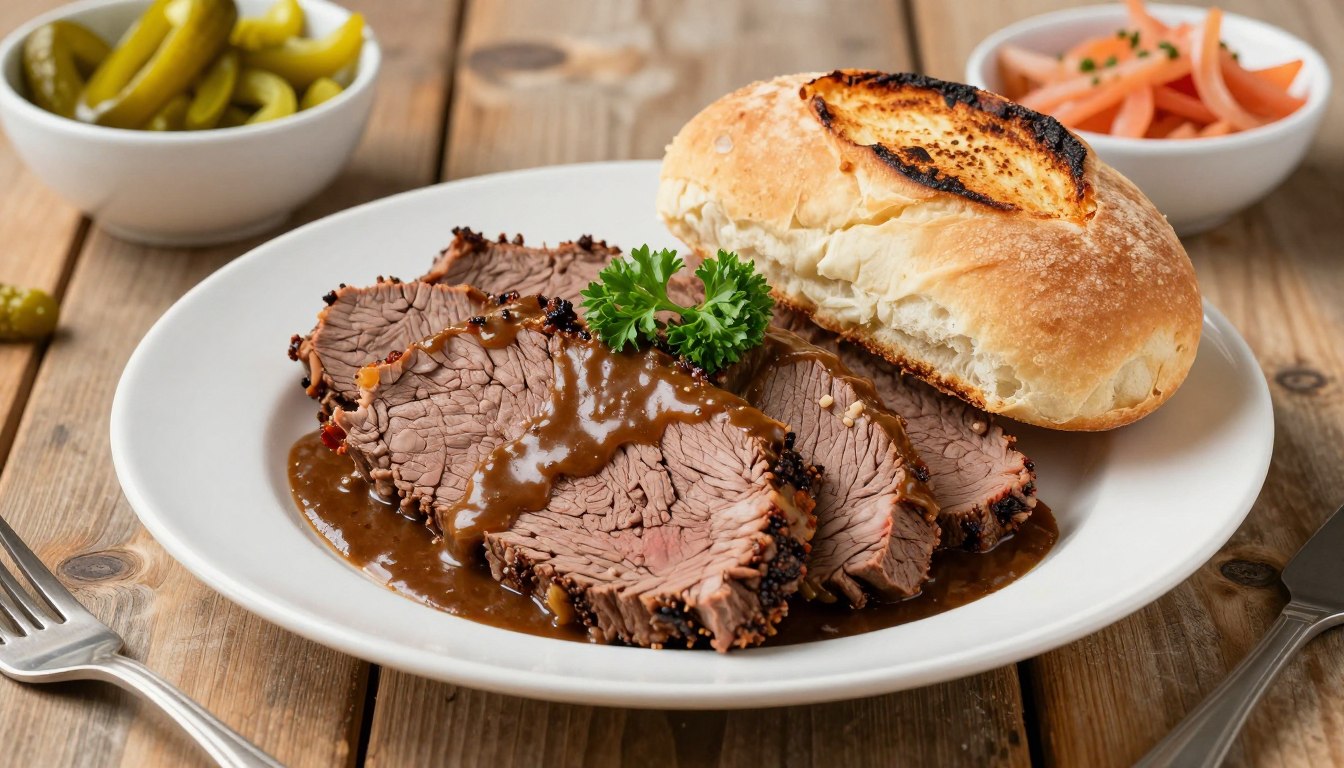
The flavor balances savory, garlicky, herbal, and peppery notes. You can adjust the heat to match your preferences. Chicago-style serving traditions add sweet peppers and spicy giardiniera over crusty bread dipped in warm jus.
These techniques show why each step matters in an authentic italian beef recipe.
| Sandwich Element | Standard Roast Beef | Homemade Italian Beef |
|---|---|---|
| Cooking Method | Oven roasted and served dry | Slowly simmered in seasoned jus |
| Texture | Firm and sliced thin cold | Extremely tender and served warm |
| Flavor Profile | Mild beef flavor | Garlicky, herbal, and peppery |
| Serving Style | Served with mayo or mustard | Dipped in jus with giardiniera |
Homemade Italian Beef Ingredients and Equipment
An authentic Chicago-style meal begins with an organized kitchen and quality ingredients. Prepare each item first to make cooking easier and more enjoyable. This guide groups your shopping list by purpose, helping you work efficiently.
Ingredients for the Beef and Savory Jus
A great roast starts with the right meat and flavorful aromatics. You need a well-marbled chuck roast, kosher salt, cracked black pepper, and whole garlic cloves. Rosemary, oregano, beef stock, and sliced yellow onions create a rich cooking liquid.
Before cooking, mix your homemade italian beef seasoning blend in a small bowl. This blend usually contains garlic powder, onion powder, dried basil, crushed red pepper flakes, and sweet paprika. Measuring the spices first helps spread their flavors evenly across the meat.
Ingredients for Serving the Sandwiches
A great sandwich needs sturdy bread that holds up to heavy juices. Choose Italian rolls or French bread loaves with crisp crusts and soft centers. Sweet bell peppers, spicy giardiniera, and warm jus finish the sandwich.
Keep extra grated cheese nearby for a cheesy finish. Together, these ingredients balance rich, savory, and tangy flavors in every bite.
Essential Kitchen Equipment
The right tools can greatly improve your cooking results. A heavy-bottomed Dutch oven or deep roasting pan holds heat and caramelizes the meat. You also need long tongs, a fine-mesh strainer, a sharp carving board, and a reliable slicing knife.
Keep a saucepan ready to reheat the strained jus. An instant-read thermometer helps you check the roast’s internal temperature accurately.
Ingredient Substitutions and Preparation Notes
Smart preparation saves time and builds better flavor. Trim excess fat from the roast, but leave a thin layer to retain moisture. Let the meat sit at room temperature for thirty minutes so it cooks more evenly.
If needed, adapt your homemade italian beef ingredients to match your pantry. Replace dried herbs with three times as many fresh herbs, or use low-sodium beef broth to reduce salt. These small changes help create a delicious meal every time.
Prepare the Roast and Homemade Italian Beef Seasoning Blend
Mastering the traditional italian beef cooking method starts before the roast reaches the oven. Each early step shapes the meat’s texture, flavor depth, and homemade jus.
Handle each ingredient with care for an authentic Chicago flavor at home. Here is how to prepare your roast for cooking.
Trim and Season the Beef
Inspect your chuck roast for thick fat and tough silver skin. Remove these layers because they can block spices from reaching the meat.
Leave a thin fat layer to protect the muscle fibers and add flavor as it melts. Pat the entire roast thoroughly dry with paper towels so the dry rub sticks.
Spread your homemade spice blend over every side, then press it into the beef. This helps the seasoning stay in place during searing.
Your blend should support the beef’s natural flavor, not overpower it. Let the seasoned roast rest briefly on the counter so it absorbs the aromas.
Build Flavor Before the Main Cooking Stage
Create a balanced base with fresh herbs, bold aromatics, and rich stock. Together, these ingredients turn the liquid into an incredible dipping broth.
Layer garlic, oregano, black pepper, and crushed red flakes in the roasting pan. This builds the strong flavor profile needed for an authentic taste.
Follow safe food handling guidelines, and do not leave perishable meat out too long. Once the roast and aromatics share the pan, begin the main cooking stage.
How to Make Original Homemade Italian Beef
Learning how to make italian beef at home becomes easier when you follow the steps in order. This method turns a tough cut into a tender sandwich with careful heat control and timing. Follow this guide for authentic Chicago-style results in your kitchen.
1. Preheat the Oven and Prepare the Cooking Liquid
Set your oven to 300°F (150°C) for steady, low-temperature roasting. In a heavy Dutch oven, combine beef stock, crushed garlic, Italian seasoning, crushed red pepper flakes, and Worcestershire sauce. Stir well to dissolve the dry spices before adding the meat.
Cooking Tip: Keep the Jus Well Balanced
This liquid becomes the savory jus that defines the dish. Taste it before adding the roast, checking that it is not too salty, bitter, or oily. Add a pinch of sugar to reduce acidity, or water if the sodium level is too high.
2. Brown the Beef on All Sides
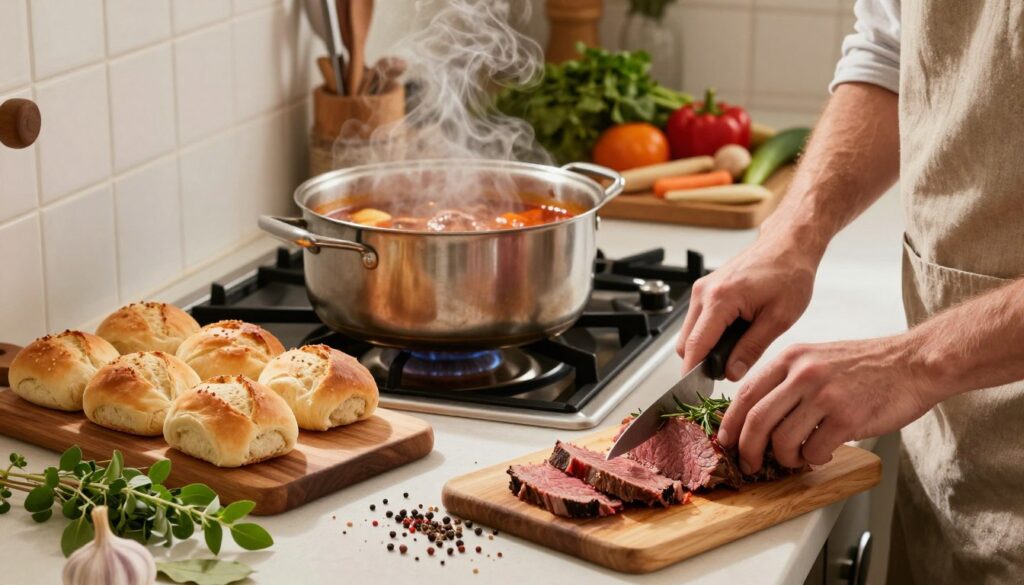
Heat one tablespoon of neutral oil in the Dutch oven over medium-high stovetop heat. Pat the chuck roast completely dry with paper towels to remove surface moisture. Place the seasoned roast in the hot oil and sear every side until a deep, golden-brown crust forms.
Common Mistake: Searing a Damp Roast
Do not place wet meat in a hot pan when seeking a rich crust. A damp roast releases water and steams instead of caramelizing, destroying the complex browned flavors needed for an authentic taste.
3. Cook the Roast Until Tender
Return the seared beef to the seasoned liquid, cover the Dutch oven tightly, and place it in the preheated oven. Braise the roast undisturbed for roughly three hours. Slow heat breaks down tough connective tissues.
Food Safety and Doneness Check
Insert an instant-read digital thermometer into the roast’s thickest part to check doneness. The beef should reach at least 205°F (96°C) inside, making it tender enough to shred or slice easily.
4. Rest the Beef and Strain the Jus
Remove the Dutch oven carefully with thick oven mitts. Transfer the cooked roast to a large cutting board and let it rest uncovered for twenty minutes. Pour the remaining pan juices through a fine-mesh strainer into a clean bowl, removing spent garlic and herb bits.
Why Resting Matters
Resting gives hot muscle fibers time to relax and reabsorb their natural juices. Slicing the roast immediately lets moisture escape onto the cutting board, leaving the beef dry.
5. Slice the Beef as Thinly as Possible
After the roast cools slightly and rests, use a sharp carving knife or electric slicer. Cut the beef across the grain into paper-thin slices. Thin slices create the classic sandwich texture.
Texture Tip: Slice According to Your Preferred Style
Choose between two popular methods based on your preference. Slicing creates classic flat pieces, while hand-shredding creates a looser texture that holds extra gravy.
6. Warm the Sliced Beef in the Jus
Return the thinly sliced beef to the strained, warm jus in the Dutch oven. Let it absorb savory flavors for about ten minutes over very low heat. Do not let the liquid reach a rolling boil.
Common Mistake: Boiling the Sliced Beef
High heat makes delicate beef slices seize, tighten, and become tough. Keep the temperature low to warm the meat without overcooking it.
7. Prepare the Peppers and Giardiniera
While the beef warms in the rich broth, prepare the vegetable toppings. Drain the jarred hot giardiniera and slice fresh green bell peppers or hot sport peppers. Ready toppings make sandwich assembly more efficient.
Chicago-Style Topping Options
Toppings can make your homemade sandwich extraordinary. Use this quick reference for traditional choices:
- Hot Giardiniera: A spicy pickled vegetable mix for a tangy crunch.
- Sweet Bell Peppers: Sautéed peppers for a mild, smoky sweetness.
- Sport Peppers: Small, fiery peppers for an authentic Chicago kick.
8. Assemble, Dip, and Serve the Sandwiches
Slice crusty Italian rolls lengthwise without cutting through the back. Pile warm, jus-soaked beef into each roll. Top the meat with your choice of peppers and giardiniera.
Serving Safety and Handling Tip
Use heat-resistant tongs and ladles when handling hot jus and steaming meat. For a traditional experience, briefly dip each assembled sandwich into the warm gravy before serving.
Italian Beef Slow Cooker Recipe Adaptation
When your schedule is packed, turning a favorite meal into a hands-off dish adds convenience. You can adapt traditional cooking into an italian beef slow cooker recipe without losing its rich, savory flavors.
Planning family dinners becomes easier when your appliance handles the hard work. This method suits busy weeknights and weekend gatherings.
How to Adapt the Recipe for a Slow Cooker
Many slow cookers cannot reach the high heat needed for a deep, caramelized meat sear. Season and brown your roast in a hot skillet or Dutch oven first.
After the roast develops a golden-brown crust, move it into your slow-cooker insert. Add the aromatics, signature herbs, and cooking liquid around the roast.
Check your appliance capacity before adding ingredients. Never fill your vessel beyond the recommended fill line to prevent spills and ensure even heating.
Slow Cooker Timing and Texture Tips
Cooking time depends on your roast size and appliance temperature. Cook until the meat is tender enough to slice or pull apart easily.
Avoid lifting the lid repeatedly during cooking. Each opening releases heat and greatly increases cooking time.
Check the beef texture shortly before the expected finish time. When done, rest the roast briefly, strain the jus, and warm the sliced meat in the liquid before serving.
| Heat Setting | Estimated Cooking Time | Best Use Case |
|---|---|---|
| Low Heat | 8 to 10 Hours | All-day cooking while you are away at work |
| High Heat | 4 to 6 Hours | Faster meal preparation on busy afternoons |
| Warm Setting | Up to 2 Hours | Holding the finished meat safely for a party |
Italian Beef Cooking Tips for the Best Homemade Sandwich
Use these proven italian beef cooking tips to improve your cooking. Mastering small details can turn a standard roast into an unforgettable meal.
How to Keep the Beef Tender and Juicy
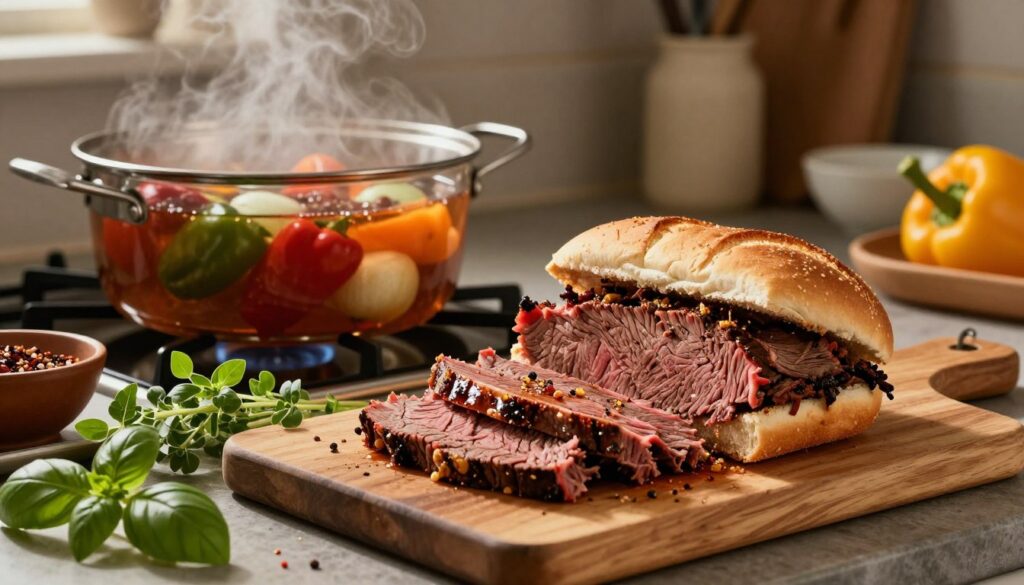
Dry the roast thoroughly with paper towels before searing to build a rich crust. Avoid high temperatures that can dry the meat fibers too soon.
Use a digital meat thermometer to track the internal temperature accurately. Let the roast rest, then slice across the grain for maximum tenderness.
How to Improve the Flavor of the Jus
Taste the liquid before final seasoning to balance the salt level. Dilute overly strong broth with unsalted stock, and skim excess fat from the surface.
Carefully adjust the garlic, black pepper, herbs, or mild acidity to brighten the taste.
How to Choose and Toast the Bread
Choose sturdy French rolls that hold wet beef without falling apart. A quick toast adds support while keeping the inside soft.
This balance helps you build the best homemade italian beef sandwich without structural failure.
How to Store and Reheat Leftovers
Cool leftovers promptly before placing them in airtight storage containers. Store the beef and jus together or separately in your refrigerator.
Reheat only the portion you plan to eat over low heat. Do not boil the meat, or its delicate texture may suffer.
| Process Step | Common Mistake | Expert Correction | Expected Result |
|---|---|---|---|
| Searing Meat | Skipping the drying phase | Pat roast dry with paper towels | Better crust and flavor |
| Slicing Beef | Cutting along the grain | Slice thinly across the grain | Tender, melt-in-mouth texture |
| Balancing Jus | Adding salt too early | Taste near the end and adjust | Perfect savory balance |
| Reheating | Boiling the meat rapidly | Warm gently in low-heat jus | Juicy, perfectly warmed beef |
What to Serve with Homemade Italian Beef
Complete your homemade Italian beef dinner with sides that balance its rich flavor. This hearty sandwich has savory jus, so choose refreshing sides for contrast. Combine bright, acidic foods with comforting starches for a balanced plate.
Choose crisp foods that cut through the meat’s rich flavor. A simple green salad with sharp vinaigrette, tangy vinegar-based slaw, or pickled vegetables cleanses your palate between bites.
For classic comfort food, add casual favorites to the table. Oven-baked French fries, crispy potato wedges, roasted potatoes, or chilled Italian pasta salad make great additions. These hearty sides satisfy hungry guests and suit any casual gathering.
Set out extra condiments for family and friends. Offer a small bowl of extra giardiniera or spicy pepperoncini. A warm cup of leftover jus lets everyone customize each sandwich.
Choose the right beverage to complete the meal. Sparkling water, freshly brewed iced tea, tart lemonade, or crisp, light beer work well. Each works wonderfully, depending on the occasion.
When planning your menu, focus on texture and portion balance. For a standard weeknight dinner or lively game-day spread, choose one bright vegetable side. Add one crisp starchy side; that is usually enough to satisfy your crowd.
Conclusion
This classic recipe brings authentic deli flavor to your kitchen. Proper seasoning, careful browning, and slow roasting create the tender texture of original homemade Italian beef.
Resting the roast helps its juices settle before slicing. Thin slices soak up savory jus, keeping every bite moist and flavorful.
Sweet peppers and spicy giardiniera let you customize each sandwich. The traditional oven method offers hands-on control, while the slow cooker makes preparation easy.
Save extra jus to reheat leftovers gently without drying the meat. Making this meal at home gives you control over every ingredient for a satisfying dinner.