


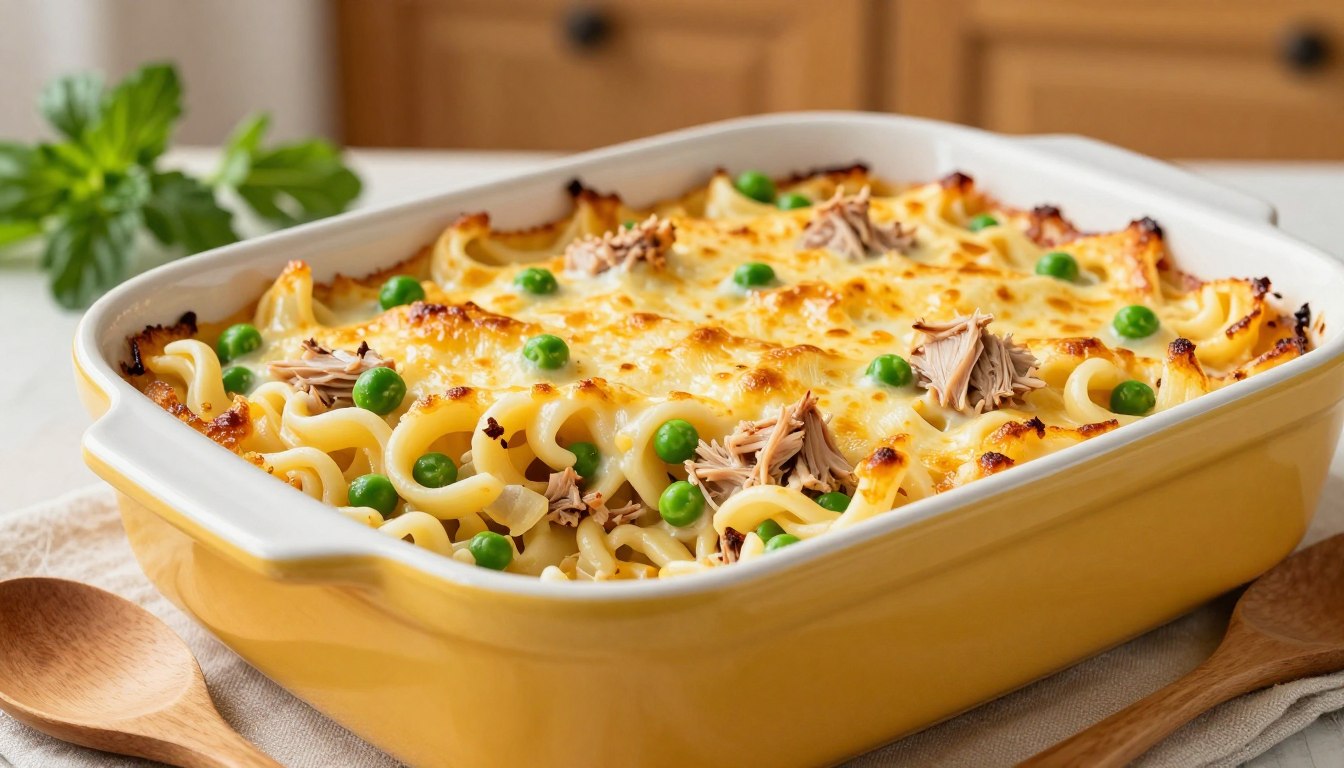
After a long, exhausting day, you crave comfort food that warms you as soon as you get home. You want a meal that feels comforting, takes little effort, and delivers maximum flavor for your hungry family.
Tender egg pasta, flaky seafood, rich cream sauce, melted cheese, sweet peas, and a crisp golden topping make this dinner. Designed for busy American homes, this cheesy tuna noodle casserole relies on familiar pantry staples and bakes in one dish.
For this tuna casserole recipe, boil pasta, mix homemade sauce, combine the delicious filling, and bake until hot and bubbly. Feel free to adjust the vegetables or cheese to suit your household while keeping that satisfying, classic flavor intact.
Key Takeaways
- Bake a comforting dinner using simple pantry staples.
- Prepare this meal quickly in a single baking dish.
- Combine tender pasta, flaky seafood, and a rich cream sauce.
- Add a crisp golden topping for an amazing texture.
- Customize vegetables and cheese to match your family’s taste.
What Makes This Cheesy Tuna Noodle Casserole an Easy Family Dinner
This comforting dinner comes together quickly on busy nights. Every home cook needs an easy tuna casserole in their regular dinner rotation.
This classic comfort food uses budget-friendly pantry staples that save time and money. Canned tuna offers lean protein without complicated preparation.
Quick-cooking egg noodles boil in minutes, while frozen peas add color and flavor without chopping. A rich, creamy sauce coats every ingredient in velvety goodness.
Flexibility helps when you feed a house full of hungry kids. Swap the cheese, adjust the vegetables, or change the crunchy topping to match your family’s preferences.
The dish also works well as a make-ahead meal for hectic schedules. Assemble it in advance, refrigerate it, and bake it whenever you are ready.
Serving this meal straight from the baking dish keeps cleanup simple. You get a warm, filling dinner on the table with little fuss.
| Feature | Time Saved | Cost Impact |
|---|---|---|
| Pantry Ingredients | Low shopping time | Very budget-friendly |
| Quick Egg Noodles | Fast boiling time | Inexpensive base |
| One-Dish Cleanup | Minimal washing | Saves utility costs |
Ingredients for a Creamy Tuna Noodle Casserole
Review what you need for this comfort food favorite. Gather your supplies first for a smooth cooking process.
A successful creamy tuna noodle casserole balances pantry staples with fresh dairy. Each component shapes the dish’s final texture and flavor.
Essential Ingredients and Recommended Amounts
You can make this meal with items already in your kitchen cabinets. Family-size portions need set ratios so sauce coats every noodle.
Noodles form the sturdy base, while homemade roux thickens sauce with butter and flour. Milk or broth adds liquid, and frozen peas bring bright color.
Choosing Tuna, Cheese, Noodles, and Toppings
The right components can turn a basic dish into a memorable meal. Tuna packed in water tastes mild, while oil-packed tuna adds richness when drained well.
Mild, reliable cheeses like sharp cheddar or Monterey Jack melt into gooey perfection. Finish your classic tuna casserole with crushed crackers, breadcrumbs, or potato chips for signature crunch.
| Ingredient | Recommended Amount | Primary Role |
|---|---|---|
| Egg Noodles | 8 ounces (wide variety) | Provides structural base |
| Canned Tuna | 2 cans (5 ounces each) | Adds savory protein |
| Butter & Flour | 1/4 cup each | Creates roux to thicken sauce |
| Milk & Broth | 2 cups total | Builds the liquid dairy base |
| Shredded Cheese | 1.5 cups | Brings richness and flavor |
Prepare Your Kitchen and Ingredients Before Cooking
Taking a few minutes to organize your workspace helps your homemade tuna casserole turn out well every time. Professional chefs call this practice mise en place, meaning everything is ready before you turn on the stove. This simple step prevents kitchen chaos and keeps cooking smooth from start to finish.
Before heating any pans, gather all the essential cooking tools. Keep these items ready on your counter:
- A large pot for boiling the noodles
- A saucepan or skillet for building the sauce
- A sturdy colander for draining pasta
- A reliable wire whisk and a wooden mixing spoon
- Measuring cups and spoons
- A lightly greased baking dish
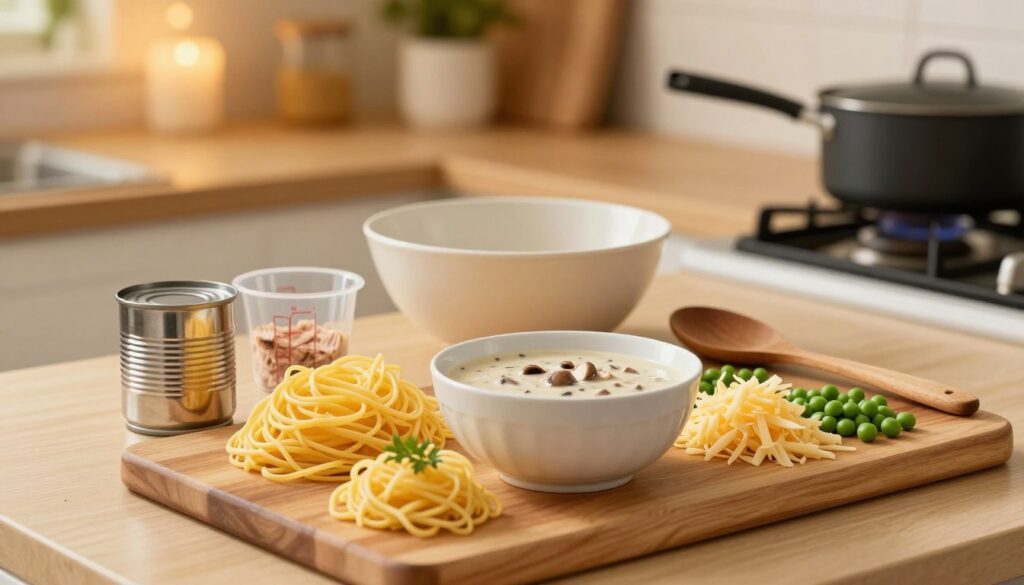
Next, prepare the food items. Preheat your oven to the correct baking temperature, so it is hot when you assemble the dish. Drain and flake your canned tuna, measure the milk and flour, shred the cheese, and thaw or rinse the frozen peas.
Preparing these components ahead serves an important purpose. It keeps your creamy sauce from sitting too long on the burner and stops egg noodles from turning mushy. It also lets you assemble the entire dish while everything is at the right temperature.
How to Make Cheesy Tuna Noodle Casserole Step by Step
This comforting meal comes together easily with a clear guide. Turn basic kitchen staples into a warm, rich, creamy, and bubbly dinner.
1. Cook the Egg Noodles Until Just Tender
Boil a large pot of salted water. Add the egg noodles, stir gently, and cook them until just tender.
Preventing Soft or Mushy Noodles
Watch the pot closely because noodles cook quickly. They continue cooking in the oven, so drain them early, rinse briefly with cool water, and remove extra starch.
2. Build the Creamy Homemade Sauce
Use a large skillet or saucepan for your flavorful base. Melt the butter over medium heat, whisk in the flour, and cook the smooth paste for one minute.
How to Keep the Sauce Smooth
Slowly pour in the milk or broth while whisking constantly. Keep the heat moderate so the liquid thickens evenly without forming lumps.
3. Melt in the Cheese and Add the Creamy Ingredients
Lower the heat before adding the dairy ingredients. Stir in shredded cheese until it melts into the sauce, creating the base for your baked tuna casserole.
Getting the Best Cheese Texture
Avoid high heat because it can make the cheese grainy or separate the fats. Add your favorite seasonings and extra creamy ingredients, then stir until smooth and fragrant.
4. Combine the Noodles, Tuna, Peas, and Sauce
Combine the main ingredients in a large mixing bowl. Add the drained noodles, flaked tuna, and green peas to the sauce, then toss gently.
Keeping the Tuna and Peas Balanced
Stir gently so the fish does not become an unpleasant paste. Spread the peas evenly so each scoop of your delicious tuna noodle casserole has a balanced mix.
5. Assemble, Top, and Bake the Casserole
Transfer the mixture to a greased baking dish and spread it evenly. Add the remaining cheese and your preferred crunchy topping, then bake in the preheated oven.
Recognizing When the Casserole Is Done
The casserole is ready when the edges bubble fiercely and the center is hot. Remove it when the crust turns golden brown, then let it rest briefly so the sauce can set.
Easy Ways to Customize This Homemade Tuna Casserole
Changing your weekly dinner menu keeps family mealtimes exciting. Simple tweaks can adapt this creamy, rich comfort food, clear out the refrigerator, or meet specific dietary needs.
The best tuna noodle casserole depends on personal taste and available ingredients. Try these ways to upgrade your next pan of pasta bake.
Vegetable Add-Ins for More Flavor and Color
Extra vegetables add bright colors and appealing textures. Try sliced mushrooms, tender broccoli florets, sweet corn, baby spinach, chopped celery, or roasted red peppers.
Firmer vegetables need cooking before they join the creamy filling. Steam or sauté dense vegetables so they become tender inside the baked dish.
Cheese, Protein, and Seasoning Variations
Changing the dairy and protein creates a new flavor profile. Replace cheddar with mozzarella, Colby, Swiss, or spicy pepper Jack cheese.
Replace tuna with cooked shredded chicken or flaked salmon for a fun protein twist. Add garlic powder, onion powder, dried dill, paprika, black pepper, or a little Dijon mustard for savory depth.
For extra crunch, try making a tuna casserole with potato chips. Crush plain or lightly seasoned potato chips over the top before baking. Account for the chips’ salt so the creamy sauce does not become too salty.
Making a Lighter or Gluten-Free Version
Make a lighter dish with reduced-fat dairy and extra vegetables. Slightly reducing the cheese lowers calories without losing comfort.
For a gluten-free version, use certified gluten-free noodles instead of regular pasta. Thicken homemade sauce with cornstarch or a gluten-free flour blend, keeping everyone safe and satisfied.
Serving Suggestions for the Best Tuna Noodle Casserole
Plating the best tuna noodle casserole means balancing its rich flavor with fresh side dishes. You should let the baked dish rest for about ten minutes before serving it. This wait helps each portion hold together neatly on the plate.
Because this main dish is hearty and creamy, pair it with lighter sides. A crisp green salad with sharp vinaigrette balances the rich noodles. Serve steamed broccoli, roasted green beans, or a simple cucumber and tomato salad for extra texture and color.
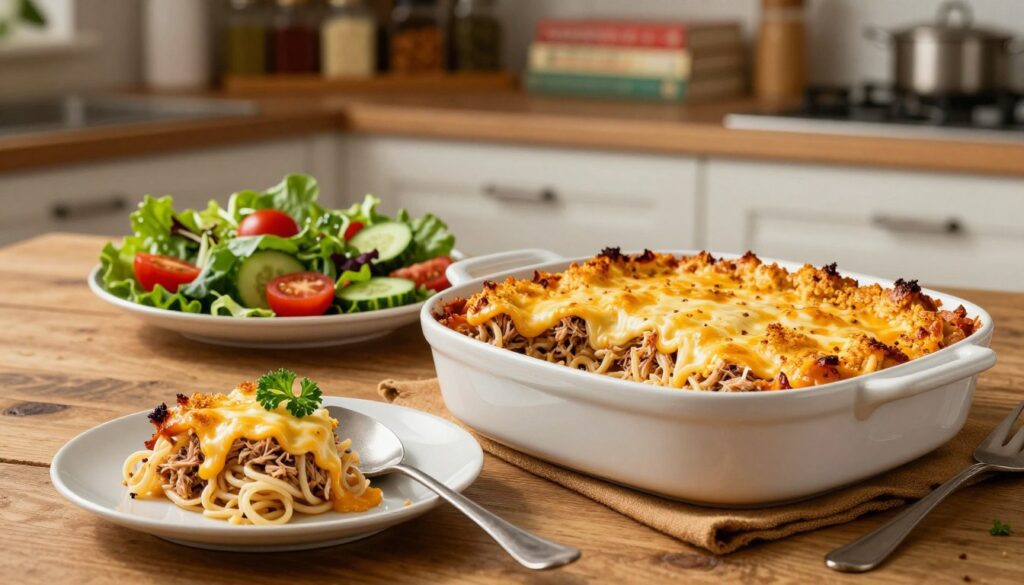
If you are feeding a hungry crowd, add warm dinner rolls or crusty French bread. A light fruit salad makes a refreshing finish after this comforting meal. Side dishes should complement, not overwhelm, the main course.
For a bright presentation, serve individual portions while the golden topping remains warm and inviting. Sprinkle on freshly chopped parsley or sliced green onion for a lovely color touch. Enjoy your homemade dinner with family and friends!
How to Store, Reheat, and Freeze Tuna Casserole
Good leftover care makes meal planning easier. Proper storage keeps your comfort food fresh and safe for days. Whether packing last night’s dinner or preparing a make-ahead meal, these steps preserve your favorite tuna casserole recipe.
Refrigerating Leftovers Safely
Cool your dish promptly before refrigerating it. Cover the baking dish tightly with plastic wrap or foil, or move portions into airtight containers. Refrigerate the food within two hours of cooking for the best freshness.
Reheating Without Drying the Casserole
Reheating can dry out baked pasta, but you can restore its creamy texture. For a single microwave portion, add a small splash of milk or broth before heating. Cover the bowl, heat it in short intervals, and stir well to spread the warmth.
For a larger portion, use your oven for the best results. Cover the baking dish with foil, and heat it until bubbly and hot. Remove the foil during the last few minutes to crisp the topping.
Freezing Before or After Baking
This dish freezes well, making it useful for busy weeknights; freeze it before or after baking. If freezing it unbaked, leave off the crunchy topping until cooking day. If freezing it after baking, let the dish cool completely first.
Thaw your frozen meal in the refrigerator overnight whenever possible before baking. Freezing can soften pasta slightly, so cook noodles just shy of tender when preparing a make-ahead tuna casserole recipe. This small trick guarantees a wonderful texture every time you pull your dish from the oven.
Troubleshooting Common Tuna Casserole Problems
Sometimes your favorite creamy tuna noodle casserole may not turn out as expected. Even experienced cooks face small kitchen problems. Do not worry; each issue has a simple fix that helps you master this dish.
Why Is the Casserole Watery?
Puddles at the bottom of your baking dish can ruin your meal’s texture. Excess liquid usually comes from undrained canned tuna, wet vegetables, or noodles holding too much water. A thin sauce that never thickened properly can also release extra moisture.
Always drain your canned fish thoroughly before mixing it into the recipe. Let your homemade sauce simmer and thicken completely before combining it with other ingredients.
Why Is the Sauce Grainy or Separated?
A smooth, velvety cheese sauce defines a great classic tuna casserole. If your sauce looks grainy, high heat is usually the main culprit. Adding shredded cheese too quickly or using pre-shredded varieties with anti-caking coatings can prevent a smooth melt.
Keep your stovetop temperature low when melting dairy in your pan. Stir in the cheese slowly, using small handfuls, until it blends evenly.
Why Is the Casserole Dry?
Nobody wants pasta that tastes stiff and lacks moisture. This problem usually occurs when you add too many noodles, use too little liquid, or bake too long. Uncovered leftovers in the oven also lose remaining moisture during reheating.
Measure your pasta carefully to balance it with the liquid ingredients. Cover your baking dish with foil when reheating leftovers, and add a splash of milk or broth if the mixture needs moisture.
Conclusion
Follow a few basic steps to bring this meal to your table with ease. Cook the noodles properly, build a smooth sauce, and bake it until golden. Each bite of this delicious tuna noodle casserole brings comfort on busy weeknights.
Make this homemade tuna casserole your own with fresh vegetables or a different cheese. Store leftovers in the refrigerator for quick lunches.
Busy families value meals that save time without sacrificing flavor. Try this recipe tonight and enjoy a cozy dinner together.
Troubleshooting Common Tuna Casserole Problems
Essential Ingredients and Recommended Amounts
For this delicious tuna noodle casserole, gather 8 ounces of wide egg noodles, two cans of tuna, 1/4 cup of butter, and 1/4 cup of all-purpose flour. You also need 2 cups of milk or a dairy base, 1 to 2 cups of shredded cheese, 1 cup of frozen peas, salt, black pepper, and your favorite crunchy topping. Noodles add structure, tuna adds protein, and butter and flour thicken the sauce. Milk adds creaminess, while cheese brings rich flavor.
Choosing Tuna, Cheese, Noodles, and Toppings
Choose quality ingredients to make your tuna casserole recipe stand out. For the best tuna noodle casserole flavor, use sharp cheddar, Monterey Jack, or a tasty cheese blend. Tuna packed in water tastes light, while oil-packed tuna tastes richer when drained well. Use breadcrumbs, crushed butter crackers, or potato chips for a salty tuna casserole with potato chips topping.
Preparing your workspace makes this easy tuna casserole easier to cook. Gather a large pot, saucepan or skillet, colander, whisk, spoon, greased baking dish, and measuring tools. Preheat the oven and lightly grease the dish. Drain and flake the tuna, measure the milk and flour, shred the cheese, and thaw the peas. This setup helps prevent overcooked noodles and sauce that sits too long.
1. Cook the Egg Noodles Until Just Tender
Preventing Soft or Mushy Noodles
Boil the egg noodles in salted water. Remove them when they are al dente, not fully soft. They will keep cooking and absorb moisture in the oven. Drain and rinse them promptly to stop cooking and prevent a mushy baked tuna casserole.
2. Build the Creamy Homemade Sauce
How to Keep the Sauce Smooth
Melt the butter in a saucepan, then stir in the flour to make a paste. Cook it briefly to remove the raw flour taste. Slowly whisk in the milk over moderate heat. Keep whisking as you add the milk to prevent lumps and create the smooth base for your creamy tuna noodle casserole.
3. Melt in the Cheese and Add the Creamy Ingredients
Getting the Best Cheese Texture
Lower the heat before adding shredded cheese to the warm sauce. Stir gently until the cheese melts into a smooth mixture. Moderate heat keeps the oils from separating, so your homemade tuna casserole stays creamy.
4. Combine the Noodles, Tuna, Peas, and Sauce
Keeping the Tuna and Peas Balanced
Fold the noodles, flaked tuna, and thawed peas into the cheese sauce. Stir gently so the tuna stays in larger pieces. Spread the peas and noodles evenly for a balanced bite in every serving of your classic tuna casserole.
5. Assemble, Top, and Bake the Casserole
Recognizing When the Casserole Is Done
Transfer the mixture to your greased baking dish. Add extra cheese and your favorite crunchy topping. Bake until the edges bubble and the topping turns golden brown. Let the casserole rest briefly before serving so the sauce can settle.
Vegetable Add-Ins for More Flavor and Color
Personalize your tuna casserole recipe with sautéed mushrooms, steamed broccoli, carrots, corn, spinach, or chopped celery. Cook firm vegetables slightly first so they become tender with the other ingredients.
Cheese, Protein, and Seasoning Variations
Change your cheesy tuna noodle casserole by replacing cheddar with mozzarella, Swiss, or pepper Jack cheese. You can also replace tuna with cooked shredded chicken or canned salmon. Try garlic powder, paprika, dill, or a little Dijon mustard for more flavor.
Making a Lighter or Gluten-Free Version
Make this easy tuna casserole lighter with reduced-fat dairy, extra vegetables, and less cheese. For a gluten-free version, use gluten-free pasta instead of egg noodles. Also choose a gluten-free thickening agent for the sauce.
Let your baked tuna casserole rest for about ten minutes after baking. This helps each serving hold its shape. Serve it with a green salad, steamed green beans, or cucumber and tomato salad. Warm dinner rolls or crusty bread make the meal more filling. Add chopped parsley or green onions before serving your comforting homemade tuna casserole.
Refrigerating Leftovers Safely
Let leftover classic tuna casserole cool completely before covering the dish or using airtight containers. Store it in the refrigerator for up to three to four days. It makes a convenient weekday lunch.
Reheating Without Drying the Casserole
Reheat individual portions of your creamy tuna noodle casserole in the microwave with a splash of milk or broth. For larger portions, cover the dish with foil and heat it in a moderate oven. Remove the foil during the final minutes to crisp the topping.
Freezing Before or After Baking
This tuna casserole recipe freezes well before or after baking. To freeze it unbaked, assemble the casserole without the topping, wrap it well, and freeze it. Thaw it overnight in the refrigerator, then add the topping and bake. To freeze it after baking, cool it completely, wrap it well, and save it for later.
Why Is the Casserole Watery?
A watery easy tuna casserole may contain undrained tuna, watery vegetables, or thin sauce. Drain canned ingredients well. Let the roux simmer until the sauce thickens before mixing.
Why Is the Sauce Grainy or Separated?
A grainy homemade tuna casserole often results from overheated sauce or pre-shredded cheese. Lower the heat before adding cheese. Stir it in slowly for a smooth finish.
Why Is the Casserole Dry?
A dry baked tuna casserole may have too many noodles or too little sauce. It may also have baked uncovered too long or stayed in the oven past the recommended time. Measure carefully and cover the dish when reheating to keep moisture inside.
