


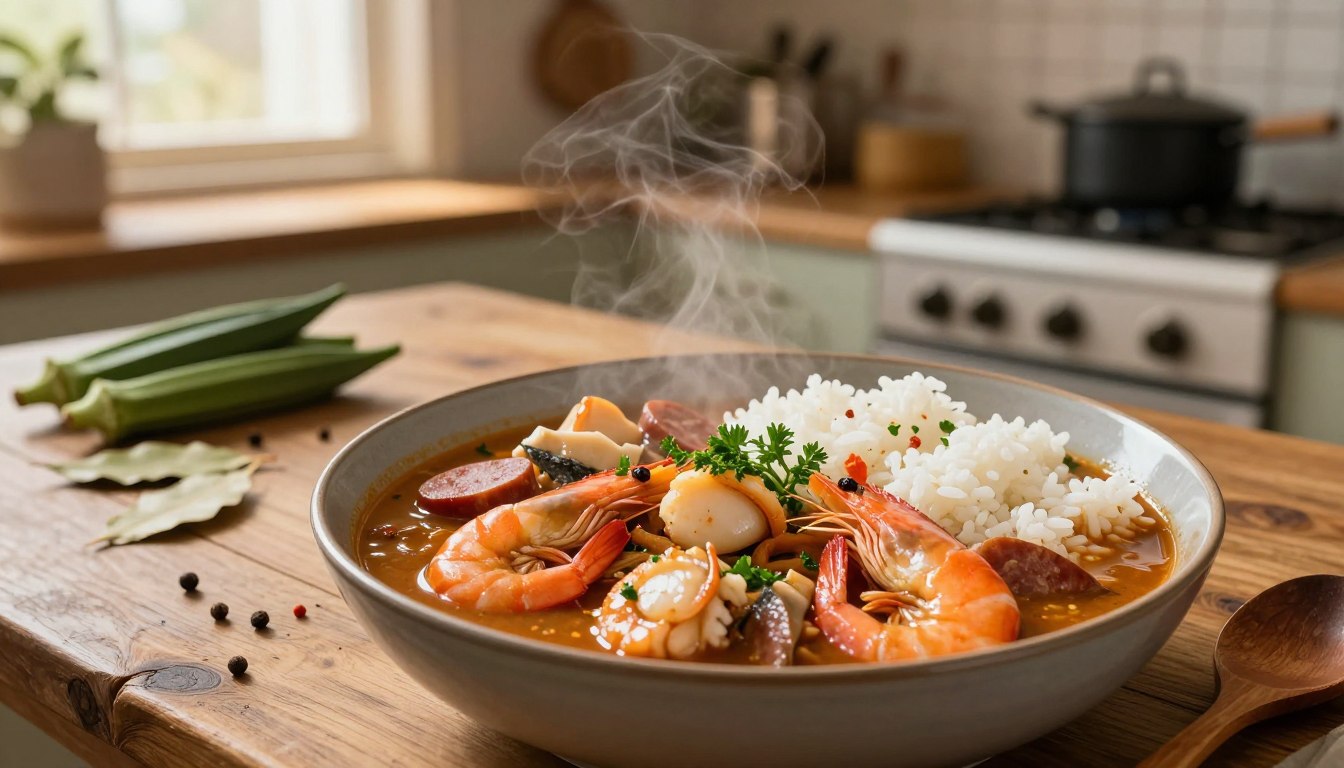
There is something truly comforting about a steaming bowl of seafood gumbo. With its deep, savory broth, tender shrimp, sweet crab meat, and flavorful vegetables, this traditional Louisiana dish brings warmth and Southern charm to any dinner table. Every spoonful offers a delicious combination of seafood, aromatic seasonings, and the rich flavor of a perfectly cooked roux.
This seafood gumbo recipe is perfect for anyone who loves hearty homemade meals with plenty of flavor. Made with shrimp, crab, okra, and a rich roux-based broth, it creates a satisfying dish that feels special enough for entertaining but comforting enough for an ordinary family dinner.
Whether you are discovering Louisiana cooking for the first time or looking for a new favorite seafood dinner, this homemade gumbo is a wonderful recipe to add to your collection.
Table of Contents
What Is Seafood Gumbo?
Seafood gumbo is a beloved Louisiana dish known for its rich broth, bold seasonings, and combination of seafood and vegetables. It is traditionally thickened with a roux made from flour and oil, which gives the broth its distinctive color and nutty flavor.
Depending on the recipe, gumbo may include shrimp, crab, oysters, sausage, okra, or other ingredients. Many versions also feature the classic Louisiana vegetable combination of onion, bell pepper, and celery, often called the holy trinity of Cajun and Creole cooking.
This seafood gumbo recipe focuses on shrimp and crab, creating a delicious balance of sweet seafood flavors and savory seasoning. Served over fluffy white rice, it makes a complete and comforting meal.
Why You Will Love This Seafood Gumbo Recipe
There are plenty of reasons to make this flavorful Louisiana classic at home.
- Rich, deep flavor: The slowly cooked roux adds a wonderful roasted flavor and beautiful brown color to the broth.
- Delicious seafood: Shrimp and crab bring natural sweetness and a tender texture to every bowl.
- Comforting and satisfying: Served with rice, gumbo is a hearty meal that is perfect for sharing.
- Easy to customize: You can adjust the seasoning, add oysters, or include andouille sausage for a different flavor.
- Perfect for gatherings: A large pot of gumbo is ideal for family dinners, special occasions, and relaxed weekend meals.
Best of all, the flavors come together beautifully as the broth simmers, making the kitchen smell absolutely wonderful.
Ingredients You Need
You will need a combination of everyday vegetables, pantry staples, seasonings, and fresh seafood to prepare this homemade seafood gumbo.
The roux
- Vegetable oil
- All-purpose flour
The vegetables
- Onion, chopped
- Green bell pepper, chopped
- Celery, chopped
- Garlic, minced
- Sliced okra
The seafood and broth
- Raw shrimp, peeled and deveined
- Crab meat
- Seafood stock
- Diced tomatoes, optional
- Andouille sausage, optional
The seasonings
- Cajun seasoning
- Smoked paprika
- Dried thyme
- Bay leaves
- Salt and black pepper
For serving
- Cooked white rice
- Sliced green onions
- Fresh parsley
- Hot sauce, optional
For the best flavor, use good-quality seafood stock and fresh seafood whenever possible. Frozen shrimp and okra also work well when thawed or prepared according to their package instructions.
How to Make Seafood Gumbo
Making seafood gumbo takes a little patience, especially when preparing the roux, but the process is straightforward when you follow each step.
Step 1: Prepare the Roux
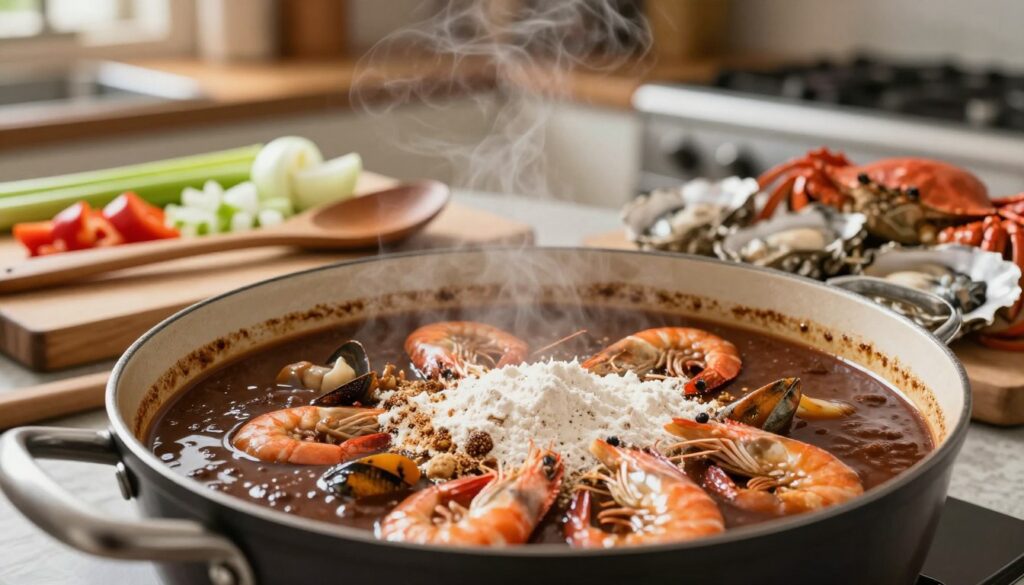
Heat the vegetable oil in a large, heavy-bottomed pot over medium heat. Gradually whisk in the flour until the mixture is smooth.
Continue cooking, stirring constantly, for approximately 20–30 minutes, or until the roux becomes a deep chocolate-brown color. Keep the heat controlled and avoid leaving the pot unattended because burnt roux can give the entire dish a bitter taste.
A good roux is one of the most important secrets to flavorful Louisiana gumbo.
Step 2: Cook the Vegetables
Add the chopped onion, green bell pepper, and celery to the browned roux. Stir carefully and cook for about 5–7 minutes, until the vegetables begin to soften.
Add the minced garlic and cook for another minute, stirring frequently to prevent it from burning.
The vegetables absorb the flavor of the roux and create a savory foundation for the broth.
Step 3: Add the Stock and Seasonings
Pour the seafood stock into the pot gradually, stirring well to incorporate the roux. Add the sliced okra, Cajun seasoning, smoked paprika, dried thyme, and bay leaves.
If you prefer a Creole-inspired variation, you can also add diced tomatoes. For a more traditional Cajun-style flavor, you may choose to leave them out.
If you are using andouille sausage, add it at this stage so its smoky flavor has time to develop.
Step 4: Let the Gumbo Simmer
Bring the mixture to a gentle boil, then reduce the heat and allow it to simmer uncovered for approximately 30–40 minutes.
Stir occasionally and let the flavors blend together. As the gumbo cooks, the broth develops a deeper flavor, while the okra helps contribute body and texture.
Taste the broth and adjust the seasonings as needed. Add salt and black pepper gradually, particularly if your seafood stock and Cajun seasoning already contain salt.
Step 5: Add the Shrimp and Crab
Once the broth has developed its flavor, stir in the shrimp and crab meat.
Cook gently for approximately 4–6 minutes, depending on the size of the shrimp, until the shrimp are opaque and cooked through. Avoid prolonged cooking, as shrimp can become tough and crab meat can lose its delicate texture.
Remove the bay leaves before serving.
Step 6: Serve Your Homemade Seafood Gumbo
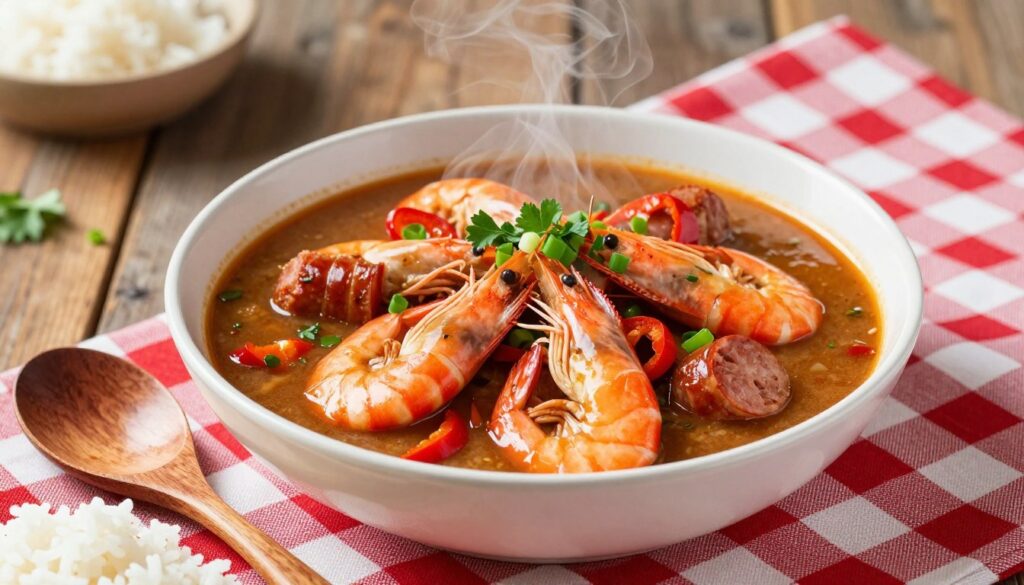
Ladle the hot gumbo into bowls and serve it over freshly cooked white rice.
Finish each serving with chopped green onions and fresh parsley. If you enjoy extra heat, place hot sauce on the table so everyone can season their bowl to taste.
The result is a rich, savory, and comforting seafood dinner that brings a little taste of Louisiana into your home.
Tips for the Best Seafood Gumbo
A few simple techniques can make a noticeable difference in the final dish.
Stir the roux constantly. The roux needs attention throughout cooking to prevent burning. Aim for a rich brown color without blackened or bitter spots.
Use the right stock. Seafood stock adds depth and complements the shrimp and crab. Low-sodium stock gives you more control over the final seasoning.
Add seafood near the end. Shrimp cooks quickly, so adding it shortly before serving helps preserve its tender texture.
Let the broth develop flavor. Give the base enough time to simmer before adding the seafood. This allows the vegetables, spices, and roux to come together.
Adjust the consistency. If the gumbo is too thick, add a little more stock. If it is too thin, let it simmer uncovered for a little longer before adding the seafood.
Keep the seasoning balanced. Cajun seasoning varies by brand, so taste the broth before adding extra salt or spice.
What to Serve with Seafood Gumbo
White rice is the classic accompaniment because it absorbs the rich broth and makes each serving more satisfying.
You can also serve your gumbo with crusty French bread or warm cornbread for dipping. A simple green salad or lightly dressed coleslaw provides a refreshing contrast to the savory broth.
For a traditional Southern-inspired dinner, serve the gumbo in deep bowls with rice, sliced green onions, and hot sauce on the side.
Can You Make Seafood Gumbo Ahead of Time?
Yes! You can prepare the gumbo base ahead of time, which makes this recipe convenient for entertaining or busy evenings.
Cook the roux, vegetables, stock, seasonings, and okra, then let the base cool promptly and refrigerate it in a covered container. When you are ready to serve, reheat the base thoroughly and add the shrimp and crab near the end of cooking.
For the best seafood texture, avoid cooking the shrimp too far in advance.
How to Store and Reheat Leftovers
Allow leftover gumbo to cool promptly, then transfer it to shallow, airtight containers and refrigerate within two hours. Store it at 40°F (4°C) or below and consume it within 3–4 days.
Reheat leftovers until they reach 165°F (74°C), stirring as needed to heat them evenly. Add a small amount of stock or water if the broth has thickened during storage.
You can freeze seafood gumbo, although shrimp and crab may become softer after thawing. For the best quality, freeze the gumbo base separately and add freshly cooked seafood when possible.
Frequently Asked Questions
What seafood is best for gumbo?
Shrimp and crab are excellent choices because they provide complementary sweet and savory flavors. Oysters, crawfish, and other seafood can also be used, depending on availability and personal preference.
Can I make seafood gumbo without okra?
Yes. You can omit okra if you do not enjoy its texture. The roux still provides body and flavor, although the final consistency may be slightly different.
Is seafood gumbo spicy?
It can be, but the heat is adjustable. Start with a moderate amount of Cajun seasoning and offer hot sauce separately so everyone can choose their preferred level of spice.
Should seafood gumbo contain tomatoes?
It depends on the style. Tomatoes are more commonly associated with many Creole versions, while Cajun versions often omit them. Both approaches can produce a delicious gumbo.
Can I use frozen shrimp?
Absolutely. Thaw the shrimp safely, remove excess moisture, and add it near the end of cooking. Cook until opaque and fully cooked.
What is the difference between gumbo and seafood stew?
Gumbo typically features a roux-based broth, Louisiana seasonings, and the regional combination of onion, bell pepper, and celery. Seafood stew can have many different bases and does not necessarily use a dark roux.
Final Thoughts
This seafood gumbo recipe is a delicious way to enjoy the bold flavors of Louisiana cooking at home. From the rich brown roux to the tender shrimp, sweet crab meat, and aromatic vegetables, every ingredient contributes to a comforting and memorable meal.
Serve it over fluffy white rice, finish it with fresh herbs, and enjoy a satisfying dinner with family and friends. Once you experience the depth of flavor in homemade gumbo, it may become one of your favorite seafood recipes to prepare again and again.
FAQ
What are the essential seafood gumbo ingredients needed for a traditional recipe?
For authentic seafood gumbo, use oil and flour for the roux, plus onions, bell peppers, and celery. Gather fresh shrimp, crabmeat, oysters or crawfish, quality seafood stock, garlic, paprika, thyme, oregano, cayenne pepper, and bay leaves. Serve it with cooked white rice.
How can I ensure my roux does not burn while making the best seafood gumbo recipe?
Prevent a burnt roux with patience, controlled heat, and constant attention. Use a heavy-bottomed Dutch oven over medium-low heat, and stir constantly with a flat-edged wooden spoon or whisk. Watch the bottom and corners; discard black-specked or acrid-smelling roux, because burnt flour ruins homemade seafood gumbo.
Can I use store-bought stock for my New Orleans style seafood gumbo?
When you cannot simmer shrimp and crab shells from scratch, use high-quality, low-sodium store-bought seafood stock. It is practical and delicious. Warm the stock, then slowly whisk it into the roux to prevent temperature shock and lumps in your base.
When should I add the delicate seafood to a spicy seafood gumbo?
Add delicate seafood, such as shrimp, crabmeat, and oysters, near the end of cooking. Add firm fish chunks or uncooked crawfish first. Shrimp need only a few minutes; they turn opaque and curl into a loose “C” shape. Fold in lump crabmeat and oysters at the end to warm them, preventing a rubbery texture.
How do I store and reheat leftover homemade seafood gumbo without ruining the seafood?
Cool leftover homemade seafood gumbo quickly in shallow containers. Refrigerate it up to three days, with rice in a separate container. Reheat it gently over low stovetop heat until steaming hot; avoid vigorous boiling to keep shrimp and crabmeat tender.
