



Imagine walking into a sunny kitchen in Greece. The smell of Greek orange roast lamb greets you. It’s more than a meal; it’s a journey through Mediterranean traditions.
Greek orange roast lamb is a feast of flavors. It combines tender meat with the zesty taste of fresh oranges. Every bite brings to mind family, the coast, and cooking traditions that last for generations.
This dish turns simple ingredients into a memorable meal. Whether you’re an experienced cook or just starting, this guide will help you make authentic Greek orange roast lamb. It will take your taste buds to the Greek islands.
Prepare to learn the secrets of a Mediterranean classic. It will make your cooking stand out and impress your guests.
Table of Contents
The Rich History Behind Greek Orange Roast Lamb
Greek cuisine has a rich history that makes traditional Greek roast lamb special. This dish has roots in Mediterranean shepherding communities thousands of years ago. It’s more than just a meal; it’s a piece of history.
Ancient Greek shepherds used unique cooking methods to bring out lamb’s natural flavors. They started with simple open-fire roasting and later added local ingredients. The use of oranges was a big change, adding depth to the dish.
- Lamb has been a staple protein in Greek diets since antiquity
- Citrus fruits were integrated through extensive Mediterranean trade routes
- Cooking methods reflected local agricultural resources
Exploring this tradition shows how oranges became key to the roast lamb. The citrus brightens the rich meat, making the dish unforgettable. Greek families have kept these recipes alive, passing them down through generations.
At Easter, families would roast whole lambs, symbolizing renewal and community. It was more than cooking; it was a way to connect with the land and family.
Greek cooking transforms simple ingredients into extraordinary culinary experiences
Learning about the authentic Greek lamb dish is about its journey. From mountain pastures to today’s tables, it’s a blend of tradition and flavor.
Essential Ingredients for Authentic Mediterranean Roast Lamb
To make a perfect Mediterranean roast lamb, you need to pick the best ingredients. Each one is important for the rich, complex flavors of Greek cuisine. Knowing the right ingredients will make your Greek lamb with orange zest truly special.
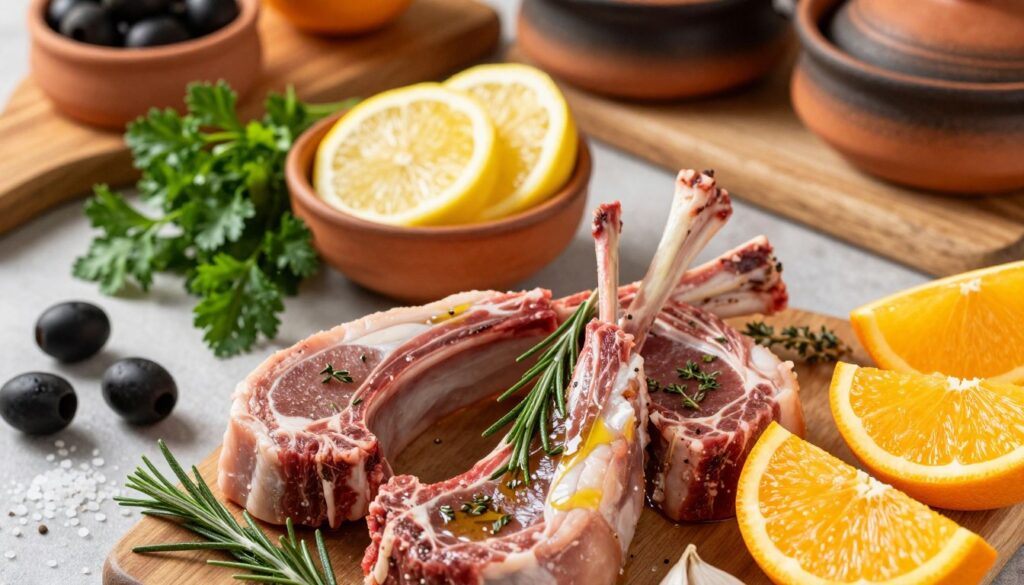
Selecting the Perfect Cut of Lamb
Choosing the right meat is the first step for your Mediterranean roast lamb. Look for these key traits:
- Leg of lamb (preferred cut for roasting)
- Grass-fed lamb for superior flavor
- Meat with light marbling for tenderness
- Preferably organic or locally sourced
Fresh Herbs and Aromatic Spices
Authentic Greek lamb needs a mix of fresh herbs and spices. Here’s a classic mix:
| Herb/Spice | Quantity | Purpose |
|---|---|---|
| Dried Oregano | 2 tablespoons | Signature Greek flavor |
| Fresh Rosemary | 3 sprigs | Aromatic depth |
| Garlic | 4-5 cloves | Intense savory notes |
| Sea Salt | 1 tablespoon | Flavor enhancement |
The Role of Orange Zest in Greek Cuisine
Orange zest is a key ingredient in Greek lamb recipes. The citrusy essence adds brightness and complexity to the meat. Grate fresh orange zest just before cooking to get the most aromatic oils. The zest balances the lamb’s richness, making the flavor vibrant and authentic.
Preparing Your Lamb for Maximum Flavor
Making a tasty Greek lamb recipe starts with careful preparation. The key to a great roast is in the steps you take before cooking. Give your lamb the right care to turn it into a true culinary delight.
First, take the lamb out of the fridge 30-60 minutes before cooking. This step lets the meat warm up evenly. Then, dry the lamb with paper towels to get rid of extra moisture. This helps create a beautiful golden-brown crust.
- Trim excess fat, leaving a thin layer for moisture and flavor
- Score the lamb’s surface in a crosshatch pattern
- Create deep slits near the bone to enhance flavor penetration
Your Greek lamb recipe needs precise preparation for the best flavor. Here are some key steps:
| Preparation Step | Purpose | Impact on Flavor |
|---|---|---|
| Room temperature resting | Even cooking | Improved meat texture |
| Surface scoring | Marinade penetration | Enhanced flavor absorption |
| Fat trimming | Balanced moisture | Rich, juicy meat |
When cooking bone-in lamb, be extra careful. Butterfly the cut or make strategic slits. These small details can make your Greek lamb recipe go from good to spectacular. Remember, the prep work is the base of a memorable Mediterranean feast.
If you enjoy hearty and simple comfort meals like this Greek Orange Roast Lamb,
you may also want to try some of our other delicious recipes:
Greek Marinated Grilled Lamb Chops
Creating a Savory Greek Lamb Marinade
Making a savory Greek lamb marinade is an art. It turns simple meat into a feast for the senses. Your easy Greek orange lamb recipe starts with finding the right mix of flavors.
A good marinade does more than add taste. It makes the meat tender and fills each bite with deep, rich flavors. These flavors take you straight to the Greek islands.
Balancing Citrus and Herbs
The secret to a true savory Greek lamb marinade is in its ingredients. Your marinade should have:
- Fresh orange juice for a bright, citrusy taste
- Extra virgin olive oil to spread flavors evenly
- Garlic for depth and a strong aroma
- Fresh herbs like oregano and rosemary
- Cracked black pepper
- Sea salt to boost the overall taste
Marinating Time and Temperature Tips
For the best results in your easy Greek orange lamb recipe, follow these marinating guidelines:
- Marinate lamb for 4-8 hours in the fridge
- Let the meat come to room temperature before cooking
- Throw away the used marinade and use fresh for basting
- Pat the meat dry before roasting for perfect browning
The secret to a great marinade is patience. Letting the lamb soak up these amazing flavors makes for a meal that truly captures Greek cuisine’s essence.
Step-by-Step Greek Orange Roast Lamb Cooking Process
Preparing the perfect Greek orange roast lamb needs precision and care. Your journey starts with careful preparation and cooking techniques. These steps will turn a simple cut of meat into a Mediterranean masterpiece.
First, preheat your oven to 425°F. This high heat creates a golden-brown crust on your lamb. Use a roasting pan with a rack for better air circulation and to prevent steaming.
- Place the lamb fat-side up in the roasting pan
- Position the meat to allow natural fat basting
- Ensure even spacing for consistent cooking
Cooking time varies based on the lamb’s weight. Generally, cook for 15-20 minutes per pound. Pro tip: Always check the meat’s internal temperature with a thermometer. For medium-rare, aim for 145°F, and for medium, target 160°F.
After the initial high-heat phase, lower the oven to 325°F. This gentle heat ensures even cooking without drying out the lamb. You can also add vegetables like potatoes and carrots to the pan. They’ll soak up the meat’s flavorful drippings.
The final step is resting. Let your lamb rest for 15-20 minutes after removing it from the oven. This waiting period allows juices to redistribute. Your lamb will be tender and full of flavor.
Greek Lamb Cooking Tips for Perfect Results
Mastering Greek lamb cooking needs precision and care. Professional chefs know that turning a simple lamb roast into a great Mediterranean dish requires focus and specific techniques.
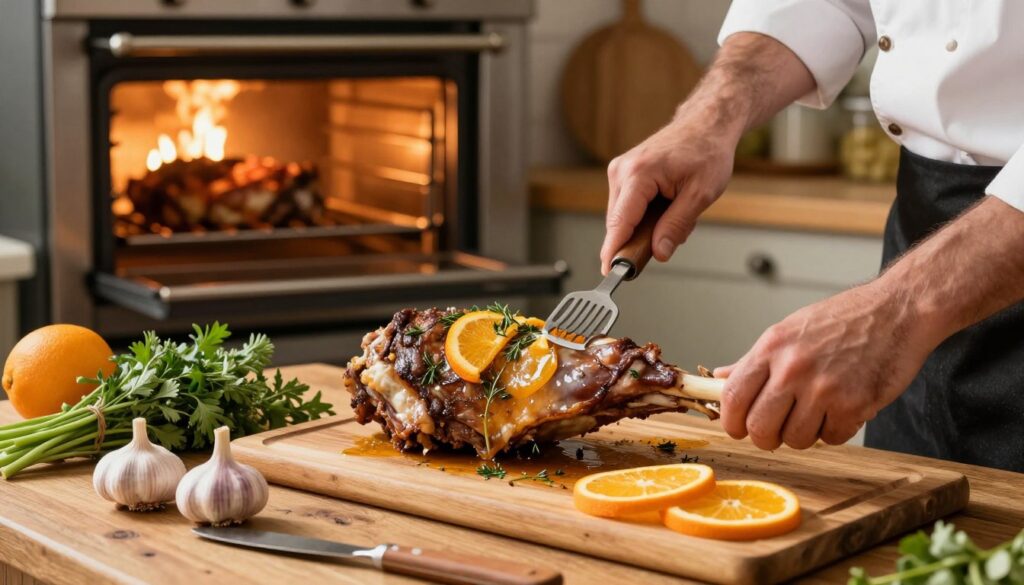
When cooking your Greek lamb, several key factors affect the final taste. The right steps can make your dish go from good to great.
Temperature Control and Timing
Getting the perfect Greek lamb roast is all about temperature control. Follow these important tips:
- Preheat your oven to 325°F (163°C)
- Use a meat thermometer for accurate doneness
- Allow 20-25 minutes per pound for medium-rare
Basting Techniques for Juicy Meat
Basting is key for keeping meat moist and adding flavor. Here are some pro tips:
- Baste every 30 minutes with pan juices
- Use a mix of olive oil, orange juice, and herbs
- Cover lamb loosely with foil to prevent drying
| Lamb Cut | Recommended Cooking Time | Internal Temperature |
|---|---|---|
| Leg of Lamb | 20-25 minutes per pound | 135°F (Medium-Rare) |
| Shoulder Roast | 25-30 minutes per pound | 145°F (Medium) |
Pro tip: Let your lamb rest for 15-20 minutes after cooking. This helps juices spread and makes it tender.
Serving Suggestions and Traditional Greek Accompaniments
Your traditional Greek roast lamb deserves a special presentation. It should honor Mediterranean culinary traditions. The right sides can turn your Mediterranean roast lamb recipe into a memorable meal.
When serving your perfectly roasted lamb, consider these classic Greek side dishes:
- Greek Lemon Potatoes (Patates Lemonates) – Crispy golden potatoes roasted in the same pan as the lamb
- Fresh Tzatziki sauce for a cool, creamy contrast
- Traditional Greek salad with fresh tomatoes, cucumbers, and feta cheese
- Roasted Mediterranean vegetables like eggplant and zucchini
Carving your lamb needs precision. Always slice against the grain for tenderness. For bone-in cuts, carefully work around the bone to preserve the meat’s integrity.
| Wine Pairing | Flavor Profile |
|---|---|
| Greek Xinomavro | Full-bodied, robust red |
| Agiorgitiko | Rich, complex flavor |
| Cabernet Sauvignon | Strong, complements lamb’s richness |
Serve your traditional Greek roast lamb on a large family-style platter or elegantly plate individual portions. Warm pita bread or crusty artisan bread makes an excellent accompaniment for soaking up the delicious pan juices.
Related Recipes:
Greek Marinated Grilled Lamb Chops
Conclusion
Your journey to make this delicious Greek lamb recipe is more than cooking. It’s about joining a culinary tradition that lasts for generations. You’ve turned simple ingredients into a Mediterranean masterpiece that connects you to Greek cuisine’s rich flavors.
The Greek lamb dish you’ve made is more than just a meal. It shows off your cooking skills and love for traditional cooking. By choosing quality ingredients, following marinating times, and watching the temperature, you’ve made a dish that will wow everyone.
Cooking is an art of personalization. You can try different herb amounts or citrus levels to match your taste. Every time you make this recipe, you’ll get better and understand Mediterranean cooking more. Your kitchen is a way to explore the bold flavors of Greek cooking.
When you share this amazing meal, you’re not just serving food. You’re sharing a story and a cultural experience that goes beyond the dinner table. Keep trying out Greek recipes, enjoy cooking, and let your culinary journey inspire others.
